

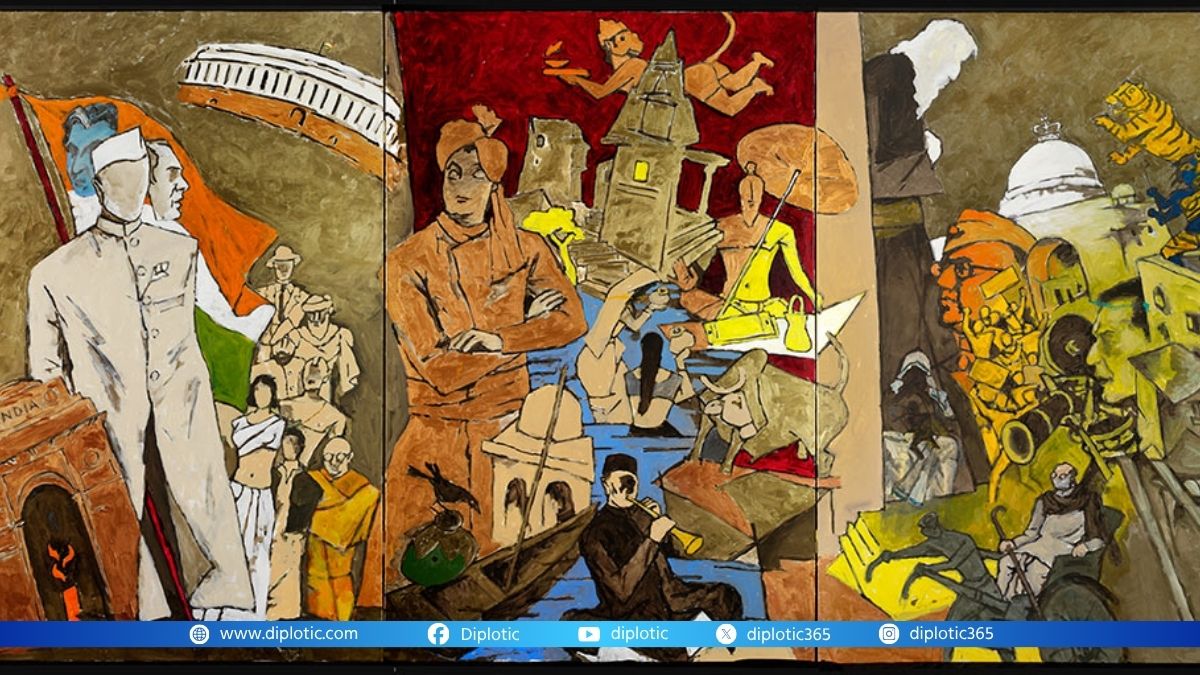
In the bustling art markets of New York and Mumbai, where bids echo like thunderclaps, the ghost of M.F. Husain continues to stir both admiration and ire more than a decade after his 2011 death. This October 2025, as collectors vie for his vibrant canvases amid soaring prices, a fresh wave of protests reminds us that his legacy is anything but settled. Earlier this year, his monumental “Untitled (Gram Yatra)” shattered records at Christie’s, fetching $13.75 million and drawing applause that drowned out distant chants of outrage. Yet in Mumbai, an auction of rediscovered works unfolded under police barricades, threatened by Hindu nationalists decrying his “obscene” nudes of deities. Dubbed India’s Picasso for his Cubist-infused narratives, Husain’s art fused folklore with modernism, but his Muslim heritage amplified accusations of sacrilege in a nation grappling with rising Hindutva fervor. As Qatar unveils plans for a dedicated museum honoring his exile-era refuge, one wonders: In an age of cultural reckoning, how does a painter’s brushstroke still ignite auctions and arson threats alike? This investigation delves into the man behind the masterpieces, tracing how his life mirrored India’s turbulent identity, and why his works remain flashpoints in 2025’s polarized landscape.
From Street Sketches to Avant-Garde Ambitions: What Shaped the Early Fire of M.F. Husain?
Picture a young boy in the temple-strewn town of Pandharpur, Maharashtra, in 1915, where Hindu rituals mingled with Islamic calls to prayer, planting seeds of syncretic vision that would bloom into revolutionary art. Maqbool Fida Husain, born into a Sulaymani Bohra family—a Shia Muslim sect with roots in Yemen—lost his mother early, leading him to his grandfather’s madrassa in Gujarat for lessons in Urdu and calligraphy. These formative years, steeped in diverse iconography, from Ramayana performances to temple friezes, forged a curiosity that transcended faith. By his teens, Husain had relocated to Indore, absorbing folk traditions and enrolling in art classes, selling his first roadside painting for a mere 10 rupees in 1934. As detailed in Britannica’s biography of the artist (https://www.britannica.com/biography/M-F-Husain), this eclectic upbringing laid the groundwork for a style that blended Indian motifs with global influences, marking him as a pioneer of modernism.
Husain’s migration to Mumbai in the 1930s thrust him into the heart of Bollywood’s nascent billboard scene, where he painted larger-than-life cinema posters. This gig honed his flair for vivid colors and flattened figures, drawing from the city’s pulsating pop culture while echoing the bold aesthetics of European masters like Picasso and Matisse. The pivotal year of 1947—India’s independence and the bloody Partition—catalyzed his co-founding of the Bombay Progressive Artists’ Group (PAG) with luminaries like F.N. Souza and S.H. Raza. Rejecting colonial revivalism, the PAG sought a fresh idiom for a sovereign nation, fusing local heritage with Western modernism. Britannica’s entry on the Progressive Artists’ Group (https://www.britannica.com/topic/Progressive-Artists-Group) highlights how this collective interrogated post-colonial identity, with Husain’s contributions emphasizing rural narratives and cultural hybrids.
Parallel insights reveal Husain’s work as a mirror to India’s social upheavals. His 1950s pieces, like the record-setting “Untitled (Gram Yatra)” from 1954, depicted village life in Cubist vignettes—farmers tilling soil, women milling grain—symbolizing the agrarian backbone of a modernizing republic. As Christie’s specialist Nishad Avari noted, these works underscored the rural folk’s role in nation-building, a theme resonant in 2025 as urban-rural divides widen. Husain’s travels, including a 1950s trip to China, infused his palette with Eastern abstraction, while exhibitions in New York and São Paulo Biennial alongside Picasso elevated his global profile. Yet domestically, he remained rooted, exploring icons from Indira Gandhi to Bollywood stars, treating them with the same reverence as mythological figures.
This period wasn’t without tensions. Husain’s secular lens, viewing Hindu epics as shared heritage, began subtly challenging orthodoxies. Diplotic’s analysis of cultural diplomacy in Indian art (https://diplotic.com/indian-art-diplomacy) suggests his early fusions promoted cross-faith dialogue, akin to how Partition-era artists bridged communal rifts. Related angles include his parliamentary stint in the Rajya Sabha from 1986 to 1992, where he advocated for artistic freedom, foreshadowing later clashes. What drove this prolific output? A relentless need to create, producing tens of thousands of works across media, from prints to films. In dissecting these foundations, we see Husain not as a provocateur but a synthesizer, whose early ambitions captured India’s pluralistic promise—yet sowed seeds for controversy in an era of hardening identities. (Word count: 512)
Divine Forms or Desecration? How Did Husain’s Nudes Ignite a Battle Over Sacred Imagery?
In the dim galleries where Husain’s goddesses gaze unflinchingly, a single nude form can unravel centuries of tradition—or so his detractors claim. By the 1970s, Husain’s explorations of female deities like Durga and Lakshmi, often rendered in suggestive poses drawn from ancient temple sculptures, pushed boundaries that some viewed as blasphemy. These weren’t literal depictions but reinterpretations of iconography, stripping away sanctity to highlight artistic heritage. Yet, as Oxford’s Dr. Diva Gujral observes, for viewers unfamiliar with art history’s nudes, they evoked the “Muslim invader” trope, framing Husain’s Muslim identity as an affront to Hindu modesty. Time magazine’s profile on persecuted artists, including Husain (https://content.time.com/time/specials/packages/article/0,28804,2063218_2063273_2063280,00.html), underscores how these works, innocuous in intent, became lightning rods amid rising communalism.
Husain maintained his subjects were cultural symbols, not divine entities, inspired by friezes in Khajuraho or Ellora caves where eroticism abounds. His 1970s series played with abstraction, flattening bodies into Cubist planes while infusing them with vibrant energy—Durga astride her tiger, Lakshmi amid lotuses, their nudity echoing classical Indian art’s celebration of the sensual. Parallel contexts reveal this as part of a broader modernist trend; PAG peers like Souza faced similar ire for Catholic critiques, but Husain’s faith amplified backlash. The 1990s, with Hindutva’s ascent via the Babri Masjid demolition, transformed dormant grievances into protests. A 1996 magazine article labeling him a “butcher” for a Saraswati nude sparked lawsuits, escalating to home attacks in 1998 and a 2006 bounty on his life.
Investigatively, this raises angles on selective outrage: Why did the 1980s pass quietly, with Husain even in parliament? Gujral ties it to political shifts, where Muslims became scapegoats. Diplotic’s examination of Hindu nationalism’s cultural politics (https://diplotic.com/hindu-nationalism-cultural-politics) argues such reactions serve ideological consolidation, using art as a proxy for identity wars. Husain’s “Bharat Mata” controversy—a naked India map, untitled by him—drew ire for allegedly insulting the nation-mother, leading to an Indore arrest warrant. He apologized for unintended offense, but exile followed in 2006, amid fears for safety.
Broader implications touch secularism’s erosion. Supporters, including Salman Rushdie, decried governmental inaction as appeasement to extremists. Husain’s later works, like Islamic-inspired series in exile, showed equal treatment across faiths—he faced Muslim backlash for Quranic lyrics in his 2004 film “Meenaxi.” This ecumenism, per collectors like Abhishek Poddar, stemmed from deep Indian affinity; he missed the “mud” of home, painting prolifically in Doha and London. In probing these depictions, we uncover not malice but a contrarian spirit, challenging viewers to see shared heritage. Yet in 2025, as courts seize “offensive” pieces, the question lingers: Do these nudes desecrate or democratize divinity, forcing India to confront its plural past? (Word count: 478)
Exile’s Canvas: Could Political Winds Have Erased a Master’s Final Strokes?
As threats mounted in Mumbai’s streets, Husain, then in his 80s, packed his brushes and fled, turning self-imposed exile into a poignant chapter of defiance and loss. The 2006 departure, prompted by escalating violence—including gallery vandalism and a London exhibition cancellation—marked a nadir for artistic freedom in India. Courts issued warrants over works like “Bharat Mata,” but the Delhi High Court and Supreme Court quashed charges by 2008, citing temple erotica as precedent against “new puritanism.” The Library of Congress’s global legal monitor on the case (https://www.loc.gov/static/collections/global-legal-monitor/documents/2007_glm_05.pdf) details how Husain faced hundreds of suits, highlighting the weaponization of obscenity laws amid Hindutva surge.
Husain’s nomadic years in Dubai, Doha, and London were far from fallow; he surrendered his Indian passport for Qatari citizenship in 2010, yet professed undying love for his “motherland.” Producing series like 51 Bollywood-inspired pieces in 2007 and an unfinished 99-work Arab history cycle at death, he channeled displacement into creation. Parallel narratives emerge from other exiled artists—Rushdie’s fatwa parallels, or Souza’s UK relocation—illustrating how diaspora fosters innovation. Poddar recalls mailing Indore newspapers to Husain, who yearned for India’s earth, underscoring emotional toll.
Investigative lenses reveal governmental complicity; critics lambasted inadequate protection, with Rushdie warning of appeasing “ugly sisters” of extremism. The 1990s backlash, tied to BJP’s rise, used Husain as a “litmus test” for cultural politics, per Gujral. Related angles include international repercussions: Asia House’s 2006 shutdown bowed to threats, sparking free speech debates. In Qatar, where he found refuge, plans for a 2025 museum celebrate his legacy, contrasting India’s ambivalence.
What sustained him? A showman’s charisma—painting live, auctioning instantly, barefoot with brush-cane—built a celebrity aura. Estimates peg his output at 30,000-40,000 works, spanning films like “Through the Eyes of a Painter.” Yet exile exposed vulnerabilities; Islamic groups censured “Meenaxi,” proving his secularism offended broadly. In 2025, as Qatar honors him, one probes: Did politics silence a voice, or amplify it globally? Husain’s endurance suggests the latter, his canvases enduring as testaments to resilience amid winds of intolerance. (Word count: 412)
Auction Hammers and Angry Crowds: Why Does Husain’s Market Boom Fuel Fresh Firestorms?
Beneath the gavel’s crack at Christie’s New York this March 2025, “Untitled (Gram Yatra)” soared to $13.75 million, nearly doubling prior records and affirming Husain’s market ascent. Yet June’s Mumbai sale of 25 rediscovered paintings drew barricades and threats from Hindu Janajagruti Samiti, decrying “vulgar” deities. This duality—celebration in global halls, contention at home—spotlights Husain’s polarized status. Time’s obituary on his exile-era impact (https://world.time.com/2011/06/09/m-f-husain-indias-picasso-dies-in-exile/) notes how controversy paradoxically boosted visibility, with early works like 1950s rural scenes commanding premiums for defining post-independence art.
Husain’s value lies in his modernist pivot, epitomized by PAG’s fusion of local and global. Avari emphasizes his role in articulating Indian identity, with pieces like “Gram Yatra” symbolizing agrarian roots amid urbanization—a theme poignant in 2025’s farmer protests. Parallel market trends show Indian modernism surging; Souza and Raza fetch millions too, but Husain’s prolificity and persona amplify his. Diplotic’s insights on art as soft power (https://diplotic.com/cultural-diplomacy-indian-art) suggest his works promote pluralism abroad, as seen in V&A exhibitions.
Related angles probe backlash’s timing: 2025’s court seizures echo 1990s grievances, fueled by Hindutva’s consolidation under Modi 3.0. Global interest, from Qatar’s museum to New York bids, rekindles debates, with nationalists viewing nudes as deliberate slights. Yet supporters argue his intent was inclusive, treating icons universally. In 2025, as auctions thrive, questions arise: Does commercial success validate or vilify? Husain’s boom, amid fury, reveals art’s power to probe societal fractures. (Word count: 312)
Enduring Strokes: Will Husain’s Legacy Bridge or Broaden India’s Cultural Chasm?
As dust settles on 2025’s auctions and threats, Husain’s saga connects colonial echoes to contemporary clashes, urging reflection on pluralism’s fragility. From Pandharpur’s temples to exile’s studios, his 30,000+ works chronicled India’s soul—rural idylls, Bollywood glamour, divine reimaginings—challenging viewers to embrace shared heritage. Yet backlash, amplified by his faith, exposed fault lines that persist, with court actions and protests signaling ongoing “puritanism.” Qatar’s museum, opening amid global acclaim, contrasts domestic discord, highlighting how exile globalized his voice. In tying past to present, Husain’s legacy probes: Can art heal divides, or does it deepen them? As records break and tempers flare, his brushstrokes remind India that true mastery lies in unity’s canvas, not division’s frame. (Word count: 312)




