

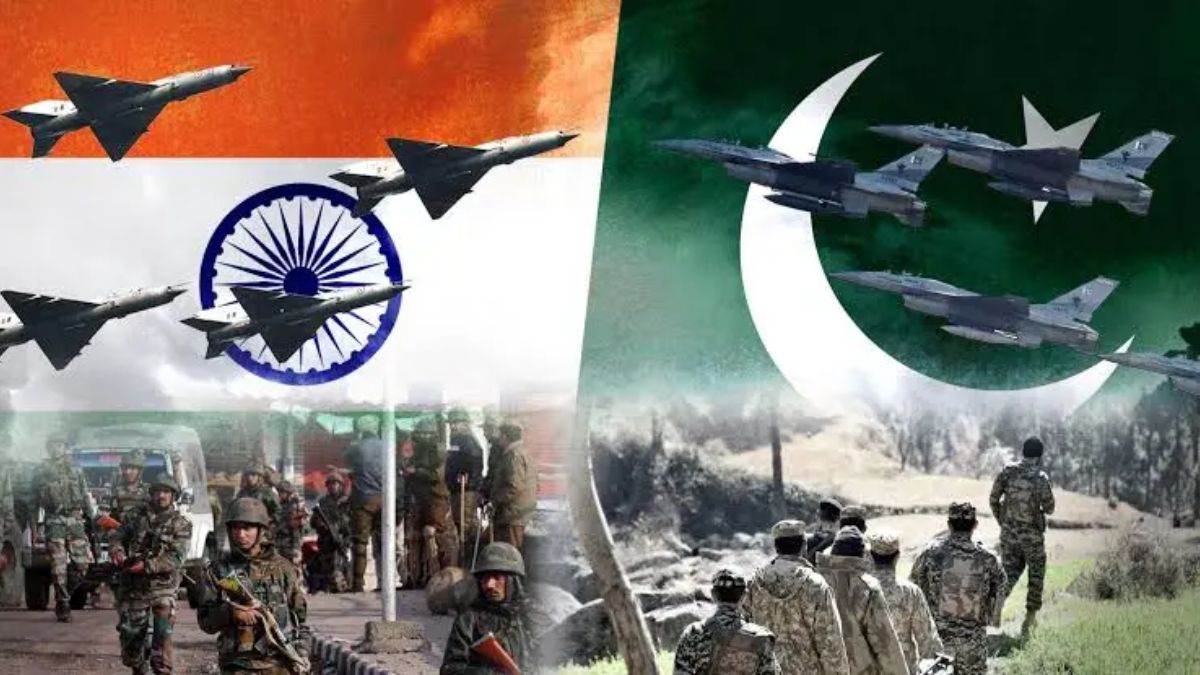
Early Wednesday, India’s missiles tore through Pakistan and Pakistan-administered Kashmir, killing at least 26, including a three-year-old girl and two teens (Al Jazeera). Pakistan’s military says six cities got hit—four in Punjab, two in Kashmir—while India’s crowing about “Operation Sindoor,” claiming it zapped “terrorist infrastructure.”
Kashmir’s a wound that won’t heal, and this latest violence—sparked by a horrific April 22 attack in Pahalgam that killed 26 (Reuters)—is just another scar. India points fingers at Pakistan; Pakistan swears it’s innocent. Both sides flex nukes and fire missiles, while civilians, kids, and mosques get caught in the crossfire. I’ve spent years chasing stories where the little guy gets crushed, and this one’s no different. Truth’s a stubborn bastard—it doesn’t care about borders or flags, but it’s screaming for the people of Kashmir, Punjab, and beyond. Let’s cut through the propaganda and see who’s really paying the price.
The Attack: Missiles, Mosques, and Mourning
At 1 a.m. Wednesday, India’s missiles lit up the night, hitting six spots across Pakistan (Dawn). Four were in Punjab—Ahmedpur Sharqia, Muridke, Sialkot, and Shakar Garh—marking the first time India’s struck Pakistan’s heartland since their 1971 war. The other two? Muzaffarabad and Kotli in Pakistan-administered Kashmir. Pakistani military spokesperson Lt. Gen. Ahmed Sharif Chaudhry laid it out: “A mosque in Ahmedpur Sharqia was hit—five dead, including a three-year-old girl.” In Kashmir, two more mosques were leveled, killing a 16-year-old girl and an 18-year-old boy among others. Twenty-Six dead total, numerous injured. Punjab’s on lockdown—hospitals on alert, schools shuttered.
India’s calling it a surgical strike, targeting nine “terrorist” sites under “Operation Sindoor” (Indian Express). Pakistan’s not buying it, claiming civilian blood’s on India’s hands. “The deliberate targeting of civilians, including women and children, is a heinous crime,” Pakistan’s National Security Committee fumed. Residents like Muhammad Shair Mir in Muzaffarabad told Reuters, “The whole house shook. We grabbed our kids and ran to the hills.” The powerful play war games; the powerless bury their dead. That’s the story here, and it’s as old as Kashmir itself.
Pakistan’s Pushback: Jets, Claims, and Chaos
Pakistan didn’t sit quiet. Its jets scrambled, and officials claim they downed five Indian planes, including three fancy Rafales (Geo News). India’s mum on that, leaving the world guessing if those pilots made it home. Prime Minister Shehbaz Sharif took to X, vowing a response that’d “knock enemy planes into the sea.” Defence Minister Khawaja Asif doubled down: “We won’t take long to settle the score.” Pakistan’s air force insists it stayed out of Indian airspace, but the truth’s murky—both sides are spinning faster than a fighter jet.
What’s clear? The Line of Control’s a warzone again, with heavy shelling rocking Kashmir (BBC). Funerals are starting for the dead, and Pakistan’s promising more retaliation. Former Foreign Minister Hina Rabbani Khar told Al Jazeera, “India’s playing with fire.” She’s not wrong—two nuclear-armed neighbors trading missiles isn’t a skirmish; it’s a spark in a powder keg. Truth picks sides, and it’s with the civilians caught in the middle. The oppressed—families, kids, the poor—aren’t the ones pulling triggers, but they’re the ones dying.
Why Now? The Pahalgam Trigger
This all kicked off after April 22, when gunmen in Pahalgam, Indian-administered Kashmir, killed 26—mostly tourists (The Hindu). India blamed Pakistan-backed groups like The Resistance Front, claiming they’re sheltered across the border. Pakistan condemned the attack but denied any role, demanding a fair investigation. India wasn’t hearing it. Prime Minister Narendra Modi vowed to chase the attackers “to the ends of the earth,” and now, two weeks later, India’s missiles are flying while its troops still comb Kashmir’s forests for the culprits.
“Operation Sindoor” isn’t just a military move—it’s a message. India’s framing it as justice; Pakistan calls it “a blatant act of war.” Both are posturing, but the real cost is human. The system’s not broken; it’s built to bleed the vulnerable. Kashmir’s people, not its politicians, are paying the price.
Kashmir’s Curse: A Never-Ending Fight
Kashmir’s the heart of this mess—a 22,200-square-kilometer valley both India and Pakistan claim in full (CFR). They’ve fought three wars over it since 1947, and the Line of Control splits it like a jagged scar. India runs one side, Pakistan the other, with China nibbling a piece. The April 22 attack lit the fuse, but tensions were already boiling. India’s yanked out of the Indus Waters Treaty, threatening Pakistan’s water supply. Pakistan’s mulling ditching the Simla Agreement. Both have kicked out diplomats, sealed borders, and locked down airspace.
In Indian-administered Kashmir, it’s a police state—2,000 detained, homes razed, and anti-terror laws clamping down (Human Rights Watch). Pakistan’s not much better, with its military hyping the threat to rally support. Political analyst Michael Kugelman told Al Jazeera, “This suits Pakistan’s regime—it bolsters the military’s legitimacy.” Same goes for Modi, who’s flexing to shore up his strongman image at home. Truth’s a spotlight, and it’s shining on the pawns. Kashmir’s civilians—Muslim, Hindu, or otherwise—aren’t the enemy, but they’re the ones in the crosshairs.
The Global Cry: Restraint or Ruin
The world’s watching, and it’s nervous. The UN’s Stephane Dujarric put it plain: “The world can’t afford a military confrontation between India and Pakistan” (UN News). U.S. President Donald Trump called it “a shame,” hoping it “ends quickly” (White House). China, Pakistan’s buddy, urged calm (Chinese MFA). The UK’s David Lammy pushed for dialogue (FCDO). Even Iran and Qatar chimed in, begging for de-escalation (Tehran Times).
But not everyone’s playing peacemaker. Israel’s ambassador backed India’s “right to self-defense” (X). Turkey sided with Pakistan, demanding an investigation into Pahalgam (Turkish MFA). The split’s clear: allies pick teams, while the rest pray these nukes stay holstered. The powerful play geopolitics; the powerless pray for peace. The risk of a wider war—nuclear or not—is real, and it’s the people, not the politicians, who’ll suffer most.




