

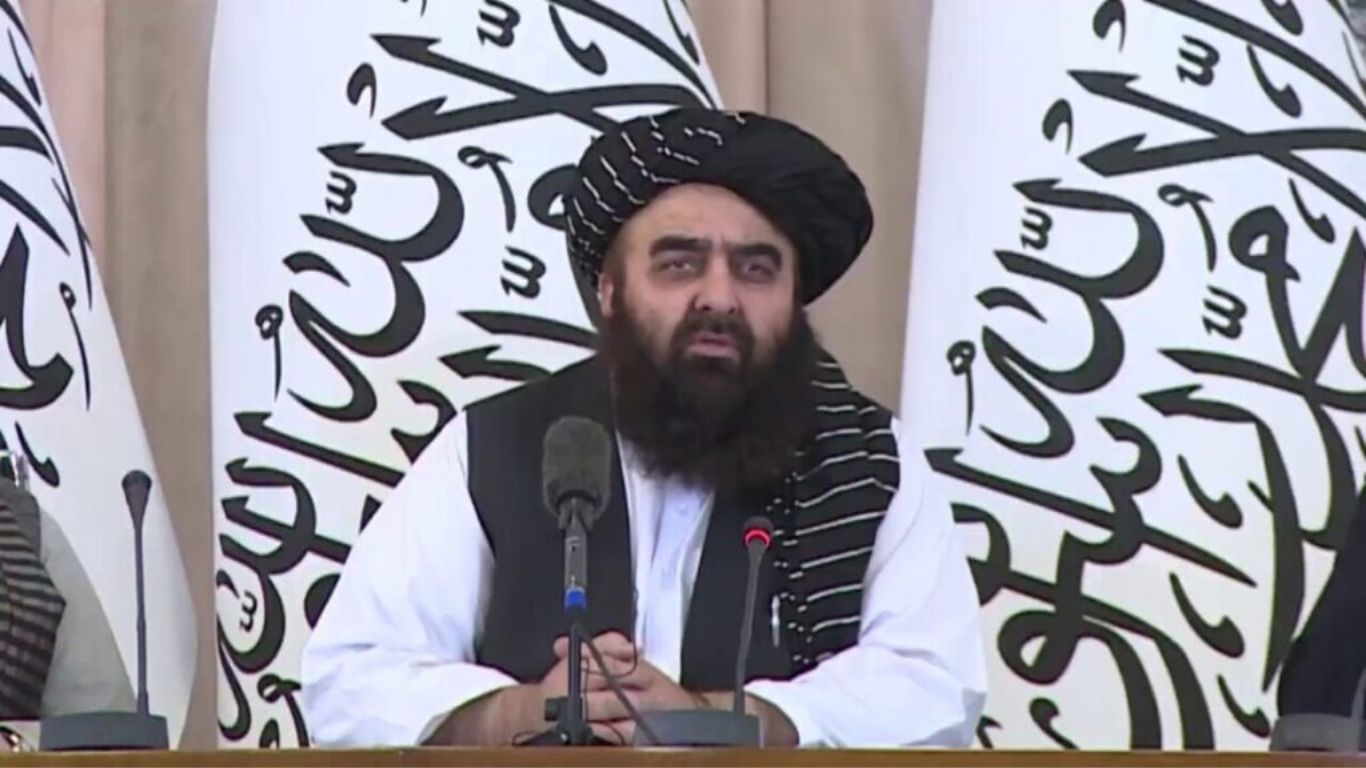
India faces a diplomatic crucible as Taliban Foreign Minister Amir Khan Muttaqi plans an unprecedented visit. Will Delhi move from engagement to recognition?
High-Stakes Visit, A Diplomatic Turning Point
Between October 9-16, 2025, India is set to host Amir Khan Muttaqi, the Taliban’s acting foreign minister, after the United Nations Security Council granted a temporary travel exemption. This will be the first official visit to New Delhi by a senior Taliban leader since the group seized power in Afghanistan in August 2021.
Such a development ignites intense speculation: is India finally poised to recognise the Taliban government? Or is this visit simply a tactical progression in a policy of cautious engagement? This op-ed dives into what this gesture means and what India is likely to do.
Engaging Without Endorsing: India’s Current Stance
India has not officially recognised the Taliban regime. Instead, New Delhi has maintained a “technical mission” in Kabul (re-opened in 2022) largely for humanitarian, development, and aid coordination.
This posture reflects a dual strategy:
- Humanitarian outreach: India has delivered aid after natural disasters in Afghanistan and continues supporting medical, infrastructure, and refugee welfare efforts.
- Strategic caution: Maintaining distance in formal diplomatic recognition due to concerns over terrorism, women’s rights, internal stability in Afghanistan, and international legal obligations.
Thus far, India’s policy has been one of engagement without endorsement.
What Muttaqi’s Visit Symbolises: More Than Just a Meeting
Even without recognition, this visit (if carried out) marks a symbolic breakthrough:
- It represents India granting a certain level of legitimacy to the Taliban leadership, at least at the diplomatic engagement level.
- It signals India’s readiness to recalibrate its Afghanistan policy in light of reality on the ground, balancing moral concerns and strategic interests.
- It may serve to hedge against the influence of other regional players (Pakistan, China, Iran, Russia) vying for leverage in Afghanistan.
The UN’s travel ban exemption underscores the international dimension: recognition isn’t merely a bilateral act, but one enmeshed in global norms, UN sanction regimes, and regional geopolitics.
The Key Factors Weighing Against Formal Recognition
Despite all this, several powerful constraints suggest that formal recognition is unlikely at least in the immediate future.
- International and Legal Constraints
- The Taliban remain under UN sanctions (travel bans, asset freezes) per multiple resolutions, including Resolution 1988 (2011). Any formal recognition would risk conflicting with these obligations.
- India, as a responsible global actor, must consider its reputation, WTO, diplomatic alignment with Western nations, and international norms around human rights and counterterrorism.
- Domestic Political Sensitivities
- India’s electorate and political spectrum are divided on how to view the Taliban: concerns about women’s rights, minority treatment, terror safe havens, and the ideologically rigid religious policies of the Taliban persist. Recognition could provoke internal backlash.
- The memory of India’s investments in Afghanistan’s earlier democratic / republic governments also weighs heavily; many are wary of appearing to reward a group that overthrew them.
- Security Concerns & Regional Dynamics
- Terrorism emanating from Afghan soil, support, or harbor of groups hostile to India is always a concern. Formal recognition might reduce India’s ability to pressure the Taliban on these issues.
- Pakistan’s relationship with the Taliban is fraught and complex also imposes an external constraint. India may be cautious so as not to inflame regional tensions.
- Precedent & International Recognition Landscape
- As of now, very few states formally recognise the Taliban. Russia is reported to have done so. But global diplomatic recognition is sparse, and establishing recognition too early could isolate India in certain multilateral forums.
Why India Might Lean Toward De Facto Recognition Instead
Given the constraints, India might opt for a tiered or de facto recognition approach rather than declaring formal recognition. Some forms this could take:
- Upgrading diplomatic mission status (technical mission → embassy, or giving Taliban envoys more formal accreditation)
- Expanding consular and trade engagements, especially via Chabahar Port and humanitarian aid.
- Signing MOUs or agreements that normalise relations in specific sectors (health, trade, education) while avoiding full political recognition.
- Incremental trust building, conditioned on the Taliban meeting certain international human rights and counterterrorism expectations.
These actions would allow India to stabilise relations without fully endorsing all aspects of Taliban governance.
What India Gains – Strategic Incentives
Why would India consider these steps? Several compelling incentives:
- Regional stability and counterterrorism: A stable Afghanistan reduces the threat of cross-border militancy. India has vital strategic interests in ensuring Afghan territory is not used against India.
- Geoeconomic leverage: Afghanistan is central to various regional connectivity projects, trade routes, mineral resources, and strategic access through Iran’s Chabahar Port.
- Balancing regional influence: With China’s increasing presence in Afghanistan, India likely seeks to ensure it is not relegated to the sidelines.
- Humanitarian legacy & international image: India’s aid efforts, cultural ties, and historical involvement in Afghanistan give it a soft-power claim. Engaging more openly could reinforce that image.
Recognition Vs. Engagement: What Is Realistic?
Given all of the above, what is most plausible?
- India is very likely to continue or deepen engagement with the Muttaqi visit, humanitarian aid, limited agreements, and dialogues.
- India is unlikely in the immediate term (next few months to a year) to formally recognise the Taliban government. Full recognition would require satisfying multiple political, legal, and strategic preconditions and would risk diplomatic costs.
In many ways, India will maintain a posture of conditional engagement: engaging as much as possible short of formal recognition.
A Diplomatic Pivot, Not Yet a Full Declaration
Amir Khan Muttaqi’s upcoming trip to Delhi is a crucial milestone not for recognition per se, but as a signal of India’s adaptive diplomacy. It reflects a shift: from outright distance to careful approach; from refusal to accept reality to trying to shape it.
Recognition is not a binary act at one moment; it is a process. India appears to be choosing to move slowly, responsively, with cautious optimism. The visit might bring India one step closer to acknowledging the Taliban’s de facto control, but India is unlikely, at least now, to cross the threshold of formal recognition.
India may yet reserve the right to define its own terms of acceptance, demanding stability, rights protection, and counterterrorism guarantees before it gives the Taliban government the diplomatic imprimatur of recognition. But for now, India seems ready to talk, not commit.




