

Opening Context
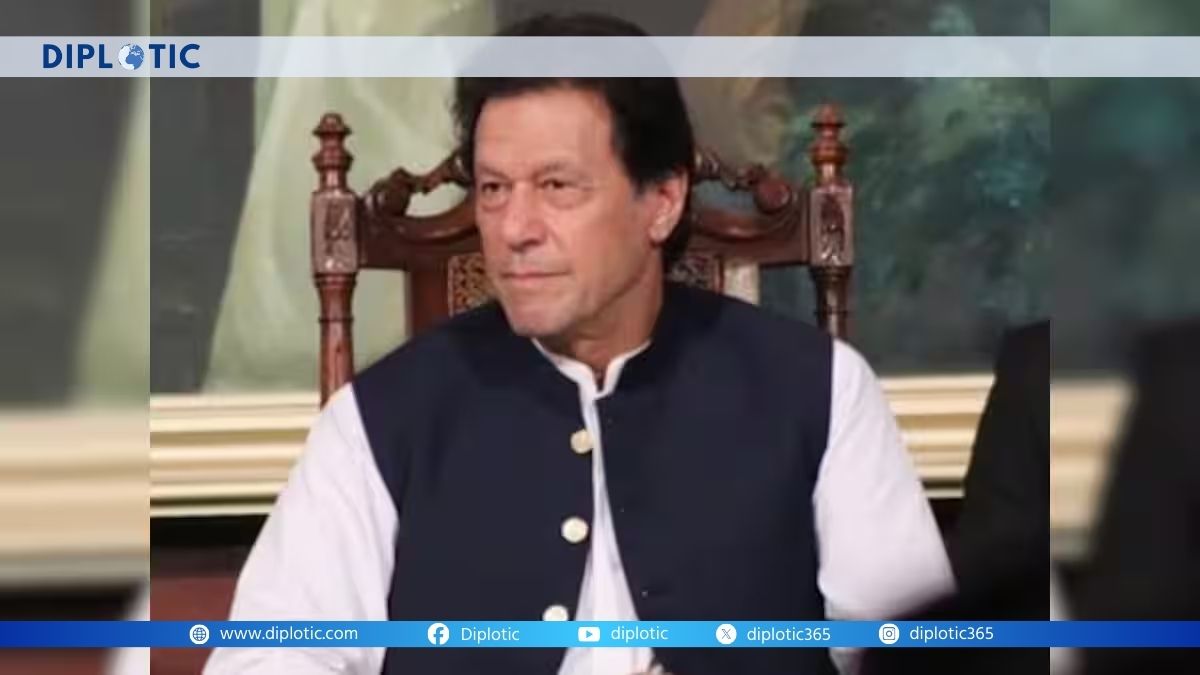
Rumors about the death of former Pakistan Prime Minister Imran Khan spread online with unusual speed, creating fear and confusion across Pakistan and beyond. The trigger was a violent incident outside Adiala Jail, where police allegedly assaulted Khan’s sisters as they tried to meet him. The brutality of the attack, combined with the government’s clampdown on access to the jailed leader, raised questions about his safety and the state’s intentions. In a country where political secrecy often breeds speculation, these events have opened a new chapter of mistrust. This article investigates the sources of the rumors, the political tension surrounding Khan’s imprisonment, and why the episode reflects deeper unrest within Pakistan’s power structure.
Section 1: Why Did Imran Khan’s Death Rumors Spread So Quickly?
Death rumors about political leaders in Pakistan are not new, but the speed and intensity of the claims surrounding Imran Khan require closer examination. Khan has been in prison since 2023 under multiple charges, and limited transparency around his daily condition has created fertile ground for speculation. Over the last few months, he has repeatedly raised concerns about restricted access to lawyers, party members, and even family. This pattern has created a vacuum of information that many fear is deliberate.
The rumors flared after a disturbing incident outside Adiala Jail, when police violently dispersed Khan’s sisters during their attempt to meet him. Videos and eyewitness accounts described a heavy-handed operation in which the area’s streetlights were switched off before officers moved in. Khan’s sister, Noreen Niazi, later detailed how she was dragged across the road despite not obstructing public movement or violating the law. Such accounts, coming from a family traditionally granted access to imprisoned leaders, signaled a breakdown of normal procedure.
Once these details surfaced, users from Pakistan and Afghanistan amplified claims that Khan had already been killed inside the jail. The claims spread through message groups and fringe channels that often mix real information with rumor. While PTI members quickly denied the reports, the environment of secrecy made their reassurances less convincing to many. Past cases in Pakistan—where political detainees suffered mistreatment, delayed medical care, or restricted visits—shaped public expectations and made the rumors believable.
Another factor was the government’s extended ban on meetings with Khan. For more than a month, no relative, party official, or even the Khyber-Pakhtunkhwa chief minister could meet him. Seven attempts by the chief minister were blocked without explanation. Khan himself has claimed that jail management operates under a military officer’s direction, adding another layer of sensitivity and suspicion. In such a climate, the slightest irregularity can trigger national anxiety.
The problem is not simply misinformation but a long-standing crisis of trust between the Pakistani public and the state. Without regular health updates, verified communication, or independent oversight inside the prison, rumors will continue to fill the gap. In this sense, the death rumors may reveal more about Pakistan’s political culture than about Khan’s actual condition.
Section 2: The Assault on Khan’s Sisters and the Rising Tension Outside Adiala Jail
The police assault on Khan’s sisters was not an isolated incident, but part of a broader pattern of force used against PTI supporters since 2023. Still, the level of violence shocked many observers. Noreen Niazi, at 71, suffered visible injuries after being seized by her hair and dragged on the road. Other women present were slapped, pushed, and detained. These details came not from opposition leaders alone but from multiple individuals who witnessed the scene.
The timing of the assault was unusual. It occurred in the evening, shortly after the lights were turned off in the surrounding area—a tactic sometimes used in Pakistan to manage or disperse political gatherings without cameras capturing the full extent of force. The sisters insisted they neither blocked roads nor engaged in unlawful protest. Their principal objective was a meeting with Khan to check his health after weeks of silence.
The immediate aftermath saw a massive crowd gather outside Adiala Jail. Thousands of PTI supporters blocked roads, chanted slogans, and demanded a transparent investigation into the attack. Many citizens saw the assault not only as a violation of individual rights but as a sign of the state’s growing nervousness about Khan’s public support. PTI leaders argued that if senior women from Khan’s own family were not safe from police excesses, ordinary protesters had even fewer protections.
This incident also renewed concerns about Pakistan’s democratic climate. The right to peaceful assembly, family visitation in prisons, and protection from arbitrary force are fundamental standards in any political system. The government’s silence on the assault added to public frustration. There was no early statement from Punjab officials, no suspension of officers involved, and no explanation for the ban on meetings. Instead, the security presence around Adiala Jail increased.
Supporters framed the assault as part of a three-year pattern of suppressing PTI through arrests, crackdowns on rallies, and restrictions on media coverage. Critics of the government argue that physical pressure on Khan’s family signals a strategy designed to break the morale of the party’s leadership. Whether or not this is the intention, the effect was to create greater instability outside the prison walls.
The assault also changed the nature of the protests. What began as a simple attempt by a family to check on a jailed relative turned into a national debate about state overreach. For many Pakistanis, it was the moment when frustration crossed into alarm: if this can happen openly at one of the country’s most closely monitored jails, what might be happening inside?
Section 3: Government Restrictions, Political Secrecy, and Pakistan’s Long History of High-Pressure Politics
The government’s decision to ban meetings with Imran Khan for more than a month is central to understanding the panic that followed the assault. In Pakistan, even inmates facing severe legal charges typically receive regular family visits unless there is a specific and publicly stated security concern. The absence of such justification raised questions. Officials declined to provide a timeline for when the ban would be lifted, and the restrictions continued even for senior political figures like the Khyber-Pakhtunkhwa chief minister.
This secrecy echoes past episodes in Pakistan’s political history when leaders under custody were held in isolation. From Zulfikar Ali Bhutto’s final days in Rawalpindi to the treatment of various opposition leaders under military regimes, political imprisonment in Pakistan has often involved information gaps that generate tension. Even in more recent years, the country’s justice system has been criticized for opaque procedures when handling high-profile political cases.
Khan’s situation is further complicated by his long-standing conflict with Pakistan’s power centers. Since his ouster in 2022, his relationship with military leadership has shifted from partnership to open confrontation. After 2023, his court cases multiplied, party leaders were arrested, and his communications were controlled. The state’s narrative focused on maintaining order, but critics argue the measures reflect political fear rather than national security concerns.
The military remains Pakistan’s most influential institution, and its role in Khan’s legal fate has been widely debated. Khan’s supporters believe the restrictions on him are not only about security but about removing any possibility of political resurgence. Meanwhile, critics outside PTI argue that Khan’s confrontational approach with the establishment has contributed to a cycle of retaliation that now shapes Pakistan’s entire political atmosphere.
When information is restricted in such an environment, rumors become a political force. The death rumors, while false, reflect a deeper anxiety: that political transitions in Pakistan often happen behind closed doors and can shift the country’s future overnight. The fact that these rumors gained traction so quickly speaks to the current level of uncertainty within the state and among citizens.
Section 4: What the Episode Reveals About Pakistan’s Current Political Climate
The assault outside Adiala Jail and the rumors that followed reveal a country facing a wider crisis of governance. Pakistan is struggling with economic pressure, rising public distrust, and deep divisions across its political class. The treatment of Khan’s family, the lack of access for senior officials, and the silence from authorities all demonstrate the fragile nature of Pakistan’s democratic institutions at the moment.
For many Pakistanis, the events highlight the gap between state power and public accountability. Institutions appear more focused on controlling narrative than providing transparent governance. The cycle of confrontation between political parties and the establishment leaves little room for trust-building. Every act of force becomes a political signal, and every rumor becomes a warning.
This environment weakens Pakistan’s international standing too. Reports of political repression, restrictions on jailed leaders, and public unrest complicate the country’s diplomatic efforts at a time when economic recovery depends on external confidence. The lack of clarity around Khan’s condition also distracts the political system from its larger responsibilities, including governance and economic management.
Ultimately, the death rumors surrounding Imran Khan are not only about him. They are a reflection of Pakistan’s current political structure, where secrecy fuels speculation and force replaces dialogue. Until the state establishes transparent procedures, regular communication, and accountable policing, such episodes will continue to unsettle the public.
The events outside Adiala Jail remind Pakistan that political stability cannot be built on silence. The questions raised by the assault remain unanswered, and the demand for clarity—about Khan’s condition, the meeting ban, and the identity of those responsible—will only grow. As Pakistan moves into another uncertain political season, the country must decide whether it will confront its internal tensions with openness or allow secrecy to deepen the divide.




