

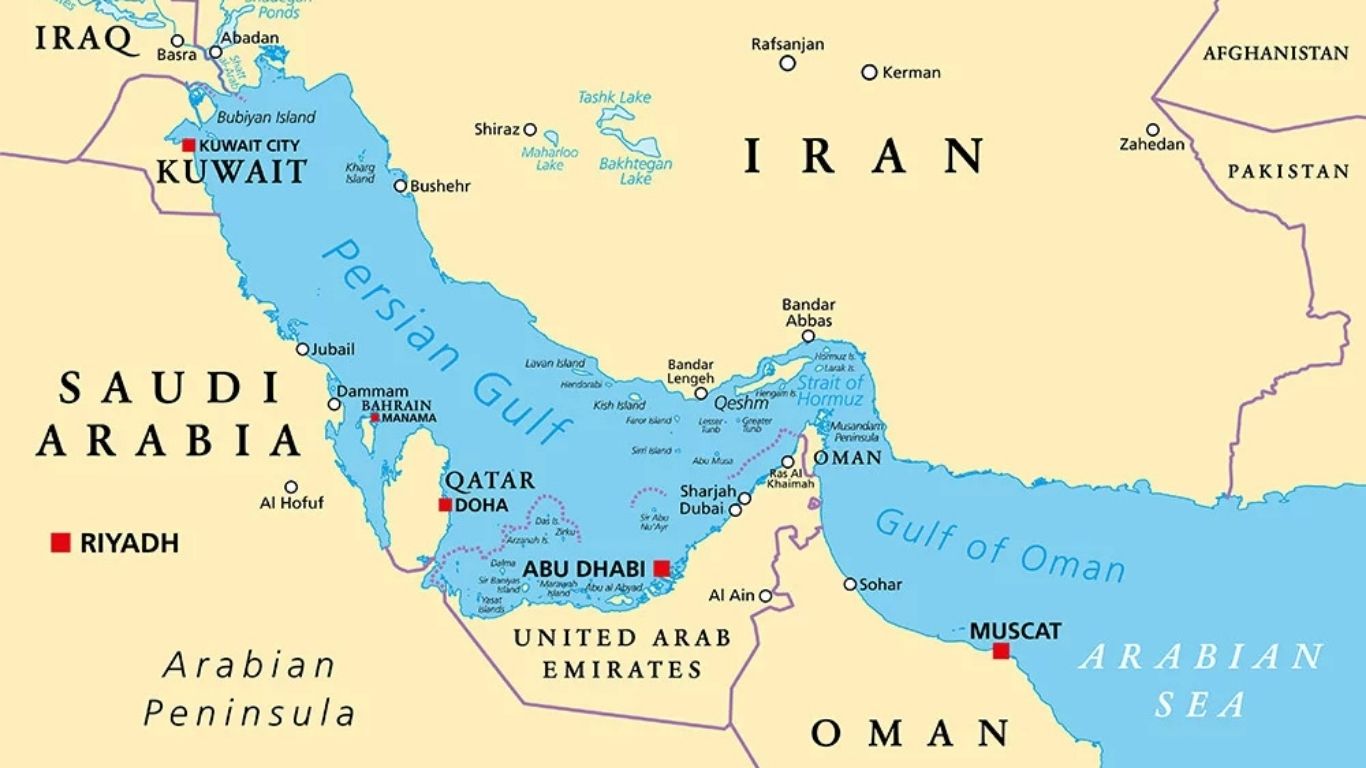
Despite threats to shut the world’s most vital oil chokepoint, experts warn that Tehran stands to suffer the most from disrupting the Strait of Hormuz.
In the wake of unprecedented U.S. airstrikes targeting Iran’s nuclear facilities at Fordow, Natanz, and Isfahan, Tehran finds itself at a geopolitical crossroads. As Iranian officials weigh their next move, speculation is growing around potential retaliation including a high-risk option: disrupting maritime traffic through the Strait of Hormuz.
The Iranian parliament recently passed a symbolic resolution endorsing action in the strategic waterway, mirroring the tactics used by Yemen’s Houthi movement in the Red Sea. However, the international community from Washington to Brussels has issued stern warnings against escalating tensions by targeting global shipping lanes.
While closing the Strait of Hormuz might seem like a pressure tactic to hit back at Western powers, analysts agree on one critical point: such a move could backfire catastrophically on Iran itself.
The Strait of Hormuz: The World’s Energy Lifeline
At just 33 kilometers wide at its narrowest point, the Strait of Hormuz punches far above its geographic weight. This narrow passage between Oman and Iran handles approximately 20 million barrels of oil per day nearly a fifth of global oil output and about a third of the world’s liquefied natural gas (LNG).
It’s a lifeline not only for Arab Gulf nations but also for Iran, whose own economy depends heavily on oil exports that transit through this very strait.
Iran’s Economic Boomerang
Despite the ongoing conflict, Iran has not ceased oil shipments through Hormuz, underscoring its reliance on the waterway. Roughly 90% of Iranian oil exports go to China, a critical economic and geopolitical partner. Any disruption would not only choke Iran’s revenue stream but also strain ties with Beijing.
“Iran has not stopped exporting its own oil via Hormuz since the conflict began, and these are sources of revenues for Tehran,” maritime analyst Noam Raydan emphasized.
Moreover, 84% of oil passing through Hormuz is destined for Asian markets, making India, Japan, South Korea, and China particularly vulnerable to any disruption. India’s energy security is especially exposed nearly 40% of its crude oil flows through the strait.
No Safety Valve for Tehran
Unlike Saudi Arabia and the UAE who have established overland pipelines like the East-West pipeline and the Fujairah export terminal Iran lacks a robust alternative route. Although it constructed the Goreh-Jask pipeline and the Jask terminal on the Gulf of Oman, they have been inactive since 2021 and lack the scale to serve as a viable substitute.
In contrast, Saudi Arabia and the UAE can bypass the Strait entirely, giving them strategic depth that Iran simply doesn’t possess.
Global Fallout vs. Domestic Collapse
Analysts agree that a full closure of the Strait is improbable. While Iran may engage in limited harassment of shipping or use the threat strategically, a total shutdown would invite severe retaliation not just from the United States, but potentially from European, Asian, and even neighboring Gulf nations.
Ulrichsen, a Gulf affairs expert, notes: “This is a standard threat that has been made by Iranian officials for over 40 years. But the political and economic cost of following through is extraordinarily high.”
Energy economist Shokri echoes this view: “Tehran may continue to use threats or limited disruptions as strategic leverage, but it is likely to avoid actions that could provoke harsh responses from powerful regional and global actors.”
Conclusion: Strategic Brinkmanship or Self-Destruction?
Iran’s threats to block the Strait of Hormuz are designed to rattle nerves and gain leverage, but the move could be economically suicidal. With no viable export alternative and its closest allies dependent on the same waters, closing the strait could devastate Tehran’s own economy more than it would damage its adversaries.
In the high-stakes chess game of Middle Eastern geopolitics, Iran may find that disrupting the Strait of Hormuz is a self-check a move that corners its own king while giving little advantage on the global board.




