

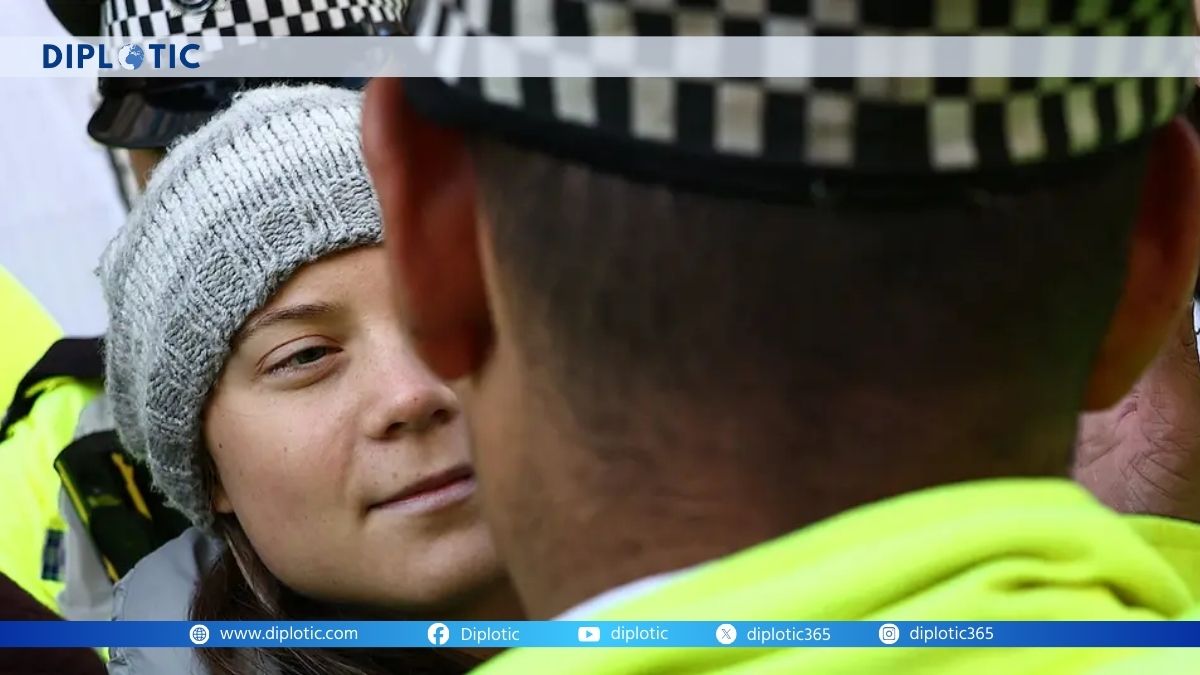
On December 23, 2025, Swedish climate activist Greta Thunberg joined a small protest in London’s financial district. The event supported prisoners linked to Palestine Action, a group the UK government banned as a terrorist organization earlier that year. Thunberg held a sign reading “I support the Palestine Action prisoners. I oppose genocide.” Police arrested her under Section 13 of the Terrorism Act 2000 for displaying support for a proscribed group. She was released on bail the same day and must return in March 2026. This case raises questions about protest rights, terrorism definitions, and free speech limits. It marks Thunberg’s highest-profile arrest in the UK amid her shift toward pro-Palestinian causes.
The protest targeted offices of Aspen Insurance, accused by organizers of covering Elbit Systems, an Israeli defense firm. Two others faced arrest for alleged damage with paint and hammers. Thunberg arrived later and focused on the sign. City of London Police confirmed the arrest without naming her initially, following standard rules. Her lawyer called the laws “farcical.” Background shows Thunberg gained fame through climate strikes starting in 2018. She has faced prior detentions, including a cleared UK public order case and expulsion from Israel after a Gaza aid flotilla. Why this charge? The sign directly referenced Palestine Action prisoners, crossing the legal line for support.
What Led to Palestine Action’s Terrorist Designation?
The UK proscribed Palestine Action in July 2025 under the Terrorism Act. The group uses direct action, like breaking into facilities and damaging property, to disrupt arms supplies to Israel. Key incidents included vandalizing RAF aircraft and Elbit sites, causing millions in damage.
Home Office cited risks to national security. Critics, including UN experts and rights groups, called it a misuse of laws, arguing property damage does not equal terrorism under international standards. Parallel views note it as the first proscription of a domestic direct-action protest group. Related angles: Over 2,000 arrests followed for related support, often placards. A judicial review challenge failed initially. Why controversial? It criminalizes membership, funding, or even reckless encouragement of support. Hunger-striking prisoners demand bail, fair trials, and de-proscription.
How Did the Arrest Unfold and What Followed?
Video from organizers shows Thunberg sitting with the sign as officers approach. They ask her to move; she complies calmly before arrest. Released hours later, she issued a statement backing prisoners’ demands to stop what they call genocide.
Police bailed her pending investigation. The protest tied to ongoing hunger strikes by detained activists. Background: Palestine Action formed in 2020 to target Elbit and similar firms. Related points: Proscription sparked mass arrests at solidarity events. Thunberg’s involvement highlights celebrity draw to causes. Why quick release? No violence alleged; bail common in such cases.
What Broader Issues Does This Raise for Protest Rights?
The incident spotlights tensions between security and expression. Section 13 bans displaying items arousing reasonable suspicion of support for banned groups. Critics say it chills speech, especially on Palestine.
Parallel insights: Similar arrests hit thousands since the ban, often for signs. Rights groups argue it conflates activism with terror. Related angles: Thunberg’s case draws global attention, amplifying debate. UN rapporteurs criticized the proscription as out of step with democracies. Why scrutiny? High-profile figure like Thunberg tests law’s application.
How Might This Affect Activism and Policy Ahead?
Thunberg faces possible charge, though outcomes vary—some prior cases dropped. The event pressures review of proscription and hunger strikers’ treatment.
Linking past to present: UK has long balanced protest with order, but recent laws expand restrictions. Broader implications touch free speech in polarized conflicts. As cases proceed, they may clarify limits on solidarity expressions. For activists, it signals caution; for policymakers, a test of proportionality in counter-terror tools. The arrest underscores ongoing debates over dissent in democratic societies.




