

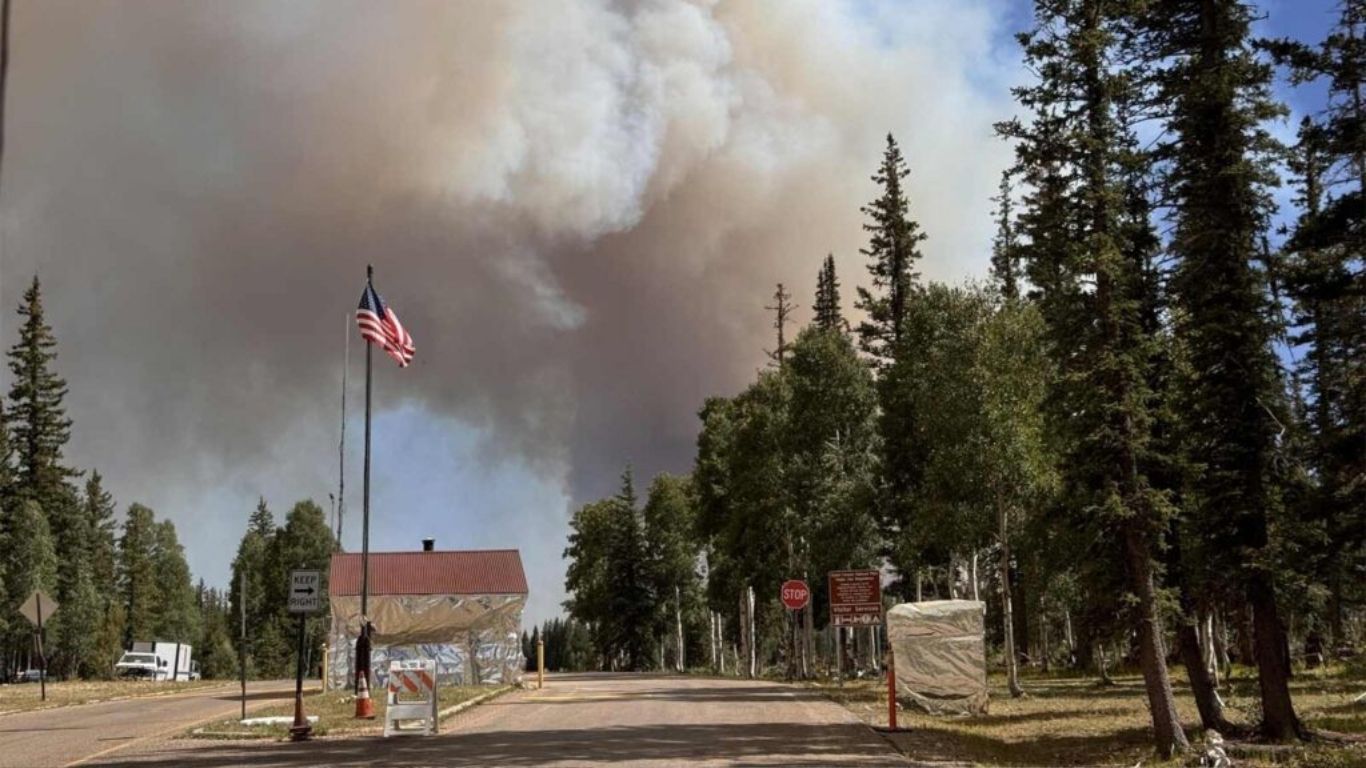
The Dragon Bravo Fire at the Grand Canyon has exploded into a megafire, burning over 112,000 acres and generating its own dangerous weather patterns. Firefighters face extreme heat, erratic winds, and fire-created thunderstorms as containment efforts struggle.
The iconic Grand Canyon is at the heart of a growing wildfire emergency as the Dragon Bravo Fire, burning along the North Rim, has escalated into a megafire, surpassing 112,000 acres in just under a month. What began as a controlled burn after a July 4th lightning strike has now become the largest active wildfire in the lower 48 states, tripling in size since early July and creating its own weather systems.
The blaze reached megafire status defined by wildfires exceeding 100,000 acres earlier this week. It has since doubled in size within days, driven by bone-dry brush, extreme heat, and relentless gusty winds, according to the National Interagency Fire Center (NIFC). As of Friday morning, only 8% containment had been achieved, a sharp decline from the 26% containment reported last weekend.
Dragon Bravo Fire Generates Pyrocumulus Clouds
One of the most alarming aspects of the Dragon Bravo Fire’s growth is its ability to generate its own weather phenomena. For at least seven consecutive days, pyrocumulus clouds commonly known as fire clouds have formed over the blaze.
“These clouds are caused when intense heat from the wildfire forces air to rise rapidly, cooling and condensing the moisture into towering clouds,” explained fire information officer Lisa Jennings. If the fire’s intensity continues, these clouds could evolve into pyrocumulonimbus storms fire-induced thunderstorms capable of producing lightning, wind gusts, and even fire-generated tornadoes.
This self-sustaining fire weather cycle poses a significant threat, as lightning strikes from these clouds can ignite new fires or reignite areas already suppressed by crews. The chaotic winds produced by these storm clouds further complicate firefighting efforts, often causing unpredictable fire spread.
Why This Fire Is Growing Out of Control
The explosive expansion of the Dragon Bravo Fire can be traced to a perfect storm of hostile environmental conditions. According to the latest incident updates:
- Bone-dry fuel sources, including shrubs and brush, have been dehydrated to a level drier than kiln-dried lumber, making them instant tinder.
- Persistent extreme heat warnings remain in effect through Tuesday, with temperatures soaring well above seasonal norms.
- Gusty winds of 20-25 mph have fanned the flames throughout the week, with forecasts predicting 30 mph gusts early next week.
Fire crews, led by Section Chief Craig Daugherty, have managed to control some portions of the fire’s perimeter. However, the northern edge and southwestern front remain areas of major concern as the blaze continues its aggressive march.
Historic Losses
The Dragon Bravo Fire has not only consumed wilderness but also inflicted significant structural damage. In mid-July, the fire razed the historic Grand Canyon Lodge located on the North Rim, a beloved landmark for visitors. Additionally, 70 other structures, including visitor centers and cabins, have been reported destroyed.
The fire’s rapid and erratic behavior erased containment gains made earlier in the month. Officials had hoped for a controlled burn strategy to clear out hazardous underbrush, but shifting weather patterns rendered this tactic ineffective as the fire quickly grew beyond initial projections.
A Growing Wildfire Crisis in the U.S.
While megafires represent just 3% of all wildfires in the United States, they are responsible for burning the majority of total acreage each year. The Dragon Bravo Fire serves as a stark example of how climate conditions, fire management strategies, and natural fire behavior can converge to create devastating wildfire events.
As the NIFC emphasized, “We are in the heart of summer and the heart of the fire year.” Wildfire season in the western United States is expected to persist through September, with Arizona, California, and other western states remaining hotspots for wildfire outbreaks.
Challenges Ahead
Despite slight chances of showers and isolated thunderstorms, experts warn that any rainfall will likely be negligible in quelling the inferno. Moreover, these storm systems could introduce gusty winds and lightning, further exacerbating fire behavior rather than aiding containment efforts.
Firefighters face an uphill battle, as forecasts predict no significant weather relief in the immediate future. The combination of extreme heat warnings, bone-dry vegetation, and unstable wind patterns makes for an incredibly volatile and dangerous firefighting environment.
Public Safety & Environmental Impact: What’s at Stake
As the Dragon Bravo Fire continues to burn unchecked, air quality in surrounding areas has deteriorated, posing health risks to vulnerable populations. Tourists and residents are advised to avoid the North Rim region, with road closures and evacuation orders remaining in effect for areas under imminent threat.
Environmental specialists warn that the ecological impact on Grand Canyon’s diverse habitats could be profound. The destruction of forests, wildlife habitats, and infrastructure adds another layer of long-term recovery challenges, even after the fire is eventually contained.
A Wake-Up Call for Wildfire Preparedness
The Grand Canyon Dragon Bravo Megafire is a sobering reminder of the growing intensity of wildfire seasons across the U.S. As megafires become more frequent, robust fire management strategies, enhanced forecasting, and greater public awareness are critical to mitigating future disasters.
Firefighters continue to wage a relentless battle against a fire that is not only defying containment but is also literally changing the weather above it.




