

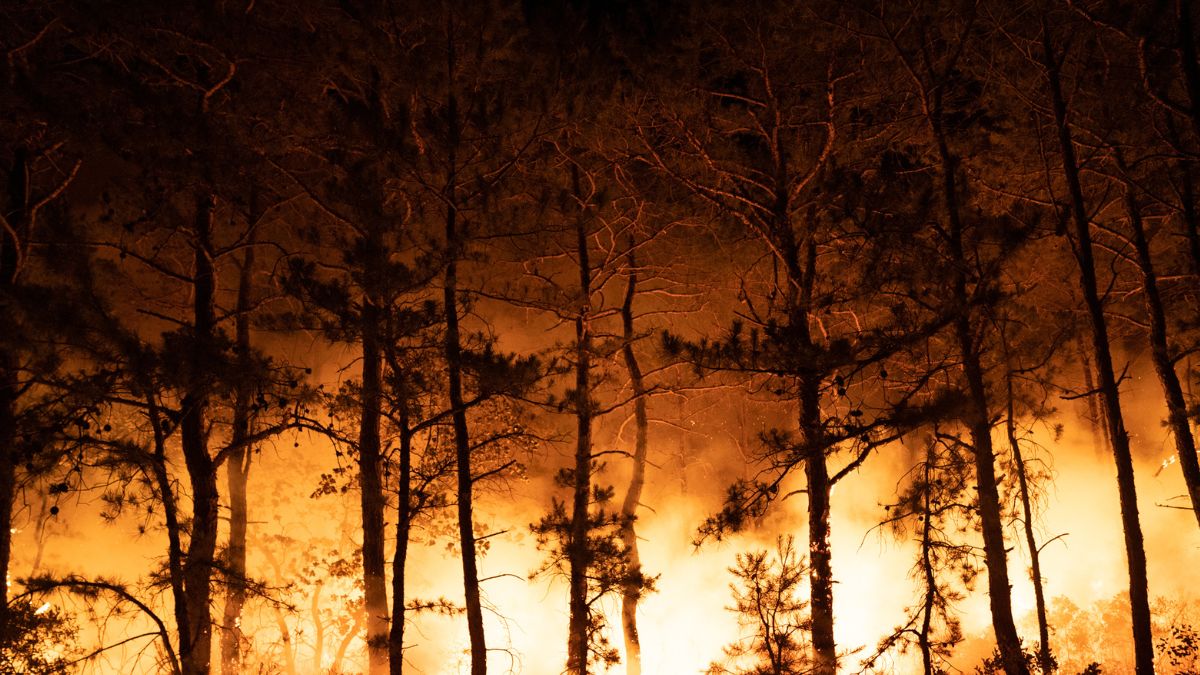
A Rapidly Escalating Wildfire Crisis
The Gifford Fire, which began on August 1, 2025, near Highway 166 in the Los Padres National Forest, has surged to 65,062 acres by August 4, 2025, with only 3% containment, making it California’s second-largest wildfire of the year, per Cal Fire. Spanning Santa Barbara and San Luis Obispo counties, the blaze has forced evacuations across nearly 600 square miles, closed a 60-mile stretch of Highway 166, and threatened 460 structures. Fueled by dry vegetation, low humidity, and warm weather, the fire’s aggressive spread has drawn comparisons to the Madre Fire, which scorched 80,779 acres in the same region earlier this summer, per The New York Times.
As of August 4, 1,091 firefighters, supported by 51 engines, 16 bulldozers, and 32 hand crews, are battling the blaze under a unified command of Los Padres National Forest, Cal Fire, and Santa Barbara County Fire, per GV Wire. Three injuries have been reported: a civilian hospitalized with burns and two contractors injured in a utility vehicle rollover, one requiring helicopter rescue, per ABC News. @SBCFireInfo on X reported, “#GiffordFire Update: 65,062 acres, 3% contained, 360 residences threatened.”
Fire Behavior and Environmental Impact
The Gifford Fire began as multiple small fires along Highway 166, approximately 30 miles northeast of Santa Maria, possibly sparked by a motorist driving on a rim with a flat tire, though the cause remains under investigation, per The Santa Barbara Independent. Dry fuels, steep terrain, and hot weather have driven its rapid expansion, with @MysticalDr16900 on X noting, “Critical fire conditions are expected today with gusts between 15-25mph and low humidity levels.”
Smoke from the fire has degraded air quality in Los Angeles, Ventura, and Kern counties, prompting an air quality alert for Cuyama and a watch for Santa Barbara County, per IQAir. Robbie Munroe, a National Weather Service meteorologist, warned SFGATE of worsening conditions: “Building heat later this week, especially Thursday and Friday, could lead to plume-dominated fire behavior, creating erratic and dangerous fire activity.”
The fire’s proximity to the Madre Fire’s burn scar raises concerns about overlapping ecological damage, though the earlier fire was declared fully contained, per Cal Fire. The Los Padres National Forest’s rugged terrain complicates suppression efforts, with aircraft grounded due to poor visibility, per @NationalWldfire on X.
Community Impact and Response
Evacuation orders cover zones like LPF-015, LPF-016, and SLC-337 in San Luis Obispo County and SBC-169A in Santa Barbara County, with warnings for additional areas, per KSBY. Temporary shelters are open at Benjamin Foxen Elementary School and Cuyama Valley Family Resource Center, with animal shelters accepting pets and livestock, per Santa Barbara County Office of Emergency Management. Highway 166 remains closed from Highway 101 to New Cuyama, disrupting rural communities like Cuyama (population ~600), per The Mercury News.
Local sentiment on X reflects urgency, with @engineco16 noting milder fire activity overnight but warning of shifting winds, and @HotshotWake sharing images of intense flames. Residents are urged to monitor ReadySBC and ReadySLO for updates. @LosPadresNF reported 818.8 acres mapped initially, but the fire’s growth to 65,062 acres underscores its ferocity.
Challenges and Future Outlook
The Gifford Fire’s low containment and rapid growth signal a prolonged battle. Hot, dry conditions and potential “sundowner” winds by dusk could exacerbate the situation, per Spectrum News. California’s 2025 fire season, already above normal due to a dry spring and high grass fuel loads, faces further strain with federal firefighting budget cuts, per The New York Times. The state’s largest 2024 fires—Park (429,603 acres) and Borel (59,288 acres)—highlight the season’s severity.
Firefighters are focusing on structure protection and containment lines, but the terrain and weather pose significant hurdles. @InfernoWatch24 on X reported, “More than 1,000 personnel are engaged, supported by helicopters and air tankers.” If the fire moves east, it may enter the Madre Fire’s burn scar, potentially slowing spread but complicating ecological recovery, per GV Wire.
What’s Next?
The Gifford Fire’s trajectory depends on weather and containment efforts. With heat building midweek, the risk of erratic fire behavior grows, per SFGATE. Residents should stay vigilant, using Cal Fire’s incident page and InciWeb for updates. The fire’s impact on air quality and rural communities underscores the need for preparedness, with IQAir recommending KN95 masks and air purifiers for smoke protection. As California braces for a brutal fire season, the Gifford Fire tests the resilience of firefighting resources and local communities.




