

Oh, the grand promises of free trade—economists swore it would shower Europe with riches, like some magical fountain of prosperity. Instead, the continent got a leaky bucket, dripping jobs and growth into distant lands while locals scratched their heads over rising bills and empty factories. As of August 2025, with the eurozone barely limping along at a 0.1% quarterly GDP bump in Q2, it’s time to face facts: free trade’s golden ticket turned out to be a dud. Maybe borrowing a page from Donald Trump’s tariff playbook isn’t such a wild idea after all. This isn’t about building walls but fixing the holes in Europe’s economic boat. Let’s sift through the wreckage, toss in some fresh numbers, and ponder if re-industrialization could pull the old world out of its slump.
The Grand Theory That Fell Flat
Back in the day, free trade sounded like a sure bet. Tear down barriers, let goods flow, and watch everyone win—or so said the textbooks. The theory of comparative advantage, cooked up by David Ricardo way back in 1817, argued that countries should stick to what they’re good at and trade the rest. For Europe, that meant ditching low-cost manufacturing for fancy services like finance and tech, while cheaper spots in Asia cranked out the widgets.
It kicked off with the General Agreement on Tariffs and Trade in 1947, morphing into the World Trade Organization in 1995. Europe jumped in with both feet, slashing tariffs through the EU’s single market and deals like NAFTA’s European cousins. By the 1990s, global trade exploded, with volumes tripling from 1980 levels, per World Bank data. Proponents cheered: more efficiency, lower prices, booming exports.
But here’s the sardonic twist—reality didn’t get the memo. Instead of a prosperity surge, Europe’s growth sputtered. From the post-war boom averaging 4-5% annual GDP hikes in the 1960s, it dipped to under 2% by the 2000s. Fast-forward to 2025: Eurostat reports Q2 GDP up a measly 0.1% in the euro area and 0.2% in the EU, following a 0.6% blip in Q1. The European Commission’s Spring 2025 forecast pegs full-year growth at 1.1% for the EU and 0.9% for the euro area, barely enough to keep the lights on. It’s whimsical to imagine economists patting themselves on the back while factories shutter—almost like they predicted the migration but forgot the rebound.
Industry’s Great Escape to Asia
The shift hit like a slow-motion train wreck. Manufacturing jobs fled to low-wage havens, mainly China and Southeast Asia. Europe’s trade deficit with China ballooned to €305.8 billion in 2024, up from €297 billion the year before, as cheap imports flooded in while exports struggled. By early 2025, monthly deficits hovered around €27-29 billion, per Eurostat. Foreign direct investment poured eastward: China sucked in over $1 trillion from Europe since 2000, building factories that once hummed in Germany or Italy.
Theory said Europe would pivot to high-skill services—engineering, meds, finance—and export them like hotcakes. The US kinda did that, birthing Silicon Valley and tech giants that now employ millions. But Europe? Not so much. Workforce participation stalled, with long-term unemployment becoming a fixture. Eurostat’s June 2025 figures show euro area unemployment at 6.2%, down a tick from 6.3% in May but still sticky, while the EU sits at 5.9%. In places like Spain, it’s 10.4%, Finland 9.3%—numbers that scream stagnation.
Why the flop? Europe’s rigid labor markets and heavy regulations made it tough to spawn new industries. Capital that could’ve fueled innovation chased quick bucks in stocks or property bubbles. The result: a continent hooked on welfare, with deficits piling up. Governments tax the shrinking workforce to feed the idle, pushing rates sky-high and scaring off business. It’s almost self-deprecating—Europe, cradle of the Industrial Revolution, now begging for scraps from its own inventions.
Inflation’s Hidden Split: Calm Surface, Stormy Depths
Add inflation to the mix, and it’s a recipe for more headaches. The European Central Bank (ECB) pats itself on the back as headline inflation holds at 2.0% in July 2025, right on target. But dig deeper, and “polarized inflation” rears its ugly head, as noted in a recent European Conservative piece. Services inflation clocks in at 3.3% in June, while goods deflate or stay flat, hitting low-income folks hardest with pricier basics like food and energy. This split challenges the ECB’s one-size-fits-all policy, as Brussels meddles more in economic steering.
It’s a vicious loop: lost manufacturing means fewer exports, bigger deficits, and reliance on imports that fuel inflation swings. Free trade’s “efficiency” left Europe vulnerable to global shocks, like supply chain snarls from the pandemic or Ukraine war. Whimsical, isn’t it? The very openness meant to enrich now exposes the continent to every economic sneeze worldwide.
America’s Edge and Trump’s Tariff Tweak
Across the pond, the US fared better, though not unscathed. Tech booms in the 1990s-2000s offset manufacturing losses, with GDP chugging at 2-3% yearly. But even there, blue-collar towns hollowed out, trade deficits swelled, and resentment brewed. Enter Trump: his tariffs, ramped up in 2025 to the highest since the Great Depression, aim to claw back jobs. New levies on dozens of countries encourage buying American, projecting $165.6 billion in extra revenue while boosting manufacturing output by 2.1% long-term, per Budget Lab estimates.
Trump’s not preaching isolation—just fair deals. “By imposing tariffs on countries with nonreciprocal trade practices, President Trump is incentivizing manufacturing on American soil,” a White House fact sheet crowed in July 2025. Early signs? US manufacturing employment ticked up 1.7% if deficits close, though critics warn of trade-offs like higher consumer prices. It’s bold, unapologetic, and—gasp—working in spots, like steel mills reopening.
Europe could use that grit. Instead of endless subsidies, why not tariffs to shield nascent industries? The US shows re-industrialization isn’t fantasy; it’s policy.
Europe’s Tentative Steps Toward Revival
Whispers of change stir in Brussels. The EU’s Clean Industrial Deal, unveiled in 2025, pushes decarbonization and cleantech, aiming for 40% of green tech made at home by 2030 via the Net-Zero Industry Act. Re-industrialization investments could hit $4.7 trillion over three years, focusing on digital twins and sustainability. Geopolitics fuels it: Trump’s tariffs loom, supply chains fray, and climate goals demand homegrown solutions.
National pushes help too. France’s “France 2030” plan pumps billions into batteries and hydrogen; Germany’s eyeing semiconductor factories. But it’s piecemeal—EU-wide strategy lags, bogged by red tape. A 2025 Goldman Sachs report flags Europe’s power demand spike from data centers and factories, urging infrastructure upgrades. Without bold moves, like Trump’s, it risks falling further behind.
Broader angles: Free trade’s winners—Asia—now face their own woes, like China’s property bust. Europe’s aging population compounds the pain, with fewer workers supporting more retirees. Immigration could help, but political backlash stalls it. And don’t forget climate: re-industrializing green means ditching fossil fuels, a double-edged sword for costs.
Flipping the Script: Business Over Bureaucrats?
Here’s a whimsical notion: What if Europe let business call the shots for once? Governments, by nature, plod along with rules and committees, while entrepreneurs spot opportunities. Imagine CEOs drafting policy—tariffs to protect startups, tax breaks for factories, less red tape for innovation. It’s almost self-deprecating to admit bureaucrats bungled it, but hey, humility might save the day.
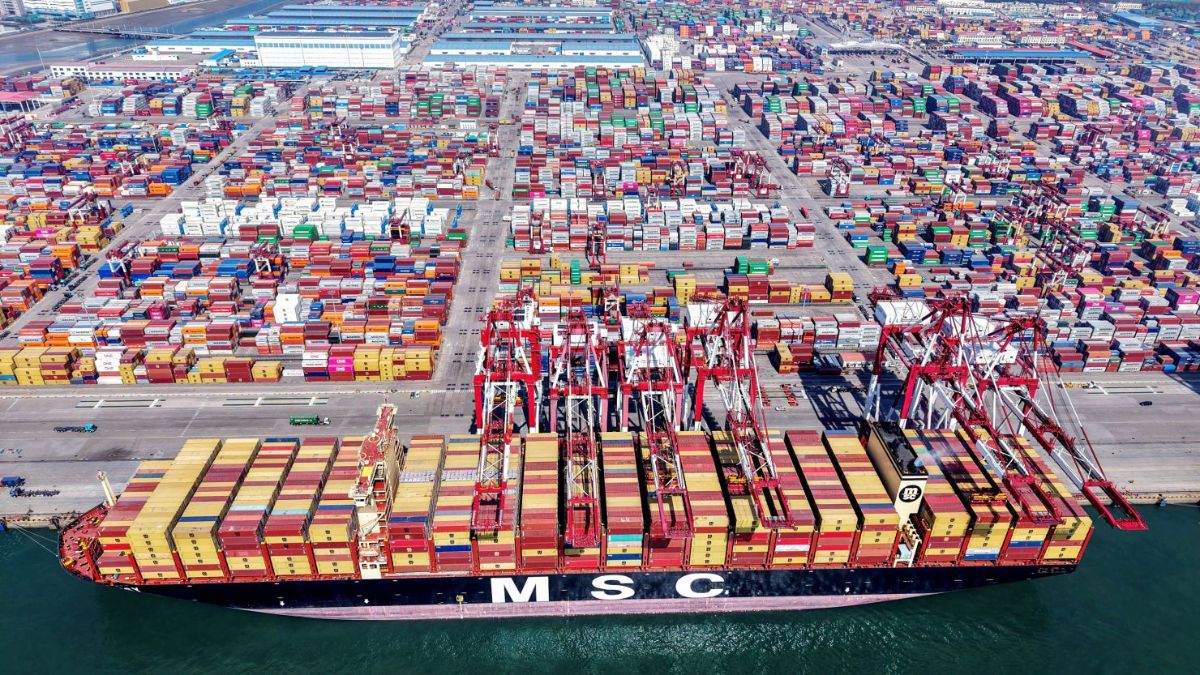
Trump’s approach isn’t perfect—tariffs spark retaliation—but it shakes the status quo. Europe, staring at 1% growth and 6% unemployment, can’t afford more of the same. Re-industrialize now, or watch the continent fade into economic irrelevance. The ocean of containers piling up at ports? They’re not just goods; they’re reminders of lost chances. Time to steer the ship home.




