

When EU leaders gather Monday in Brussels to discuss the future of European defense, it will be France against (almost) everyone else. Paris is holding firm to its position that European taxpayer money should be spent on military systems designed and made in Europe.
“A lot has been done already, but we need to do more. We need to do it better, stronger, and faster—and we need to do it together,” Antonio Costa, the president of the European Council of EU leaders, said after the summit on defense in Brussels.
The informal summit is meant to address EU defense policy in reaction to the rising threat from Russia, including issues like finance and weapons production, and give the European Commission pointers as it works on a long-term defense policy proposal. One of Monday’s main objectives is to find common ground on military equipment to be jointly developed with EU cash. However, the oversized role of Washington and American companies in Europe’s defense will loom large.
Some countries, especially those geographically close to Russia, want to buy off-the-shelf weapons to build up their militaries to face down the Kremlin, as well as produce foreign equipment under license.
Turmoil in the Time of Trump
The fight over how much cash to send within the bloc and how wide to open the door to non-EU arms-makers is already raging over the €1.5 billion European Defence Industry Programme. Although it’s small—Kosiniak-Kamysz called the size a “joke”—it’s a precursor for a planned massive increase in EU defense spending. Poland and the Baltic countries circulated a document ahead of the summit calling for the EU to spend at least €100 billion on defense by 2027, including by purchasing arms from non-EU NATO allies. European Commission President Ursula von der Leyen said last year the bloc should look at spending an additional €500 billion on defense over the next decade.
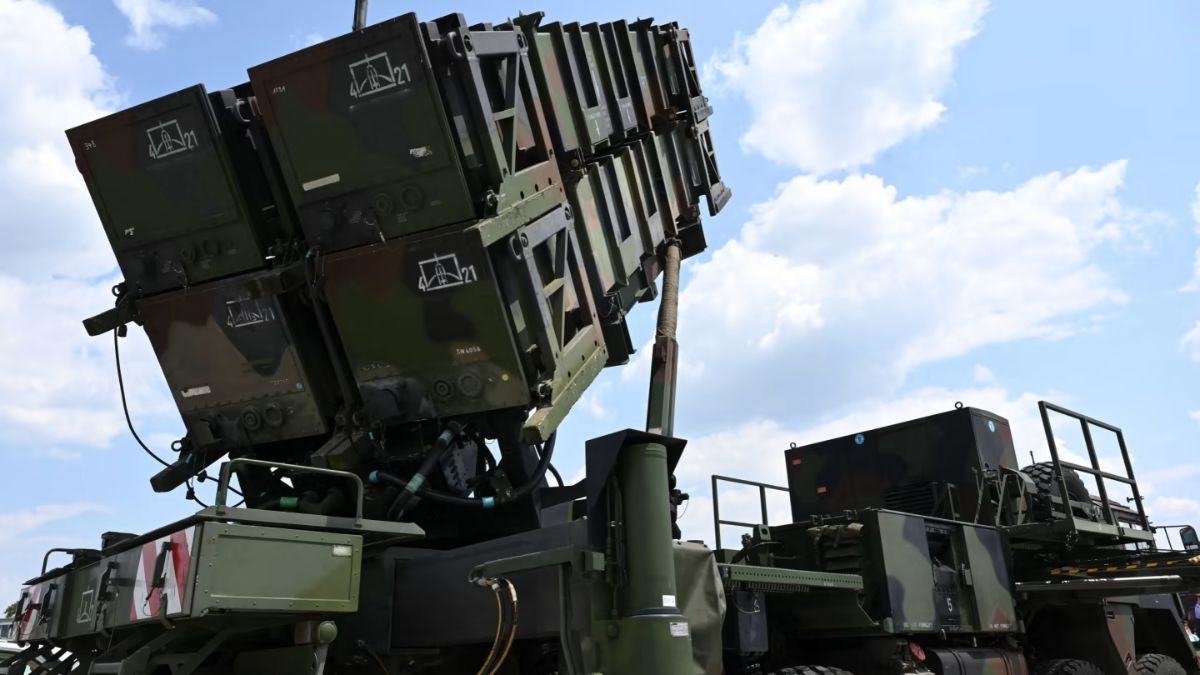
At the moment, the U.S. is doing very well out of Europe’s military buildup. Between mid-2022 and mid-2023, 63 percent of all EU defense orders were placed with U.S. companies, and a further 15 percent with other non-EU suppliers, according to last year’s Draghi report, which looks to make Europe more competitive. France is leading the fight for that to change—with some backing from Greece. Last week, Greek Deputy Defense Minister Yiannis Kefalogiannis said that buying more arms “developed and produced in the EU will lead to greater strategic autonomy, especially if NATO comes under pressure during Trump’s second term.”
Trade Tensions and EU Defense Strategy
The start of the summit was overshadowed by Trump declaring at the weekend that he would soon impose tariffs on imports from the EU, having just ordered similar measures on goods from Canada, Mexico, and China. Arriving leaders warned Trump against starting a trade war and said the EU would retaliate if he did so. Macron said Trump’s policies were one of several factors pushing the EU to become less dependent on others.
The EU’s 27 national leaders are expected to discuss what military capabilities they need, how they could be funded, and how they might cooperate more through joint projects. The funding discussion will be especially tough, according to diplomats, as many European countries have little room in their public finances for big spending hikes. European countries have already ramped up defense spending in recent years, in response to Russia’s 2022 invasion of Ukraine and a growing view that they cannot rely so much on the United States to protect the continent in years to come.
Their efforts have been fueled by questions about U.S. President Donald Trump’s commitment to the NATO security alliance and by his demands for European nations to spend more on the continent’s defenses. The start of the EU summit was overshadowed by Trump declaring at the weekend that he will soon impose tariffs on imports from the EU, having ordered similar measures on goods from Canada and Mexico—which were paused on Monday—and from China. The EU leaders agreed to focus on filling critical gaps in their defenses, such as air and missile defense, missiles, ammunition, and military transport.
Long-Term Defense Spending Plans
Last year, EU countries spent an average of 1.9% of GDP on defense, or about 326 billion euros ($334.5 billion)—a 30% increase on 2021, according to EU estimates. But many EU leaders have said they will need to spend even more. The Commission, the EU’s executive body, has estimated the bloc may need to spend an extra 500 billion euros over the next decade to fill the critical gaps in European defenses. Trump has said NATO’s European members should spend 5% of GDP on defense—a figure no member of the alliance, including the United States, currently reaches.
Von der Leyen and Costa said the EU had several potential defense financing options, including national spending, an expanded role for the EU’s European Investment Bank, and private capital. Leaders avoided directly addressing in public the politically sensitive question of whether the EU should issue joint debt to pay for defense spending.




