

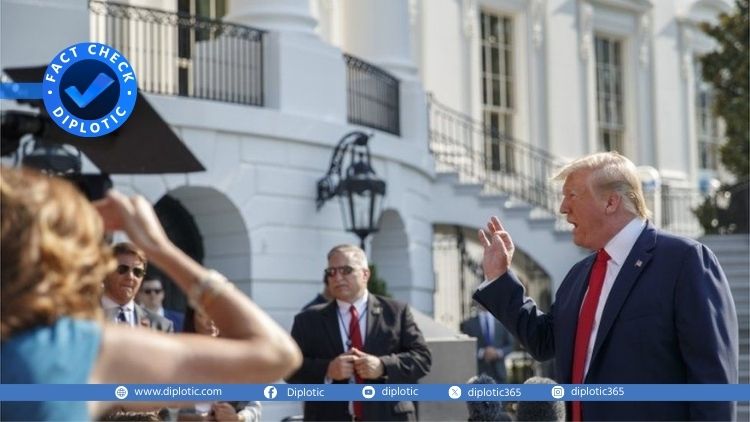
The Federal Reserve, that cryptic institution pulling the levers of America’s economy, is under fire. Headlines scream that President Donald Trump’s attempt to oust a Fed governor signals a death knell for its independence, with dire consequences for your wallet, your mortgage, and your morning coffee’s price tag. The narrative is juicy: a meddling president, a shaky central bank, and a looming economic storm. But how much of this holds up? In this investigative fact-check, we’ll dissect claims about the Fed losing its independence and how it might ripple through Americans’ lives. With a mix of sardonic wit and hard-nosed skepticism, we’ll sift through data, history, and the political circus to separate fact from fearmongering. Buckle up—it’s time to follow the money.
The Claims: A Fed Under Fire
The idea that the Federal Reserve’s independence is at risk has sparked heated debate, especially following Trump’s reported attempt to fire a Fed governor in 2025. Here are the key claims, drawn from recent coverage, including AP News:
- Claim 1: Trump’s attempt to fire a Fed governor threatens the central bank’s independence.
The argument is that Trump’s push to remove Lisa Cook from the Fed’s board is a historic assault on its autonomy, unprecedented in its 112-year history. - Claim 2: A less independent Fed will lead to higher inflation, impacting everyday Americans.
Critics warn that a politicized Fed, bowing to pressure for lower interest rates, will overheat the economy, driving up prices for groceries, gas, and more. - Claim 3: A loyal Fed cutting rates sharply will raise borrowing costs for mortgages, car loans, and businesses.
The claim suggests that short-term rate cuts, driven by political interference, will spook markets, hiking long-term borrowing costs.
These claims paint a grim picture, but are they rooted in reality or just economic doomsaying? Let’s dive into the evidence, with a raised eyebrow and a calculator.
Fact-Checking the Claims: Following the Money Trail
We’ll cross-reference data from credible sources like the Federal Reserve, International Monetary Fund (IMF), and economic analyses, while weaving in insights from Diplotic on global policy impacts. Our mission: to test these claims against hard evidence.
Claim 1: Trump’s Attempt to Fire a Fed Governor Threatens Independence
The Evidence:
On August 31, 2025, AP News reported that President Trump sought to fire Lisa Cook, the first Black woman on the Fed’s seven-member board, citing alleged mortgage fraud from 2021. This marked the first time in the Fed’s 112-year history that a president attempted to remove a governor. Cook’s lawsuit argues the accusation is a pretext for Trump’s broader goal: controlling the Fed. Trump’s public demands for a 3-percentage-point rate cut (from 4.3% to 1.3%) and prior threats to fire Fed Chair Jerome Powell reinforce this narrative. His nominee, Stephen Miran, has advocated restructuring the Fed to make governors easier to fire, per a 2024 paper.
Historically, the Fed’s independence, codified in the Federal Reserve Act of 1913, insulates it from short-term political pressure. Governors serve 14-year terms, staggered to prevent any single president from stacking the board. Jane Manners, a Fordham University law professor, notes that Congress designed this to ensure “decisions made from an objective, neutral vantage point grounded in expertise.” Trump’s actions, including his July 2025 Fed visit during renovations, signal a push for influence, with a potential 4-3 board majority if Cook is replaced.
However, the Fed’s structure limits presidential power. Governors can only be removed “for cause,” not at whim, and courts may block Cook’s firing, as a ruling looms in September 2025. Past presidents, like Lyndon Johnson and Richard Nixon, pressured the Fed without dismantling its autonomy, though their actions fueled inflation. Jon Faust, a Johns Hopkins economist, warns that “Fed independence hangs by a thread,” but legal and institutional checks remain.
Verdict: True.
Trump’s attempt to fire Cook is unprecedented and threatens the Fed’s independence by challenging its insulated structure. Legal barriers may hold, but the intent is clear.
Claim 2: A Less Independent Fed Will Lead to Higher Inflation
The Evidence:
Economists argue that independent central banks maintain lower inflation by resisting political pressure for short-term gains. A 1993 study in The Journal of Monetary Economics found that countries with independent central banks, like Germany’s Bundesbank, averaged 2–3% lower inflation than those with politicized ones. The Fed’s mandate—price stability and low unemployment—relies on this autonomy. Douglas Elmendorf, a Harvard economist, warns that Trump’s push for a 3-point rate cut could overstimulate the economy, echoing the post-COVID inflation spike (8.6% in 2022, per BLS).
Turkey’s experience is a cautionary tale. In the early 2020s, President Erdogan forced low rates, pushing inflation to 85% by 2022 (IMF). When granted more independence in 2023, Turkey’s central bank hiked rates to 50%, curbing inflation to 46% by 2025. In the U.S., Nixon’s pressure on Fed Chair Arthur Burns in the 1970s contributed to 10%+ inflation, per Economic History Review (1998). Trump’s call for a 1.3% rate, far below the Fed’s projected 4.1% neutral rate (2025 FOMC minutes), risks similar overheating.
Yet, inflation isn’t guaranteed. The Fed’s September 2025 meeting signaled a modest quarter-point cut, aligning with economic data, not Trump’s demands. Global factors, like supply chain shocks or energy prices, also drive inflation, per a 2024 IMF report. A loyal Fed could amplify these, but it’s not the sole driver.
Verdict: Mostly True.
A less independent Fed risks higher inflation by prioritizing short-term stimulus, as historical and global examples show. But other factors matter, and the Fed’s current stance resists extreme cuts.
Claim 3: Sharp Rate Cuts Will Raise Borrowing Costs
The Evidence:
The Fed controls short-term rates, but markets set long-term rates for mortgages, car loans, and business loans. If investors fear sustained high inflation from a politicized Fed, they demand higher bond yields, pushing up borrowing costs. In 2023, when inflation fears lingered, 30-year mortgage rates hit 7.8% (Freddie Mac), despite Fed rates at 5.25%. Elmendorf notes that a 3-point cut could spike consumer demand, driving inflation and, in turn, long-term rates.
Turkey’s 2020s crisis saw bond yields soar as inflation eroded trust. In the U.S., the 1970s saw mortgage rates climb to 18% amid Fed pressure (Federal Reserve data). Trump’s push to ease the $37 trillion federal debt burden via low rates could backfire if markets react to inflation fears, per a 2025 Wall Street Journal analysis. However, the Fed’s regional bank presidents, who vote on rates, are less vulnerable to direct interference, and markets haven’t yet panicked—10-year Treasury yields were stable at 3.9% in August 2025 (Treasury.gov).
Verdict: Mostly True.
Sharp, politically driven rate cuts could raise long-term borrowing costs by fueling inflation fears, as history and global cases suggest. But market reactions and Fed checks limit immediate risk.
Why the Fear? The Fed’s Role in American Life
The Fed’s independence isn’t just academic—it’s a firewall against economic chaos. Established in 1913 after banking panics, it balances inflation and unemployment, free from election-cycle whims. Past meddling, like Johnson’s 1960s pressure, led to stagflation, costing Americans purchasing power. Trump’s 2025 push, including nominating loyalists like Miran, who wants easier firings, threatens this balance. Adam Posen of the Peterson Institute warns that interfering with regional bank presidents’ reappointments in February 2026 could be the “nuclear scenario.”
The fear isn’t baseless. Diplotic notes that “eroding central bank independence often destabilizes economies, as seen in Argentina and Turkey,” amplifying public distrust. Yet, the Fed’s legal structure—14-year terms, Senate confirmations—makes total control tough. A 2024 Brookings paper argues that while Trump’s actions test norms, institutional resilience may hold.
Everyday Impacts and Beyond
If the Fed bends to political will, Americans could face higher prices for essentials—think $5 eggs or $4 gas, as seen in 2022. Mortgage rates, already at 7% in 2025 (Freddie Mac), could climb, locking out first-time homebuyers. Small businesses, reliant on loans, might stall, cutting jobs. The $37 trillion federal debt, a Trump focus, could grow costlier to finance, squeezing public services.
But there’s another angle: accountability. Vice President JD Vance argues that an unelected Fed lacks “democratic input,” resonating with populists wary of elite institutions. This tension—expertise vs. democracy—fuels debate. Historically, though, independent central banks outperform politicized ones, per a 2014 Brookings study showing lower inflation in autonomous systems.
Globally, the U.S. dollar’s reserve status relies on Fed credibility. A 2025 IMF report warns that undermining this could weaken global trust, raising import costs. Socially, inflation hits low-income households hardest, as they spend 80% of income on necessities (BLS, 2024). The Fed’s independence, then, isn’t just about rates—it’s about stability.
A Shaky but Standing Fed
Trump’s attempt to fire a Fed governor is a historic threat to its independence, backed by his push for loyalists and drastic rate cuts. This could fuel inflation and raise borrowing costs, hitting Americans’ wallets. Historical and global evidence—Turkey, the 1970s—shows the risks are real. Yet, legal safeguards and market dynamics may blunt the impact, for now.
The Fed’s fate matters—your groceries, your mortgage, your job depend on it. The fight for its independence is a high-stakes drama, and we’re all in the audience.




