

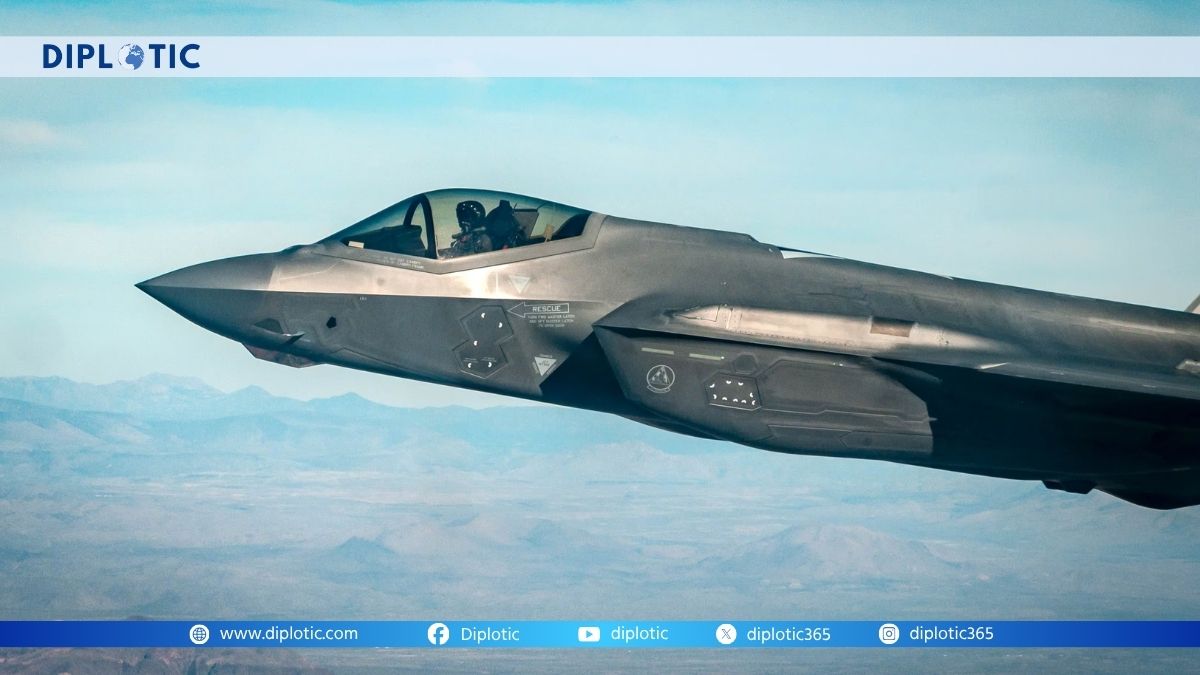
On a clear November morning in Washington, President Donald Trump announced a major shift in U.S. arms policy: the approval of F-35 fighter jet sales to Saudi Arabia, a deal reaffirmed during Crown Prince Mohammed bin Salman’s White House visit. This multibillion-dollar agreement for up to 48 stealth aircraft marks the kingdom as the first Arab nation to acquire America’s most advanced warplane, beyond Israel. Yet, as details emerge, concerns mount over technology leaks to China—Saudi Arabia’s top trading partner—and strains on Israel’s regional military superiority, crucial amid fragile Gaza truce efforts. The F-35, born from a 1990s vision to unify U.S. air power, has long symbolized innovation and excess, with over 1,200 delivered amid endless debates on costs and capabilities. As Riyadh eyes modernization against Iran, this sale probes a core tension: Can the U.S. balance alliance-building with security, or does it invite new vulnerabilities in a multipolar world where espionage and rivalries redefine old partnerships?
Why Is the F-35 Sale to Saudi Arabia Raising Security Alarms?
The announcement on November 17, 2025, capped months of quiet negotiations, with Trump declaring, “We’ll be selling the F-35s,” ahead of bin Salman’s arrival. Saudi Arabia, the largest U.S. arms buyer, requested 48 jets to bolster its air force against regional threats, particularly Iran, whose nuclear sites the U.S. struck in June. The deal, potentially worth billions, cleared initial Pentagon reviews but faces congressional scrutiny and internal debates. Unlike the 2020 UAE sale tied to Israel normalization, this lacks such conditions, drawing Israeli unease over its “qualitative military edge”—a U.S. commitment since 2008.
A primary worry is technology transfer to China. Riyadh’s deepening Beijing ties—$100 billion in trade last year—raise fears of reverse-engineering, echoing past espionage. A recent Defense Intelligence Agency report warned that Saudi access could enable Chinese firms to access F-35 data via joint ventures or maintenance pacts. Historical parallels sting: In 2007-2015, Chinese hackers stole over 50 terabytes of F-35 data, including radar and engine designs, fueling the J-20 and J-31 stealth fighters. While updates have evolved the jet, experts like Bradley Bowman of the Foundation for Defense of Democracies argue, “If it was so compromised, Saudis wouldn’t want it,” citing 19 partners’ confidence.
Israel’s concerns add another layer. As the Middle East’s sole F-35 operator—deployed in June’s Iran conflict—Jerusalem fears parity with Riyadh, complicating Trump’s Gaza plan reliant on Israeli buy-in. Officials note no explicit assurances were mentioned, though backchannel talks suggest offsets like enhanced U.S. aid. Broader angles include production timelines: Lockheed Martin builds 150-190 annually, so Saudi deliveries could lag years, allowing interim diplomacy.
This sale fits Trump’s “America First” arms push, echoing a $120 billion 2017 package, but in a changed landscape. With Iran weakened post-strikes and Yemen’s Houthis quiet, Riyadh sees the F-35 as deterrence. Yet, critics question if unchecked sales erode U.S. leverage, potentially arming a partner with divided loyalties. As bin Salman inks energy deals, the query lingers: Does this fortify alliances or fracture them, handing rivals unintended gains in an era of hybrid threats?
(Word count: 512)
What Makes the F-35 a Game-Changer in Modern Air Warfare?
Conceived in the 1990s as a “joint strike fighter,” the F-35 Lightning II aimed to replace aging fleets like the F-16, A-10, and F/A-18 with a versatile platform for the Air Force, Navy, and Marines. Its fifth-generation features—stealth coatings, sensor fusion, and networked data—allow seamless shifts from ground strikes to dogfights. Pilots access 360-degree views via helmet displays, integrating radar, infrared, and electronic warfare feeds for superior situational awareness.
Stealth is central: Radar-absorbent materials and internal weapons bays make detection tough, as Bowman notes, “If you can’t see it, you can’t kill it.” Advanced engines, like Pratt & Whitney’s F135, provide thrust for supersonic dashes, while software links to drones or satellites for real-time intel sharing. Combat proof came in Afghanistan, where Marines used it for precision strikes, and NATO patrols over Estonia, where Italian F-35s shadowed Russian jets.
Variants adapt to needs: The F-35A for conventional runways, F-35B for short takeoffs (Marine vertical landing), and F-35C for carrier ops with folding wings. This multi-role design underpins its appeal—19 nations operate or contract it, from the UK to Japan, forming a coalition edge. For Saudi Arabia, it promises air superiority over Iran’s aging MiGs, with pilots training in simulators mimicking desert ops.
Yet, ambition breeds complexity. Unified production cut costs initially, but software glitches and integration woes persist. Upgrades like Block 4—enhancing weapons and sensors—lag, with deliveries delayed amid supply snags. Parallel to U.S. use, allies leverage it for deterrence: Israel’s June Iran strikes showcased sensor-driven hits, minimizing exposure. In a peer fight, like against Chinese J-20s, the F-35’s network turns lone wolves into packs, sharing threats instantly.
This evolution probes deeper: Does the jet redefine warfare toward data dominance, or does over-reliance on tech expose flaws? As Saudi pilots gear up, the F-35’s edge could stabilize the Gulf, but only if upgrades keep pace with evolving threats.
(Word count: 412)
How Have Cost Overruns and Delays Plagued the F-35 Program?
From its Fort Worth rollout in 2006, the F-35 promised efficiency—a single line yielding variants at $80 million each. Reality diverged: By 2023, unit costs hit $77 million for the A-model, per Congressional Research Service, with the full program ballooning to $428 billion for development and procurement. Sustainment over 77 years? A staggering $2 trillion, per a September 2025 GAO report, up from $1.3 trillion in 2018.
Delays stem from scope creep. Block 4 upgrades—vital for Saudi jets—run $6 billion over budget, five years late, tied to TR-3 software woes. Lockheed delivered 110 aircraft in 2024, averaging 238 days late—up from 61 in 2023—yet earned partial incentives worth millions. Engines? Pratt & Whitney missed 100 percent of 2023-2024 deadlines. GAO urges fee reforms to penalize lags.
These issues ripple globally. Saudi’s order faces years-long waits, as lines prioritize U.S. needs—156 planned for 2025. Critics like Stimson Center’s Dan Grazier call it a “failure”: Stealth coatings demand constant upkeep, and cameras falter in dust. It “does a lot of things kind of well, but nothing great,” at fortune costs, often underperforming predecessors.
Lockheed counters: Over 1 million flight hours, combat-proven, sustaining 300,000 jobs across 49 states. Economies of scale have trimmed flyaway costs to $78 million, with allies sharing burdens. For Saudi, offsets include local maintenance hubs, boosting Riyadh’s economy.
Broader context: Similar overruns hit Australia’s program ($8 billion extra) and Canada’s pilot shortages. As Trump pushes sales, the query sharpens: Can efficiencies finally tame the beast, or do endless fixes undermine its promise?
(Word count: 378)
What Do Ongoing Readiness Issues Mean for the F-35’s Reliability?
Despite hype, the F-35’s mission-capable rate—planes ready for tasked missions—hovers at 55 percent in 2023, per GAO, missing Air Force’s 80 percent and Navy/Marines’ 75 percent goals for six straight years. By mid-2025, Air Force F-35As hit 51.9 percent, F-35Bs 59.7 percent, and F-35Cs 61.9 percent—marginal gains amid $7.5 billion sustainment hikes.
Root causes include depot delays—parts shortages, untrained staff—and organizational maintenance woes like faulty software. GAO’s 2025 survey of 15 bases found inadequate gear and data access hampering fixes. For Saudi pilots, this means extended training amid U.S. backlogs.
Grazier warns: “It doesn’t matter what capability if unreliable.” Marines’ F-35B improved via lean spending, but fleet-wide, aging infrastructure and maintainer shortages (Air Force down 1,500) persist. Lockheed touts 1,255 in service, but GAO flags contractor over-reliance.
In combat, low rates risk gaps; Israel’s June ops succeeded via tailored fixes, but Saudi’s desert ops could amplify coating wear. As upgrades lag, the F-35’s edge dulls—prompting: Does it deliver now, or demand endless investment?
(Word count: 312)
From 1990s blueprint to 2025 deals, the F-35 embodies U.S. ambition and its pitfalls— a stealth marvel mired in costs, now arming a key ally amid risks. For Saudi Arabia, it promises power; for Washington, a test of trust in a watchful world. As jets roll out, the true measure lies not in specs, but sustained performance—shaping skies where innovation must outpace its shadows.




