

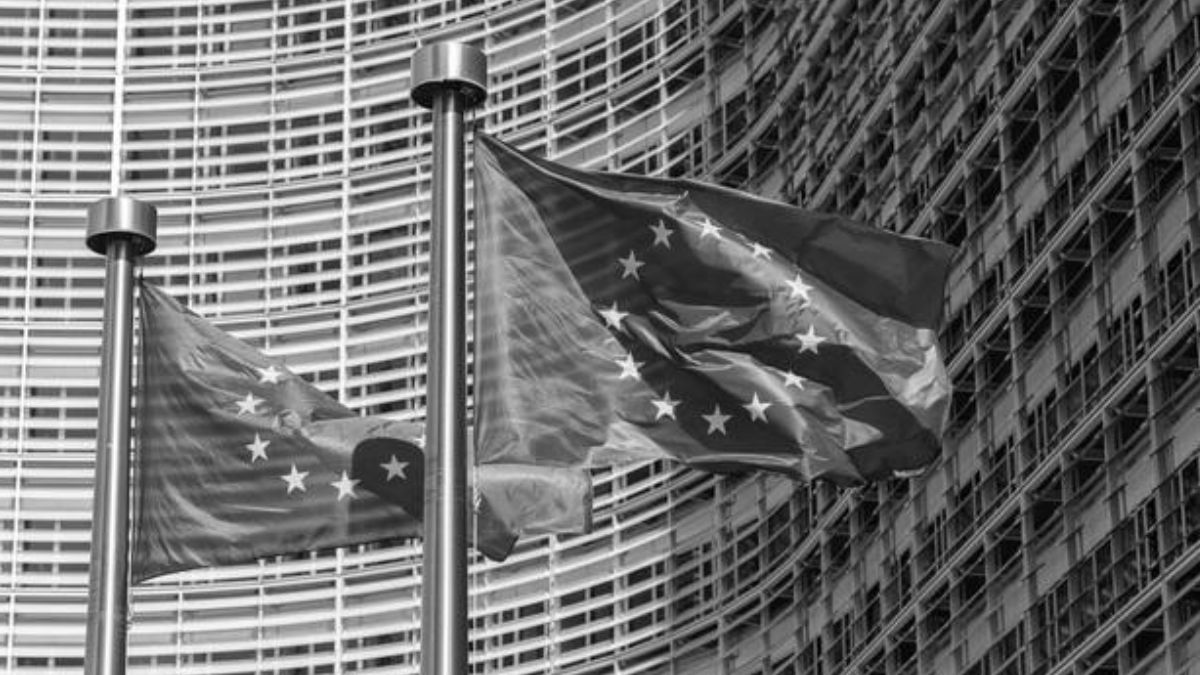
Europe’s sliding into a quagmire where saying the wrong thing can land you in jail, and it’s not just about stopping fights—it’s about controlling ideas. From London to Lisbon, governments are tightening the screws on speech they call “hateful,” wielding laws and tech like a blunt club. The US, with its First Amendment armor, might smirk at the mess across the pond, but don’t get comfy. The same forces—centralized power, murky definitions, and algorithms sniffing out “bad” words—are knocking at America’s door. This isn’t just a European problem; it’s a flare-up of what happens when freedom gets chipped away under the guise of safety. Let’s unpack the chaos, dig into the roots, and see why the US should keep its eyes peeled.
The Southport Spark: When a Tweet Becomes a Crime
It all kicked off with a tragedy. In July 2024, a horrific attack at a children’s dance class in Southport, UK, left three kids dead and the public reeling. With officials tight-lipped about the killer’s identity, rumors spread like wildfire, fueling riots over immigration policies. Enter Lucy Connolly, a Northampton mom, who tweeted a call for “mass deportation” while shrugging off the unrest. Her punishment? A 31-month prison sentence for a single post. That’s not a typo—31 months for words on a screen.
This wasn’t a one-off. The UK, post-Brexit and under Prime Minister Keir Starmer, has doubled down on speech crackdowns. Since Starmer took office in July 2024, over 3,500 people have been arrested for online “incitement” or “offensive” posts, many tied to immigration or government criticism, per Home Office data. During the Southport riots, 1,280 arrests followed, with 600 new prison spots created to handle the surge, mostly for social media posts. “We’re policing the digital streets now,” Starmer said in August 2024, framing it as public safety. But when a tweet lands you behind bars, it’s hard to call that anything but censorship dressed up as justice.
Europe’s Slippery Slope: From Unity to Control
How did Europe get here? Rewind to 2007, when the Lisbon Treaty reshaped the European Union. Signed that year and effective since 2009, it gave the EU legal heft to act like a state in global deals, centralizing power and trimming member nations’ clout. Article 83 of the Treaty on the Functioning of the European Union (TFEU) standardized serious crimes—terrorism, trafficking, child exploitation—across member states. Sounds reasonable, until you see the fine print: it handed Brussels power to define crimes, opening the door to slippery slopes.
By December 2021, the European Commission pushed to add “hate speech and hate crimes” to that list, citing the rise of “far-right” voices railing against immigration and multiculturalism. The European Parliament called out the “Great Replacement” theory—a narrative about population shifts—as a dangerous idea gaining traction. Parties like France’s National Rally or Germany’s AfD, now major players in national governments, were in the crosshairs. Brussels didn’t just want to police crime; it aimed to steer ideology. “This is about protecting democracy,” a Commission spokesperson claimed in 2022. But targeting elected parties smells more like control than protection.
The EU’s Digital Services Act (DSA), rolled out in 2022, sidestepped the need for unanimous approval on hate speech laws. It leans on tech platforms to scrub “disinformation” and “harmful” content, with hefty fines for non-compliance. Germany’s June 2025 sweep—140 people targeted with home searches and arrests for online comments—shows how far this goes. Spain jailed Isabel Peralta for a year over protest remarks; Portugal’s Mário Machado got hit for a tweet. These aren’t fringe cases anymore. The European Court of Human Rights, often a last resort, has upheld such convictions, citing “public order” over free expression.
AI as the New Censor: Algorithms with an Agenda
Here’s where it gets sci-fi creepy. The EU’s AI Act, debated in 2025, aims to regulate artificial intelligence but doubles as a censorship tool. It pushes automatic filters to catch “offensive” speech, letting algorithms decide what’s too spicy for public ears. Problem is, as data scientist Cathy O’Neil warned in her book Weapons of Math Destruction, these systems aren’t neutral—they bake in the biases of their makers. A 2023 study in the German Law Journal by Evangelia Psychogiopoulou flagged the risks: vague hate speech definitions lead to inconsistent takedowns, chilling free speech. “When you let AI play judge, you’re asking for trouble,” O’Neil told a Brussels panel in April 2025.
Tech giants like Meta and Google, under DSA pressure, have already ramped up content moderation. In 2024, X reported removing or labeling 45% more posts in Europe than the prior year, often flagged by AI for “potential harm.” But harm’s a squishy term—what’s hateful to one bureaucrat might be debate to another. And when platforms face €6 million fines or 6% of global revenue, per DSA rules, they err on the side of deletion. The result? A sanitized internet where dissent gets buried.
The Political Quarantine: Stifling the Right
Europe’s new right—parties like Hungary’s Fidesz or Italy’s Brothers of Italy—has surged, holding 131 seats in the 720-seat European Parliament as of June 2025, per Politico. The Patriots for Europe group, including these parties, ranks as the third-largest bloc. Yet Brussels keeps them on the sidelines, barring them from key posts. “It’s a deliberate quarantine,” said Viktor Orbán, Hungary’s prime minister, in a July 2025 speech. By labeling their immigration critiques as “hate,” the EU sidesteps debate and paints them as threats.
This isn’t just about policy—it’s about power. The EU’s push for “harmonized” speech laws lets unelected officials override national voters. In Germany, hate speech prosecutions jumped fourfold since 2021, with 2,300 cases in 2024 alone, per Federal Criminal Police Office stats. Spain and Portugal’s convictions, though smaller in number, signal a trend: dissent, especially on hot-button issues like immigration, gets you a cell. “What was once called censorship is now sold as inclusion,” a Lisbon activist told Reuters in August 2025. Europeans are waking up to the risk—polls show 62% of Germans worry about free speech, up from 45% in 2020.
The American Shadow: A Model to Avoid?
Across the Atlantic, the US watches with a mix of horror and hubris. The First Amendment’s ironclad free speech protections make Europe’s jail-for-a-tweet approach seem dystopian. But don’t get cocky. Progressive groups, like the Center for Democracy & Technology’s Europe branch, have pushed the EU’s European Democracy Shield as a blueprint for tackling US “disinformation” post-2021 Capitol riot. Their 2024 consultation with the European Commission stressed balancing speech with “harm prevention,” a fuzzy line at best.
American tech giants, knee-deep in Europe’s DSA, are already tweaking algorithms to comply globally. X, Meta, and TikTok removed 18% more US content in 2024 than in 2023, citing “policy alignment” with EU rules, per internal reports. The extraterritorial creep is real—when platforms bow to Brussels, Americans feel the ripple. A 2025 Pew Research poll found 57% of US adults fear foreign laws could curb online speech, up from 41% in 2022.
Historical context sharpens the stakes. Europe’s speech laws echo post-World War II efforts to curb Nazi rhetoric, but they’ve morphed into tools for broader control. The US dodged this with cases like Brandenburg v. Ohio (1969), protecting speech unless it incites imminent lawless action. Yet, pressure’s building—think calls to censor “misinformation” during COVID or election seasons. If tech firms keep aligning with Europe’s playbook, the First Amendment’s shield might not hold.
Why This Matters: Freedom’s Fragile Edge
Europe’s crackdown shows how fast freedom erodes when “hate” becomes a catch-all excuse. From a mom jailed for a tweet to AI scrubbing posts before you hit send, it’s a slow boil toward silence. The US isn’t immune—tech’s global reach and activist pushes could import this mess. “Freedom is lost gradually, slice by slice,” warned a CDT report in June 2025. The fix? Stay vigilant. Push back on vague laws. Demand platforms resist overreach. And vote for leaders who see free speech as a cornerstone, not a nuisance.
Europe’s lesson is clear: let centralized power define “acceptable,” and you’re on a path to losing your voice. The US has a chance to dodge this bullet, but only if it pays attention. For now, Lucy Connolly’s 31 months in a cell stand as a warning—words aren’t just free; they’re fragile.




