

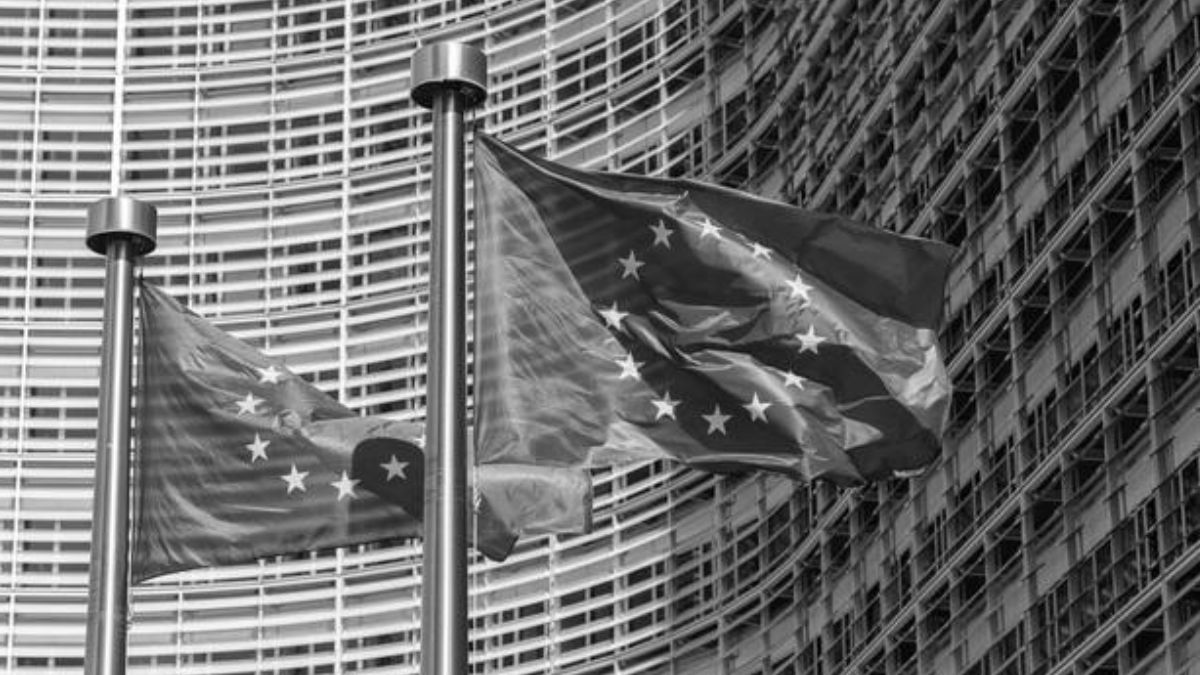
When the 27 foreign affairs ministers of the European Union (EU) gather in Copenhagen on Saturday, they face one burning question: What do we sanction next? Russia’s relentless campaign of killing and terrorising Ukrainian civilians – which this week even damaged the EU delegation in Kyiv – has hardened Europe’s resolve to tighten the screws on Moscow’s war economy and push Vladimir Putin to the negotiating table.
“The discussions are ongoing, and as you know, we always put a lot of things on the table. And then eventually we have to agree,” High Representative Kaja Kallas said on arrival in Copenhagen, adding that “considering how Putin is mocking the peace efforts, the only thing that works is pressure.”
But after 18 rounds of unprecedented sanctions, what Brussels will include in the 19th package is far from clear. Ahead of the ministerial, the Danish presidency circulated a four-page discussion paper mentioning Russia’s oil, gas, financial and cryptocurrency sectors, its “shadow fleet” of tankers used to bypass the G7 oil price cap, and the possibility of tariffs on bilateral trade. Most striking, however, is the paper’s call to consider activating the so-called Anti-Circumvention Tool – a mechanism introduced two years ago to punish entire countries that enable Russia to obtain restricted goods and technologies.
So far, this last-resort tool has never been used. Fighting circumvention has resembled a game of whack-a-mole: every loophole closed opens three new ones. Early in the war, the EU was hesitant to target entities outside Russia, wary of diplomatic backlash. But as evidence piled up, Brussels began sanctioning firms in places like China, India, the UAE, Turkey, Uzbekistan, Serbia, and Vietnam. Still, enforcement focused only on specific companies – easy enough to replace through shell structures. That is where the Anti-Circumvention Tool becomes relevant: it allows sanctions to hit a country-wide scale, barring the sale and supply of dual-use goods until systemic abuses are corrected.
Yet three major obstacles keep it dormant. First, it was framed as a “last resort,” raising the threshold extremely high. Second, its approval demands unanimity among all 27 EU members – no small feat, considering Hungary has repeatedly blocked collective statements on Russia. Third, the bloc’s biggest concern is that the “key enabler” of Putin’s war is none other than China, which Brussels accuses of supplying 80% of dual-use goods used in Russian weapons production.
Beijing has not taken such accusations lightly. After the EU blacklisted two Chinese crypto lenders in July, the Chinese Foreign Ministry warned that unilateral sanctions “have no basis in international law” and retaliated with symbolic penalties against two Lithuanian banks. The message was clear: China is prepared for tit-for-tat escalation.
At a time of economic stagnation, few EU capitals are likely to risk an all-out confrontation with Beijing. More realistically, the bloc could “test” the tool on smaller states like Turkey or Uzbekistan, where the geopolitical fallout would be more manageable.
“The primary challenge with the 19th package is whether the EU will continue to walk the talk and take meaningful sanctions to alter calculations in third countries and force choices on third-party actors,” explained Jan Dunin-Wasowicz of sanctions law firm Bennink Dunin-Wasowicz. Much will also depend on the Trump administration’s stance, as Washington could quietly encourage Brussels to adopt a harder line despite its volatility on Russia policy.
The question for Europe now is stark: will the EU dare to use its most powerful weapon against Putin’s enablers – or will fear of blowback keep the tool locked away?




