

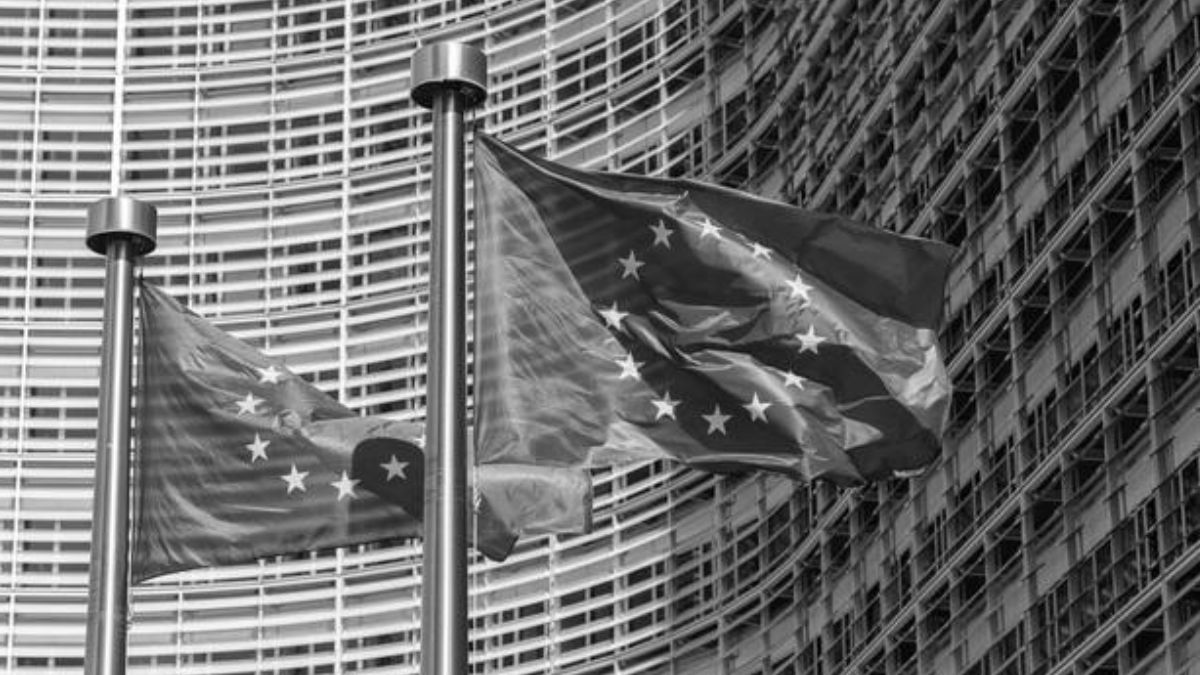
A Pragmatic Pivot Amid Geopolitical Shifts
In June 2025, the European Union hosted a senior officials’ conference in Brussels, a subtle but significant step toward engaging Afghanistan’s Taliban regime, which has controlled Kabul since the U.S. and NATO’s chaotic withdrawal in 2021. The European External Action Service, alongside the EU’s development and humanitarian arms, co-hosted the event, announcing €161 million in aid for vulnerable Afghans. While no Taliban representatives attended, the presence of Afghan civil society signaled a cautious diplomatic probe. The EU’s post-meeting statement noted a deteriorating human rights situation, particularly for women and girls, but stopped short of condemning the Taliban outright, hinting at a softer stance. This shift reflects a broader recalibration driven by strategic imperatives: the war in Ukraine, Middle East tensions, India’s military actions against Pakistan, and the unpredictability of U.S. policy under President Donald Trump. With Russia, China, and India deepening ties with Kabul, the EU faces pressure to secure its interests in a strategically vital region.
The historical context of EU-Afghanistan relations reveals a delicate balance between principle and pragmatism. Since 2021, the EU has conditioned engagement on five benchmarks: safe departure for those wishing to leave, respect for human rights (especially women’s), humanitarian access, preventing terrorism, and an inclusive government. None have been fully met, yet the EU’s €1.2 billion in aid since the Taliban’s return, per EU data, shows a commitment to engagement without formal recognition. The Taliban’s progress in curbing drug trafficking and restoring nationwide security contrasts with the corruption and warlord-driven chaos of the NATO era, per regional analysts. However, their restrictions on women’s education and rights—banning girls from secondary schools since 2021—clash with Islamic teachings emphasizing knowledge for all, as the Prophet Muhammad declared seeking knowledge an “obligation upon every Muslim.” This contradiction complicates the EU’s moral posturing, rooted in its human rights framework, as it navigates ties with a regime it cannot ignore.
Geopolitically, Afghanistan’s position at the crossroads of Central and South Asia makes it critical for trade and security. Russia’s removal of the Taliban from its terrorist list in 2025 and Norway’s accreditation of a Taliban diplomat, a first for Europe, underscore shifting dynamics. The EU’s foreign policy challenges highlight its struggle to balance ethics with influence, as seen in its support for authoritarian regimes elsewhere under the guise of aid. Economically, the EU’s €400 billion trade with Asia, per Eurostat, hinges on stable regional corridors like the proposed trans-Afghan railway, discussed in Tashkent in 2025. Socially, 65% of Europeans support humanitarian aid to Afghanistan but oppose recognition, per 2025 Eurobarometer polls, reflecting public unease with the Taliban’s human rights record. An undivided India’s post-1947 diplomatic cohesion contrasts with the EU’s fragmented approach, torn between moral rhetoric and strategic necessity.
The Human Rights Dilemma and Strategic Calculations
The EU’s cautious engagement with the Taliban exposes a tension between its stated values and geopolitical realities. The Brussels meeting’s muted tone, avoiding direct condemnation, suggests a pragmatic shift, as the EU seeks to counterbalance Russia and China’s growing influence in Afghanistan. Since 2021, Western sanctions have lost potency, with Asia’s economic partnerships diversifying beyond Western dominance. China’s $2 billion investment in Afghan infrastructure and India’s trade talks with Kabul in April 2025 reflect a regional race for influence, per regional reports. The EU’s €161 million aid package, while humanitarian, doubles as a diplomatic lever to maintain relevance in a country critical for counterterrorism and migration control. Afghanistan’s role as a potential terrorism hub, with 20% fewer attacks in 2024 compared to 2020, per UN data, aligns with EU security interests, yet the Taliban’s exclusion of women from education—impacting 1.1 million girls, per UNESCO—remains a sticking point.
The EU’s benchmarks, particularly on women’s rights, clash with the Taliban’s policies, which bar girls from secondary education and restrict women’s public roles, defying Islamic principles of equal learning. This contradiction undermines the EU’s leverage, as 70% of Afghans support girls’ education, per local surveys, creating internal pressure on the Taliban. Norway’s diplomatic move, hosting a Taliban envoy in June 2025, carries weight within the European Economic Area, signaling a potential path for EU states. The UK’s “limited and pragmatic” engagement via Doha, per a 2025 government report, and the EU’s Kabul mission—the only one from the 27-member bloc—suggest a gradual thawing. Economically, the EU’s $500 million annual aid budget for Afghanistan, per EU budgets, risks entrenching dependency without reform, while socially, 60% of X posts criticize the EU’s “hypocrisy” in engaging Kabul without human rights concessions.
Politically, the EU faces internal divisions. France and Germany push for stricter conditions, while smaller states like Belgium advocate engagement to stabilize migration flows, with 50,000 Afghan refugees in Europe in 2024, per UNHCR. The global geopolitical landscape underscores the EU’s challenge: maintaining influence in a multipolar world where sanctions yield diminishing returns. An undivided India’s unified post-1947 diplomacy contrasts with the EU’s 27-member consensus struggles, delaying decisive action. The Brussels meeting, attended by Afghan civil society but not the Taliban, reflects this cautious approach, balancing aid with pressure but risking accusations of enabling an oppressive regime.
A Path to Normalization or a Moral Compromise?
The EU’s tentative steps toward engaging the Taliban raise the question of whether normalization is imminent or if human rights concerns will hold sway. No country has formally recognized the Taliban, yet Russia’s ambassador exchange and India’s trade talks signal a trend the EU cannot ignore. The Taliban’s control, stabilizing Afghanistan after decades of war, offers the EU a partner for counterterrorism and regional stability, critical as 30% of Europe’s energy imports pass through Central Asia, per Eurostat. However, the regime’s human rights violations—particularly against women, with 80% of girls out of school, per UNICEF—challenge the EU’s credibility. Its €1.2 billion aid since 2021, while vital for 20 million food-insecure Afghans, per WFP, risks legitimizing the Taliban absent reforms, a concern echoed by 55% of European NGOs, per 2025 surveys.
Future scenarios depend on the EU’s ability to press for concessions. A Taliban reversal on girls’ education could unlock broader engagement, potentially saving €500 million in aid costs by fostering self-reliance, per economic models. Failure to secure reforms risks alienating European voters, with 62% opposing recognition without progress, per polls. The EU’s selective engagement with authoritarian regimes, like Saudi Arabia, reveals a pattern of prioritizing strategic interests over values, yet Afghanistan’s unique position demands a nuanced approach. The Taliban’s openness to talks, evident in Norway’s diplomacy, suggests leverage exists, but the EU’s slow consensus risks ceding ground to Russia and China.
As global powers vie for influence, the EU’s path hinges on balancing pragmatism with principle. Success could stabilize Afghanistan, reducing migration and terrorism risks, while failure might entrench a regime at odds with EU values, damaging its moral standing. With 65% of Afghans favoring international engagement, per local polls, the EU’s cautious steps may lead to normalization, but only if it navigates the delicate line between strategic gain and ethical compromise.




