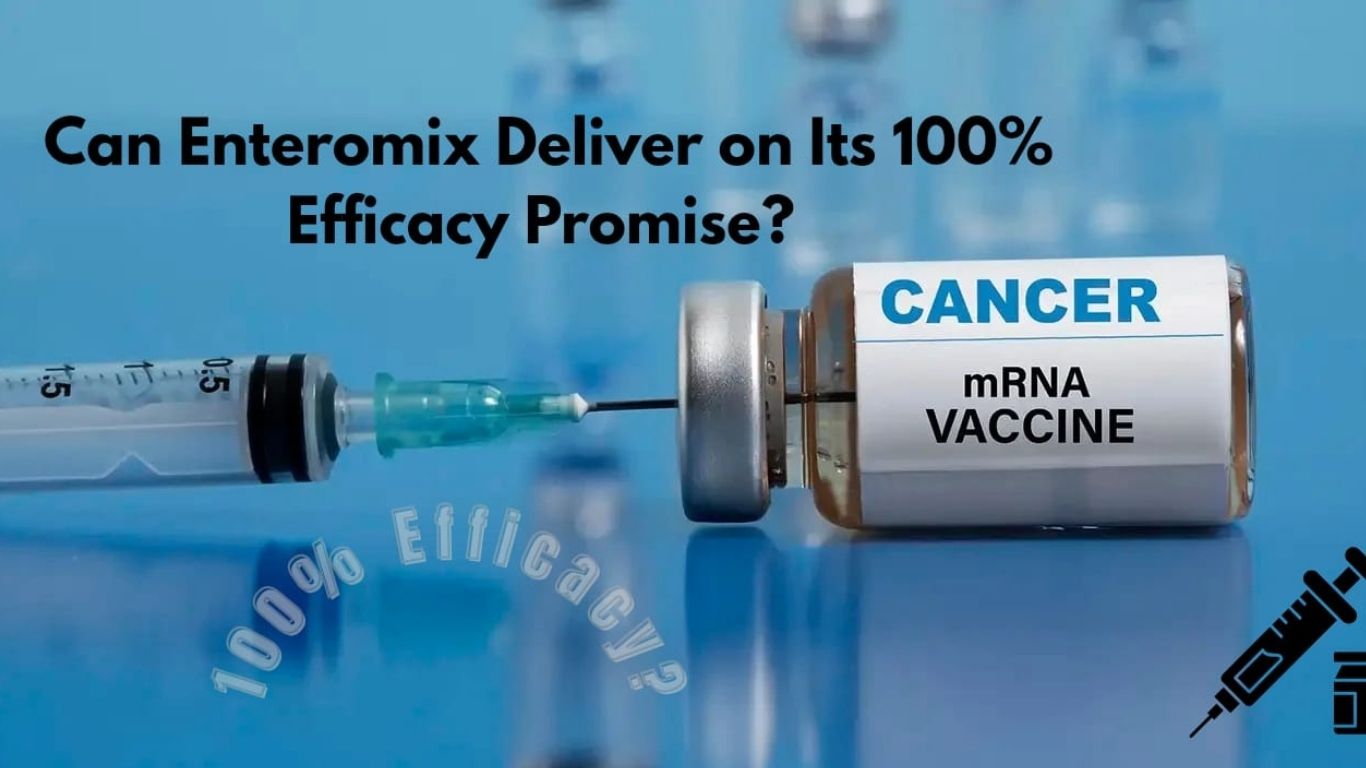
In September 2025, Russia’s Federal Medical and Biological Agency (FMBA) broke news about their personalized mRNA-based cancer vaccine, Enteromix, was 100% effective in clinical trials. The claim sent waves across the global scientific community. If proven and cleared, the advance will revolutionize cancer prevention and treatment.
A New Type of Vaccine
Enteromix is mRNA-based, similar to COVID-19 vaccines. Instead of immunizing against a virus, it teaches the immune system to see and destroy cancer cells. What makes Enteromix so unique is that it’s tailored. Each vaccine dose is tailored to the patient’s genetic profile and the RNA of the tumor so that the immune system kills just the strange cells without even touching healthy tissue.
As FMBA director Veronica Skvortsova reported, the vaccine also caused not only regression of tumors but even complete control of the disease in some patients. It was initially tested on patients with colorectal cancer, followed by subsequent forms in preparation for glioblastoma and melanoma.
Clinical Trial Results
The initial human trials involved 48 participants. Unlike chemotherapy and radiation, which can cause serious side effects, no significant adverse reactions were reported with Enteromix. The trial demonstrated tumor reduction and, in some patients, complete regression.
The reported 100% efficacy refers to measurable clinical responses, including tumor control and immune system activation. While the sample size was small, the consistency of the results has attracted attention from oncologists worldwide.
The Role of Russian Research Institutions
Enteromix was developed by the National Medical Research Radiology Centre and the Engelhardt Institute of Molecular Biology of the Russian Academy of Sciences. The program began years before the COVID-19 pandemic, but the rapid development of mRNA platforms during 2020–2022 accelerated its progress.
Clinical trials were showcased at the St. Petersburg International Economic Forum 2025, signaling Russia’s intention to position itself as a leader in medical biotechnology.
Global Implications
If approved, Enteromix could reshape:
1) Cancer care delivery: shifting from hospital-based chemotherapy to personalized outpatient immunization.
2) Healthcare economics: potentially lowering long-term costs by reducing hospital stays and toxic treatments.
3) Global health equity: if production is scaled affordably, low- and middle-income countries could access advanced cancer care earlier than with traditional treatments.
However, political and regulatory barriers may complicate rapid global rollout, especially given geopolitical tensions involving Russia.
Skepticism and Verification Challenges
A 100% efficacy claim naturally invites skepticism. No cancer therapy in history has shown universal success across all patients. Experts stress the need to:
1) Examine the clinical trial protocol in peer-reviewed journals.
2) Verify follow-up durations to assess relapse rates.
3)Evaluate tumor types, stages, and genetic diversity of participants.
4)Confirm independent replication of results.
Until transparent peer-reviewed data is released, Enteromix remains a potential breakthrough, not a confirmed one.
The Personalized Medicine Revolution
Enteromix is part of a broader shift in oncology:
1)From one size fits all to precision medicine.
2) From toxic treatments to immune-guided therapies.
3)From late-stage management to early intervention and prevention.
mRNA technology, once experimental, is now proving to be a versatile platform, capable of adapting to rapidly mutating diseases like cancer.
Safety Profile
One of the most striking outcomes of the Enteromix trial was the absence of severe side effects. Chemotherapy often causes fatigue, nausea, immune suppression, and organ toxicity. Enteromix’s mechanism avoids harming healthy cells, making it more tolerable.
Patients reportedly experienced only mild flu like symptoms after vaccination, which resolved within 48 hours.
Regulatory Path Ahead
The FMBA has submitted Enteromix for approval by Russia’s Ministry of Health. If approved, it will likely enter Phase 3 multicenter trials involving thousands of patients worldwide.
Global rollout will depend on:
1) Peer reviewed publication of trial results.
2)Collaboration with international regulatory bodies.
3)Addressing manufacturing and distribution logistics.
Moderna and BioNTech, which also have cancer vaccine programs, may seek collaborations or competitive trials to benchmark efficacy.
Ethical and Economic Considerations
Introducing a 100% effective cancer vaccine raises critical questions. Such as…
1) Will access be equitable or limited to wealthy nations?
2)How will pricing and patent rights affect availability?
3) How will healthcare systems integrate personalized manufacturing at scale?
Russia’s decision on licensing and partnerships will shape global access.
Reactions Around the World
Global reaction has been a mix of hope and skepticism.Patients see it as a ray of hope against aggressive cancers.Oncologists call for independent verification.Pharmaceutical companies are watching closely, as this could disrupt billion-dollar treatment markets.Times Now News described Enteromix as a “potential gamechanger,” while also warning against “global hype without scientific verification.”
Next Steps for Research
For Enteromix to prove its worth globally some steps should be taken..
1)Larger Phase 3 trials across multiple countries are needed.
2)Long term follow up to assess recurrence must be completed.
3) Comparative studies against existing immunotherapies should be conducted.
4) Manufacturing capacity for personalized vaccine production must be scaled.
If these steps are successful, we could be witnessing the first widely effective therapeutic cancer vaccine.
Why Enteromix Could Work Where Others Didn’t
Unlike previous cancer vaccines that targeted limited antigens, Enteromix uses full RNA sequencing to match the vaccine to each patient’s tumor. This level of personalization may be why it achieved high efficacy.
Additionally, by combining oncolytic viral therapy with mRNA immunization, it tackles the tumor from two fronts one is direct destruction and another is immune activation.
The Bigger Picture
Cancer is not a single disease. It’s a collection of over 200 diseases with diverse genetic mutations. A universal treatment has been elusive. But if Enteromix proves effective across multiple cancer types it may…
1)Transform cancer from a life threatening disease to a manageable condition.
2)Make early-stage vaccination a reality for high-risk populations.
3)Inspire a new generation of cancer therapeutics.
Conclusion: A Breakthrough with Caveats
Enteromix may mark a turning point in cancer research, offering unprecedented efficacy, safety, and personalization. However, the path from promising trial to global cure is long and complex. Scientific validation through peer review is essential. Regulatory transparency will determine credibility. Ethical distribution will define its global impact. If these hurdles are met, Enteromix could become what many oncologists have dreamed of for a decade: a cancer vaccine that truly works.