

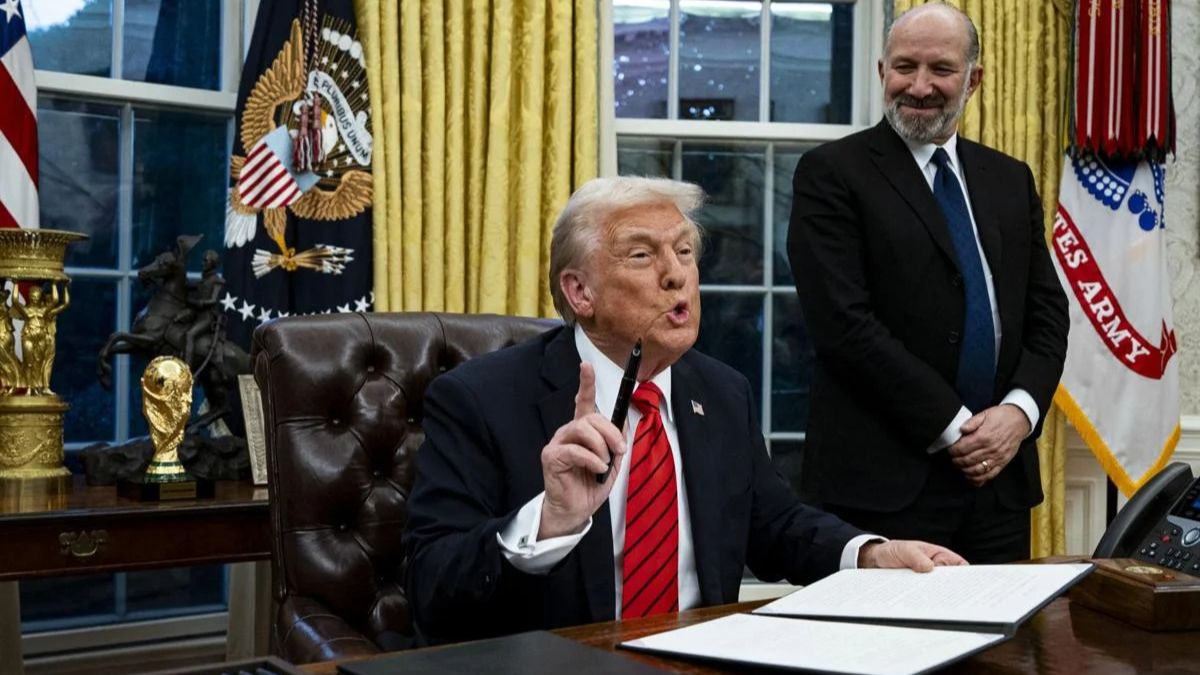
In a move that has sent shockwaves through the educational and political landscapes, President Donald Trump is poised to sign an executive order directing Education Secretary Linda McMahon to begin dismantling the U.S. Department of Education. This unprecedented action aims to transfer educational authority back to the states, fulfilling a longstanding conservative ambition. However, the path to achieving this objective is fraught with legal complexities and staunch opposition.
A Historical Perspective
The Department of Education, established in 1979 under President Jimmy Carter, was designed to centralize federal efforts in supporting and regulating education across the nation. Over the decades, it has played a pivotal role in administering federal funding, enforcing civil rights laws in educational settings, and managing student loan programs. The department’s existence has been a point of contention among conservatives, who argue that education should be managed at the state and local levels without federal intervention.
The Executive Order: Scope and Limitations
President Trump’s forthcoming executive order instructs Secretary McMahon to “take all necessary steps” to facilitate the closure of the department. However, it’s crucial to note that dismantling a federal agency requires Congressional approval. The executive branch cannot unilaterally abolish a department created by legislative action. This sets the stage for a potential constitutional showdown between the administration and Congress.
Motivations Behind the Move
The administration asserts that this initiative aims to grant states and local communities greater control over education, thereby tailoring educational policies to better suit regional needs. Proponents argue that decentralization could lead to more innovative and effective educational strategies, free from federal mandates that may not align with local priorities.
However, critics contend that this move could exacerbate educational inequalities. Federal oversight has historically ensured that marginalized and underserved communities receive necessary support and protection. Dismantling the department could jeopardize programs that address disparities in education access and quality.
Legal and Political Hurdles
The proposed dismantling faces significant legal obstacles. As previously mentioned, abolishing a federal department necessitates legislative action. Given the current composition of Congress, securing the required approval appears unlikely. Moreover, numerous education-related programs and funding mechanisms are enshrined in federal law. Redistributing these responsibilities to other agencies or state governments would be a complex and contentious process.
Politically, this move has garnered mixed reactions. While some conservative lawmakers and constituents applaud the initiative as a step toward reducing federal overreach, others within the Republican Party express concerns about the potential fallout. Education is a deeply personal issue for many Americans, and the prospect of upheaval in the system may not sit well with a broad spectrum of voters.
Implications for Students and Educators
Should the administration succeed in its endeavor, the ramifications for students and educators could be profound. The Department of Education oversees a $1.6 trillion student loan portfolio and distributes billions in federal funding to schools nationwide. The absence of a centralized body to manage these functions could lead to confusion and inconsistency in policy implementation.
Students with disabilities, low-income students, and other vulnerable populations who rely on federally mandated support services may find themselves particularly affected. The potential erosion of civil rights protections in education is a pressing concern among advocacy groups.
The Role of Elon Musk and the Push Against the Judiciary
In a related development, billionaire Elon Musk has been actively supporting efforts to impeach federal judges who have impeded President Trump’s policies. Musk’s involvement underscores a broader campaign to reshape the federal judiciary to align with the administration’s agenda. This tactic raises alarm among legal experts who view it as an assault on judicial independence and a threat to the checks and balances that underpin American democracy.
Conclusion
President Trump’s initiative to dismantle the Department of Education represents a bold and contentious effort to redefine the federal government’s role in education. While the stated goal is to empower states and local communities, the potential consequences of such a move are complex and far-reaching. As this situation unfolds, it will undoubtedly spark vigorous debate about the future of education in the United States and the balance of power between federal and state authorities.




