

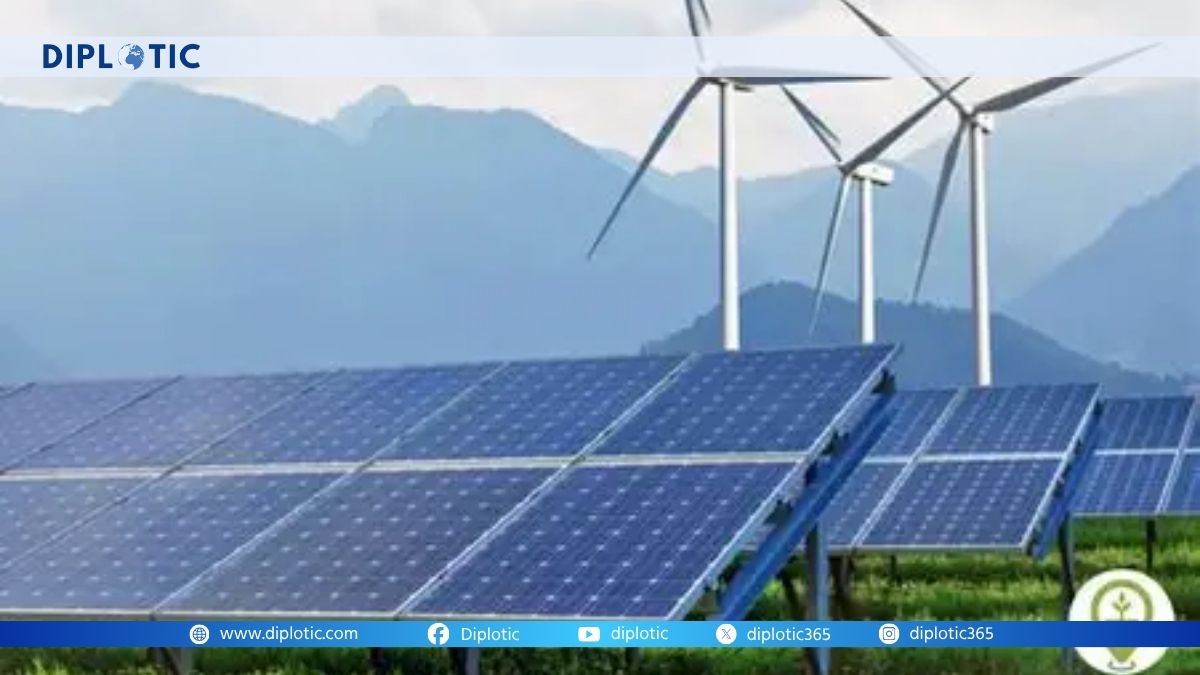
For decades, the global economy has run on oil. From the fuel in our vehicles to the plastics in our products, petroleum has been the invisible foundation of modern life. But that era is ending. Not abruptly, perhaps, but inexorably. The combination of climate imperatives, technological change, and geopolitical volatility is accelerating the transition away from fossil fuels. For South Asia, a region heavily dependent on imported oil, this transition presents both an urgent challenge and a historic opportunity. The recent crisis in the Strait of Hormuz, where 20 percent of global oil flows have been disrupted by conflict, has exposed the profound vulnerability of economies built on imported energy . As oil prices spike and currencies weaken, the case for diversification has never been clearer. This thought piece explores why South Asian nations must pivot toward renewable energy and resilient supply chains, and what lessons they can draw from global experiences in managing the post-oil transition.
Why Is the Post-Oil Era Inevitable?
The forces driving the world away from oil are powerful and mutually reinforcing. The first is climate change. The scientific consensus is unambiguous: to avoid catastrophic warming, global emissions must fall dramatically, and that means leaving most remaining fossil fuels in the ground. South Asia is already experiencing the consequences of a warming planet—more intense monsoons, longer droughts, rising sea levels threatening coastal cities. The 2025 monsoon season in India, with its devastating floods from the Himalayas to Kolkata, offered a preview of the costs of inaction . For nations that did little to cause the problem but are bearing its worst effects, the moral and practical case for clean energy is overwhelming.
The second force is technology. The cost of renewable energy has collapsed over the past decade. Solar and wind are now the cheapest sources of new electricity in most of the world, including South Asia. Battery storage costs are falling rapidly, addressing the intermittency challenge. Electric vehicles are becoming mainstream, reducing demand for oil in transportation. These are not futuristic projections; they are current realities. The economics of energy are shifting in favor of clean sources, and that shift will only accelerate.
The third force is geopolitics. The Strait of Hormuz crisis is only the latest reminder of the risks inherent in oil dependence. When 20 percent of global supply passes through a narrow channel that can be threatened by a regional power, every oil-importing nation is hostage to events beyond its control . The resulting price spikes, currency pressure, and economic disruption are not anomalies but features of the oil system. Diversification away from oil is, among other things, a strategy for national security and economic sovereignty.
What Is the Current State of South Asia’s Oil Dependence?
South Asia’s vulnerability to oil shocks is extreme by global standards. India imports approximately 85 percent of its crude oil requirements, making it one of the most exposed major economies . Pakistan, Bangladesh, and Sri Lanka are similarly dependent, with import shares ranging from 70 to 100 percent. The majority of this oil comes from the Gulf region and passes through the Strait of Hormuz, creating a concentrated source of systemic risk .
The economic consequences of this dependence are visible in every oil price spike. Higher import bills widen current account deficits and pressure currencies. The Indian rupee, Pakistani rupee, Bangladeshi taka, and Sri Lankan rupee all weaken when oil prices rise, amplifying inflation and eroding purchasing power . Higher transportation costs feed into food prices, hurting the poorest households most. Governments face the difficult choice of absorbing costs through subsidies, which strain budgets, or passing them to consumers, which risks social unrest.
The fiscal dimension is equally concerning. Many South Asian countries subsidize fuel to protect consumers, but these subsidies become unsustainable when oil prices spike. The opportunity cost is enormous: money spent on oil imports and fuel subsidies is money not spent on education, health, infrastructure, or the clean energy transition itself. Breaking this cycle is essential for long-term development.
What Lessons Can South Asia Learn from Global Diversification Efforts?
Countries around the world have attempted to diversify their economies away from oil dependence, with varying degrees of success. Their experiences offer valuable lessons for South Asia.
The Gulf states themselves provide perhaps the most relevant examples. Saudi Arabia’s Vision 2030, launched over a decade ago, aims to reduce the kingdom’s dependence on oil through investments in tourism, entertainment, technology, and renewable energy . The United Arab Emirates has built Dubai into a global hub for trade, finance, and tourism, demonstrating that oil wealth can be leveraged to create diversified economies. These efforts are far from complete—Gulf economies remain heavily oil-dependent—but they show what is possible with sustained political commitment and strategic investment.
Norway offers a different model. Rather than spending its oil revenue, Norway invested it in a sovereign wealth fund that now owns approximately 1.5 percent of global stocks . The fund provides a permanent source of income that will outlast the country’s oil reserves. For South Asian countries that are oil importers rather than exporters, the lesson is different but still relevant: when windfalls occur—whether from foreign investment, remittances, or aid—they should be invested in productive assets rather than consumed.
China’s approach to renewable energy offers another lesson. By making strategic investments in solar manufacturing, battery production, and electric vehicles, China has positioned itself as the global leader in the industries of the future . These investments were not accidents of the market; they resulted from deliberate industrial policy, sustained over decades. For South Asian countries seeking to participate in the clean energy economy, the lesson is that strategic direction matters.
How Can South Asia Build Resilient Supply Chains?
The pandemic exposed the fragility of global supply chains. The war in Ukraine exposed the risks of energy dependence. The Strait of Hormuz crisis is exposing the vulnerabilities of concentrated trade routes. For South Asia, building resilient supply chains must be a priority.
Resilience has multiple dimensions. The first is diversification of sources. For oil and gas, this means cultivating relationships with suppliers beyond the Gulf—the Americas, Africa, Central Asia. For critical minerals needed for the energy transition, it means securing access to multiple sources and investing in recycling and domestic production where feasible.
The second dimension is regional integration. South Asia remains one of the least economically integrated regions in the world, with intra-regional trade accounting for barely 5 percent of total trade . Building better connectivity—through roads, rails, power grids, and pipelines—would reduce dependence on distant sources and create buffers against global shocks. The India-Bhutan-Bangladesh-Nepal initiatives on hydropower and grid connectivity point in the right direction.
The third dimension is strategic reserves. Japan’s 254 days of oil stockpiles and China’s year’s worth of Gulf imports demonstrate the value of buffers . South Asian countries should build and maintain strategic reserves of oil, food, and other critical supplies, accepting the carrying costs as insurance against disruption.
The fourth dimension is manufacturing resilience. The concentration of global production in China creates vulnerabilities that were exposed during the pandemic. South Asian countries have an opportunity to attract investment in diversified manufacturing, leveraging their large workforces and growing domestic markets. The production-linked incentive schemes in India are a step in this direction.
What Role Can Renewable Energy Play?
Renewable energy is not just an environmental imperative; it is an economic opportunity and a strategy for resilience. By generating electricity from domestic sources—sun, wind, water, biomass—South Asian countries can reduce their exposure to volatile global oil markets and strengthen their balance of payments.
The potential is enormous. India has some of the best solar resources in the world and has set ambitious targets for renewable capacity. Pakistan’s wind corridors and hydropower potential remain underutilized. Bangladesh’s solar home systems have brought electricity to millions but can be scaled further. Nepal and Bhutan have vast hydropower resources that could power the entire region if grid integration improved.
The economics are increasingly favorable. Solar and wind are now cheaper than new coal-fired power in most of South Asia, and they are becoming cheaper than existing coal. Battery costs are falling, enabling higher penetration of variable renewables. Electric vehicles are becoming cost-competitive, reducing oil demand in transportation. The transition is not a sacrifice; it is an opportunity to build a cleaner, cheaper, more resilient energy system.
The employment potential is also significant. Renewable energy is more labor-intensive than fossil fuel energy, particularly in installation and maintenance. Manufacturing solar panels, wind turbines, and batteries can create industrial jobs. The just transition—ensuring that workers and communities dependent on fossil fuels are supported—must be part of the strategy.
What Are the Policy Priorities for South Asian Governments?
Translating these insights into action requires a coherent policy framework across multiple domains. The first priority is pricing carbon. Whether through taxes, emissions trading, or removal of fossil fuel subsidies, putting a price on carbon sends signals to investors and consumers about the direction of travel. Fossil fuel subsidies in South Asia remain substantial; redirecting them toward clean energy and social support would accelerate the transition while improving fiscal sustainability.
The second priority is investing in infrastructure. Grid modernization is essential to accommodate higher shares of renewable energy. Cross-border transmission lines can unlock regional hydropower potential. Charging infrastructure for electric vehicles must be built out. Ports and logistics need upgrading to handle diversified trade flows. These investments are large but essential.
The third priority is supporting innovation and manufacturing. Research and development in clean energy technologies, support for startups, and incentives for domestic manufacturing can create competitive industries. The global race for leadership in solar, batteries, and green hydrogen is underway; South Asia should not be left behind.
The fourth priority is managing the transition fairly. The benefits of the clean energy economy will not be automatically shared. Policies must ensure that low-income households have access to affordable clean energy, that workers in fossil fuel industries are supported, and that communities dependent on coal or oil are not left behind. Social safety nets, retraining programs, and regional development policies all have roles to play.
The fifth priority is international engagement. South Asian countries should participate actively in global climate negotiations, advocate for climate finance and technology transfer, and build partnerships with countries and companies that can support their transitions. The India-US initiative on critical minerals, the International Solar Alliance, and bilateral clean energy partnerships all offer avenues for cooperation.
How Does the Current Crisis Strengthen the Case for Action?
The Strait of Hormuz crisis is a vivid illustration of the risks of oil dependence. Every day the conflict continues, the costs mount: higher oil prices, wider trade deficits, weaker currencies, slower growth. For South Asian households, the pain is felt at the fuel pump and in the price of food. For businesses, it is felt in input costs and uncertain demand. For governments, it is felt in fiscal pressure and difficult policy choices.
But crises also create opportunities. The current moment has concentrated minds on the vulnerabilities of the status quo. Policymakers who might have been complacent about oil dependence are now confronting its costs. Business leaders who might have delayed investments in efficiency or renewables are now accelerating them. Citizens who might have taken cheap energy for granted are now questioning the system’s sustainability.
The challenge is to translate this heightened awareness into sustained action. The crisis will eventually pass—the Strait of Hormuz will reopen, oil prices will moderate—but the underlying vulnerabilities will remain. The only durable solution is to reduce dependence on oil itself. That means accelerating the transition to renewable energy, building resilient supply chains, and diversifying economies away from their exposure to fossil fuel volatility.
Conclusion
South Asia stands at a crossroads. One path leads back to the familiar vulnerabilities of the oil era: dependence on imported fuel, exposure to distant conflicts, recurring balance of payments crises, and a worsening climate. The other path leads toward a more resilient future: energy from domestic renewable sources, diversified supply chains, integrated regional markets, and cleaner air.
The choice is not as difficult as it might seem. The economics of renewable energy have shifted decisively. The technology is available and affordable. The geopolitical case for energy independence has never been stronger. The climate imperative is undeniable. What has been lacking is not the means but the will—the sustained political commitment to navigate the transition and overcome the entrenched interests that benefit from the status quo.
The Strait of Hormuz crisis is a wake-up call. For South Asian policymakers, business leaders, and citizens, the question is whether they will heed it. The post-oil era is coming, whether we prepare for it or not. The only choice is whether we shape that transition or are shaped by it. The lessons from global experience are clear: diversification pays, resilience matters, and the countries that invest in the future will be the ones that thrive in it. For South Asia, the time to act is now.




