
• About
  • Contact
  • Methodology
  • Violation Policy
  • Editorial Policy
  • Correction Policy
  • Privacy Policy
  • Reader Submissions
  • Our Team
  • Funding & Donors
Monday, June 8, 2026
  • Home
  • Focus
    • Exclusive
    • Editor’s Pick
    • Behind the Curtain
  • Fact Check
  • Politics
  • Diplomacy
  • Economy
  • War & Conflict
  • South Asia
  • More
    • Games & Sports
    • Technology
    • Entertainment
    • History & Culture
    • Science & Technology
    • Nature & Environment
    • Health & Lifestyle
Bangla
Diplotic
No Result
View All Result
  • Home
  • Focus
    • Exclusive
    • Editor’s Pick
    • Behind the Curtain
  • Fact Check
  • Politics
  • Diplomacy
  • Economy
  • War & Conflict
  • South Asia
  • More
    • Games & Sports
    • Technology
    • Entertainment
    • History & Culture
    • Science & Technology
    • Nature & Environment
    • Health & Lifestyle
No Result
View All Result
Diplotic
Bangla
Home Behind the Curtain

Why Do Shallow Earthquakes Cause More Destruction Than Deep Ones?

Staff Reporter by Staff Reporter
September 1, 2025
in Behind the Curtain, Nature & Environment
Reading Time: 3 mins read
A A
0
Why Do Shallow Earthquakes Cause More Destruction Than Deep Ones?
0
VIEWS
Share on FacebookShare on Twitter

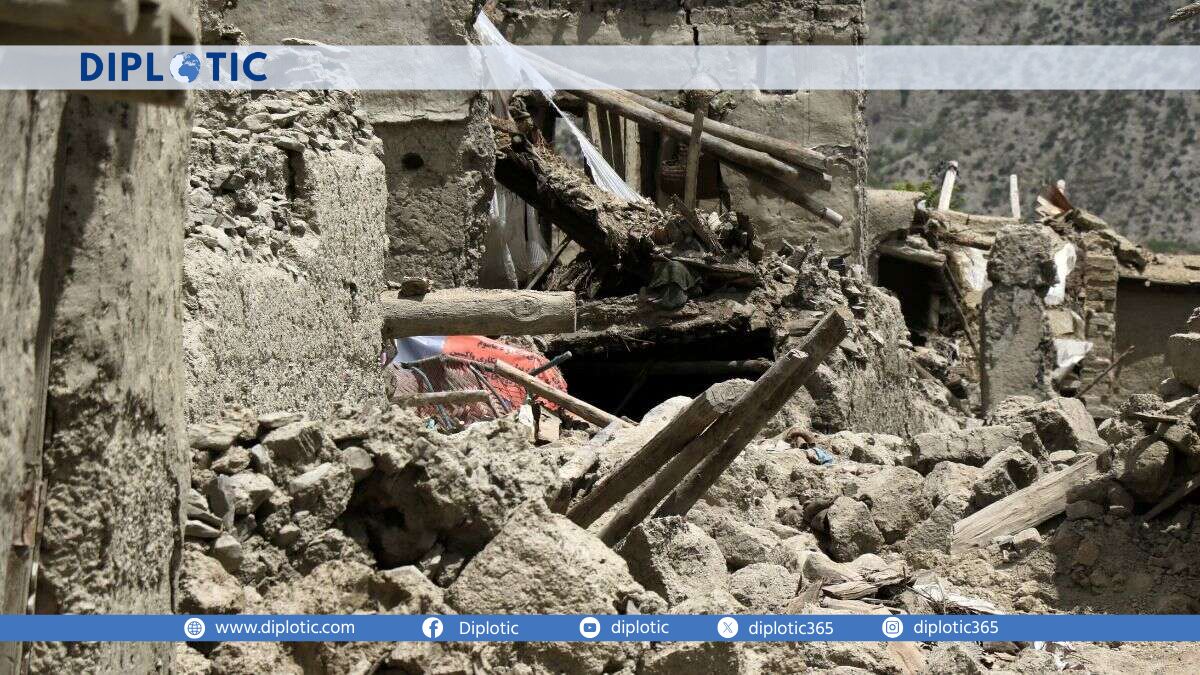
A magnitude 6 earthquake struck eastern Afghanistan near the border with Pakistan just before midnight on Sunday. Several aftershocks followed.

At least 800 people were killed and 2,500 were injured. The epicentre was recorded at a depth of about 8km (5 miles) — considered shallow by seismologists — making the shaking far more intense and devastating for fragile homes and vulnerable communities.

Most earthquakes occur at shallow depths, and understanding why they tend to be more destructive helps explain the immense toll disasters like this can cause.


How Do Earthquakes Happen?

The Earth’s surface is made up of hard rock plates, known as tectonic plates, which float on top of molten, moving rock. These plates are constantly in motion but usually locked together, building stress over time.

When the stress becomes too great, the plates suddenly slip along fault lines — long fractures in the crust. This abrupt release of pressure sends powerful waves of energy through the surrounding rock, which we feel as an earthquake.


How Are Earthquakes Measured?

Scientists rely on seismographs to measure ground shaking. In the past, these devices worked with needles that scratched lines on rotating drums of paper; today, advanced digital networks capture and share real-time data globally.

Magnitude is the most common measurement, with each whole number increase representing a tenfold jump in strength. But magnitude alone doesn’t determine the level of destruction — depth is a critical factor.


Why Are Shallow Earthquakes More Destructive?

Two earthquakes of the same magnitude can cause vastly different levels of damage depending on how deep they occur.

  • Shallow earthquakes (0–70 km / 0–43 miles deep): Energy has very little distance to travel before hitting the surface, so the shaking feels more violent and destructive.
  • Intermediate earthquakes (70–300 km / 43–186 miles): The energy dissipates more as it travels upward, often reducing the surface impact.
  • Deep earthquakes (300–700 km / 186–435 miles): Despite being powerful, much of their energy is absorbed by rock layers before reaching the surface.

This explains why shallow quakes, like the one in eastern Afghanistan, frequently cause the highest casualties and damage.


Why Is Afghanistan So Earthquake-Prone?

Afghanistan lies in one of the world’s most active seismic regions. The collision between the Indian Plate and the Eurasian Plate creates immense pressure beneath the Hindu Kush and Pamir mountains.

  • In the Hindu Kush, the lithosphere sinks steeply into the mantle, producing rare deep-focus quakes that can reach depths of 200 km (124 miles).
  • Along the Sulaiman Range and near the Main Pamir Thrust, earthquakes are usually shallow, striking closer to the surface where towns and villages are most vulnerable.

This complex geology explains why Afghanistan experiences both devastating shallow quakes and unusually deep ones in the same region.


Staff Reporter

Staff Reporter

Staff Reporter at Diplotic | Covering global affairs, diplomacy & policy with clarity and insight.

Blue Moon: The Rare Lunar Wonder

Blue Moon: The Rare Lunar Wonder

by Arjuman Arju
May 31, 2026

The night sky has always fascinated people with its countless stars, planets, and celestial events. Among these wonders, the Blue...

Fact Check: Does Consciousness Create Reality?

Fact Check: Does Consciousness Create Reality?

by Morium Jahan Setu
May 11, 2026

For more than a century, quantum mechanics has challenged humanity’s understanding of reality. Unlike classical physics, which describes a predictable...

How China, Russia, Turkey and Europe Are Responding to Iran War

The Impact of the US-Iran Conflict on Global Oil Prices and Economic Performance

by Sajjad Hossain Adib
May 11, 2026

Introduction The conflict between the United States and Iran is a central topic in global geopolitics. This enduring friction has...

Fact Check: AI-generated misinformation is destabilizing South Asian elections

Fact Check: Are “Clear Cache” Apps Actually Improving Phone Speed?

by Samshul Arefin
May 1, 2026

Every day, millions of smartphone users tap buttons labeled "Clean," "Boost," or "Speed Up" in third-party cleaning apps, hoping to...

DIPLOTIC

© 2024 Diplotic - The Why Behind The What

Navigate Site

  • About
  • Contact
  • Methodology
  • Violation Policy
  • Editorial Policy
  • Correction Policy
  • Privacy Policy
  • Reader Submissions
  • Our Team
  • Funding & Donors

Follow Us

No Result
View All Result
  • Home
  • Focus
    • Exclusive
    • Editor’s Pick
    • Behind the Curtain
  • Fact Check
  • Politics
  • Diplomacy
  • Economy
  • War & Conflict
  • South Asia
  • More
    • Games & Sports
    • Technology
    • Entertainment
    • History & Culture
    • Science & Technology
    • Nature & Environment
    • Health & Lifestyle

© 2024 Diplotic - The Why Behind The What

