

History is not merely a record of past events; it is the foundation of a nation’s identity, values, and the intellectual framework through which future generations understand their country. What appears in school textbooks is therefore not just an academic matter. It shapes how young citizens perceive their nation, its struggles, and its ideals.
Against this background, the recent decision to remove Bangabandhu Sheikh Mujibur Rahman’s historic 7th March Speech from the 2026 national textbooks while introducing detailed narratives of the July 2024 anti-government uprising has raised widespread questions and concerns. For many, this is not simply a curriculum change but a reflection of how national priorities are being interpreted at a sensitive moment in the country’s history.
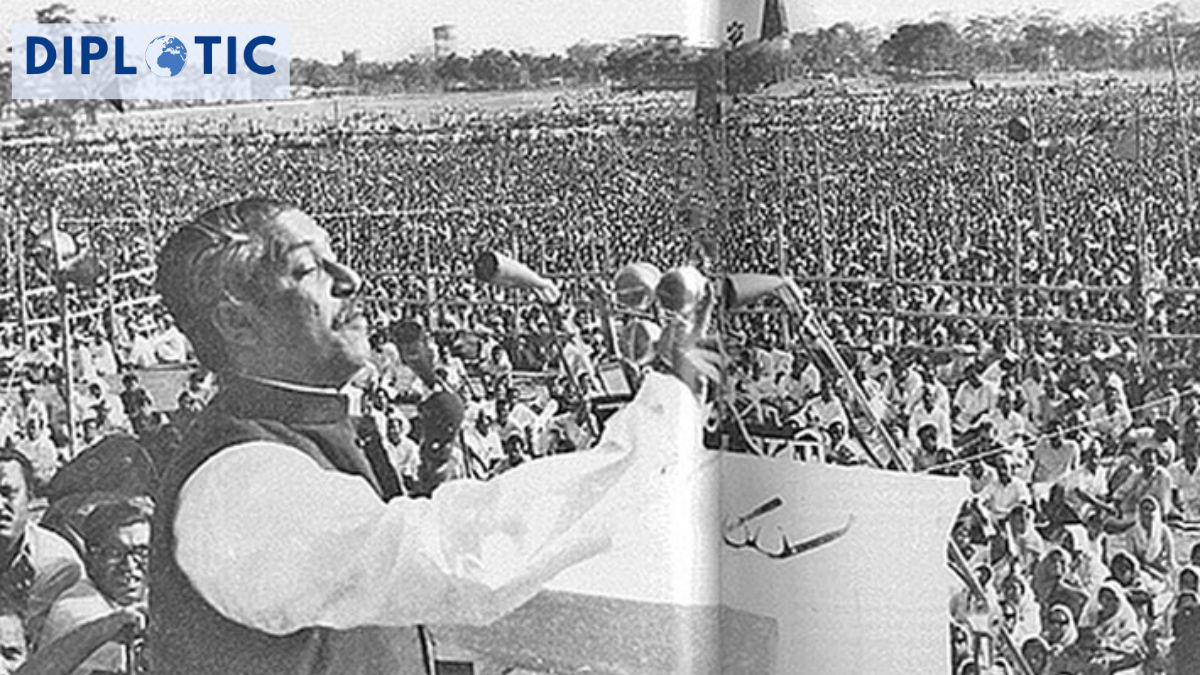
The 7th March Speech: A Foundational Document
The 7th March Speech is widely regarded as a defining moment in Bangladesh’s road to independence. Delivered at a time of intense political repression, it provided moral direction, political clarity, and emotional unity to a population moving toward self-determination. Its global importance was formally recognized in 2017 when UNESCO included the speech in its Memory of the World Register.
Educators often note that keeping this speech in textbooks is not just about preserving a historical document. It allows students to understand the ideological foundations of the Liberation War, the power of political communication, and the historical circumstances under which Bangladesh emerged as an independent state. Removing it therefore, raises concerns about whether students will continue to receive a complete picture of the country’s formative years.
History and Contemporary Politics
In democratic systems, governments change, and policies evolve accordingly. However, the core elements of national history usually remain stable over long periods, because history serves as a collective record rather than a political instrument.
This has led to an important debate: Should internationally recognized historical documents be adjusted or removed based on present political realities? While incorporating recent events into curricula is common practice, many scholars argue that removing foundational historical material can blur the distinction between academic history and contemporary political interpretation.
Students themselves are beginning to ask thoughtful questions: Can the contributions of historical leaders be re-evaluated solely through the lens of later political developments? And if textbook content changes with every political transition, which version of history should be considered reliable?
A Time of Multiple National Challenges
The textbook debate has emerged at a time when Bangladesh is facing a range of social, diplomatic, and political pressures.
Recent discussions around Bangladesh–India relations have highlighted ongoing concerns regarding regional diplomacy, trade, water sharing, and border management. These issues directly affect economic stability and regional cooperation and continue to draw public attention.
In the sports arena, the removal of national cricket team player Mustafizur Rahman from the Indian Premier League has generated public discussion about international sports politics, player management, and the broader implications for Bangladeshi athletes in global competitions.
Social concerns have also been prominent. The recent death of Hadi has led to renewed conversations about public safety, justice, and accountability. At the same time, incidents of election-related violence have again raised questions about the health of democratic practices and the peaceful conduct of political processes.
Within this broader context, many citizens are asking whether changes to historical content in textbooks should be among the country’s most urgent priorities.
Including Contemporary History: Need and Limits
There is no doubt that recent political and social developments deserve a place in future historical study. The events of July 2024 will inevitably become part of Bangladesh’s modern history, and students should eventually learn about them in an academic and analytical manner.
However, the central question is whether introducing new material requires removing internationally recognized foundational content. Many educators believe that both can coexist in the curriculum, allowing students to understand historical continuity from the country’s birth to its present challenges.
The Message to Future Generations
Textbooks are not merely tools for examination preparation; they play a key role in shaping young citizens’ ethical values, civic understanding, and sense of belonging. Preserving historical continuity helps students develop a stable and coherent understanding of national identity.
If fundamental historical narratives change with every political transition, there is a risk of confusion, weakened trust in public institutions, and uncertainty about national identity outcomes that can affect any society’s long-term cohesion.
Conclusion
The 7th March Speech remains a cornerstone of Bangladesh’s historical identity and carries international recognition. At the same time, contemporary events will also become part of the nation’s historical record.
The real challenge is not choosing between past and present, but designing a balanced, evidence-based, and continuous curriculum, one that preserves foundational history while thoughtfully incorporating modern developments. At a time when Bangladesh faces multiple diplomatic, social, and democratic challenges, decisions about historical education require particular care, transparency, and scholarly consideration.
Protecting historical continuity ultimately supports not only the understanding of the past but also the intellectual foundation of future generations.




