

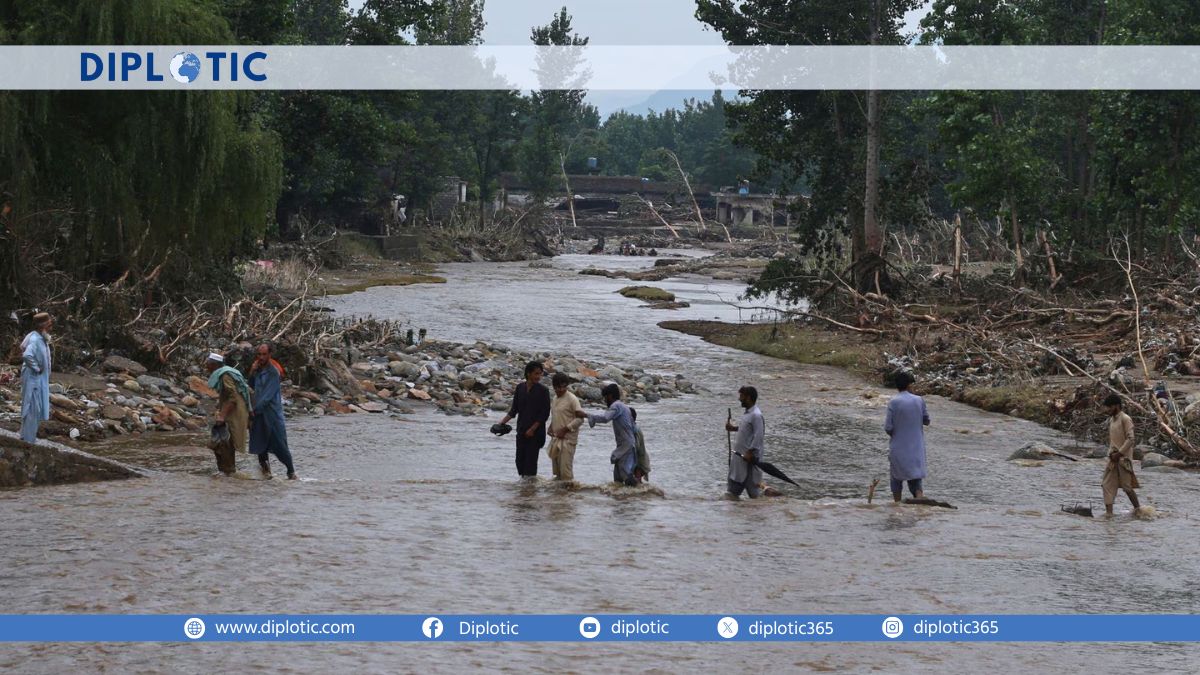
A Village Erased by Nature’s Fury
In the verdant embrace of Khyber Pakhtunkhwa’s mountains, the village of Bishnoi once thrived as a pastoral haven, its river a lifeline for farmers. But on the morning of August 15, 2025, this serenity shattered as torrential rains unleashed a flash flood that locals described as a relentless force, “bringing huge rocks with it and crushing buildings in its path, destroying the entire village.” The Provincial Disaster Management Authority (PDMA) reported 314 deaths and 156 injuries across the province, with Buner district—home to Bishnoi—bearing the brunt at 217 fatalities. The floodwaters, surging through before dawn, left behind a landscape of devastation: concrete blocks, uprooted trees, and homes buried under debris. “There is a house under every stone,” said local Israr Khan, capturing the grim reality as residents and rescue workers sifted through rubble with inadequate tools, desperate to find survivors.
The historical context of Pakistan’s monsoon seasons reveals a recurring tragedy amplified by modern challenges. Monsoons, delivering three-quarters of South Asia’s rainfall from June to September, have long triggered floods and landslides, as documented in studies of regional weather patterns. Since late June 2025, 507 deaths and over 700 injuries have been recorded nationwide, per the National Disaster Management Agency, with Khyber Pakhtunkhwa’s glaciated terrain particularly vulnerable. Global warming, thinning glaciers and loosening debris, has intensified these disasters, a trend noted in analyses of climate-driven flooding. Bishnoi’s destruction, where 50% of homes were obliterated and the rest rendered uninhabitable, mirrors the 2022 floods that submerged a third of Pakistan, killing over 1,700. The government’s declaration of disaster zones, with forecasts of rain until August 21, underscores the ongoing peril, as villagers like Asrar Khan lament the loss of 27 still missing.
The human toll is visceral. In Bishnoi, a wedding preparation turned deadly, with entire families swept away. Abdul Salam, from Punjab, recounted his frantic calls to his wife and three children, all drowned in Swat Valley’s floods. Yet, acts of heroism emerged: in Swat, school principal Saeed Ahmad evacuated 900 students just before floodwaters demolished half his school, a decision that saved lives but couldn’t stem the broader tragedy. The economic cost—flattened crops, ruined markets, and collapsed infrastructure—compounds the social devastation, with Buner’s Pir Baba Bazaar reduced to mud-soaked chaos, sugar sacks and clothing strewn amid collapsed shops. Pakistan’s economic fragility, already strained by 2022’s $40 billion flood losses, faces another blow, with recovery efforts hampered by limited resources and reliance on manual labor.
Systemic Failures and the Climate Reckoning
The Khyber Pakhtunkhwa floods expose systemic vulnerabilities in Pakistan’s disaster preparedness and response. The PDMA’s tally of 217 deaths in Buner alone highlights the region’s exposure, exacerbated by glacial melt and unchecked construction along riverbanks, a recurring issue since the 2010 floods that killed 2,000. The government’s warning of continued rainfall until August 21, coupled with the absence of heavy machinery in Bishnoi, reveals a critical gap in infrastructure, as locals resorted to small tools to clear debris. Relief efforts, bolstered by Al-Khidmat and military personnel, showed resilience, but the arrival of volunteers from distant areas underscored the state’s stretched capacity. “The water was so strong it had no mercy on anyone,” said Asrar Khan, a sentiment echoing the powerlessness felt across the province.
Historically, Pakistan’s monsoon disasters have been worsened by policy failures, from inadequate early warning systems to lax enforcement of riverbed regulations, as seen in the 2022 Swat River encroachments that intensified flooding. The climate change nexus, driving glacier retreat and extreme rainfall, amplifies these risks, with a 2022 World Weather Attribution study linking heavier monsoons to global warming. Pakistan, contributing less than 1% of global emissions, bears a disproportionate burden, a hypocrisy highlighted by its high disaster risk ranking per World Bank assessments. The economic fallout is stark: agriculture, employing 40% of Pakistan’s workforce, faces decimated crops, while damaged infrastructure disrupts trade in a province already reliant on tourism and farming. The government’s refusal of foreign aid, citing sufficient resources, contrasts with local complaints of neglect, as seen in 2022 when 8 million were displaced with limited support.
The floods also reveal social fractures. In Bishnoi, survivors like the two young men staring at their family’s buried home, described as “unconscious and confused,” embody the psychological toll. The loss of 18 from a single household underscores the communal devastation, with recovery slowed by the lack of heavy equipment. Comparisons to an undivided India’s historical resilience, unifying resources to combat crises, highlight Pakistan’s fragmented response, where local efforts outpace centralized aid. The PDMA’s disaster zone declarations are a start, but without systemic reforms—enhanced forecasting, stricter land-use laws, and climate adaptation funding—the cycle of destruction persists, threatening Khyber Pakhtunkhwa’s future.
The Road to Recovery and Reform
As Khyber Pakhtunkhwa grapples with the flood’s aftermath, the path forward demands urgent reform to break the cycle of devastation. The immediate priority is rescue and relief, with agencies like Al-Khidmat distributing goods and setting up medical camps, yet the scale of destruction—50% of Bishnoi’s homes gone—requires massive investment. Reconstruction costs could mirror 2022’s $40 billion, straining Pakistan’s $350 billion economy, already burdened by inflation and debt. The government’s forecast of continued rain signals more potential losses, necessitating preemptive evacuations and robust early warning systems, absent in Bishnoi’s tragedy. The school principal’s swift action in Swat Valley saved 900 lives, but such individual heroics cannot substitute for systemic preparedness.
Long-term, Pakistan must address climate-driven risks through infrastructure upgrades and land-use enforcement, learning from past failures like the 2010 flood mismanagement that left millions homeless. Global support, as offered by the UN post-2022, could bridge funding gaps, but Pakistan’s insistence on self-reliance risks delaying recovery. The global climate adaptation framework emphasizes resilience for vulnerable nations, yet Pakistan’s low emissions contrast with its high exposure, demanding international accountability. Economically, restoring agriculture and markets in Buner and Swat is critical, with potential aid from regional powers like China, though geopolitical tensions may complicate assistance. Socially, the trauma of survivors—crying at the mention of lost kin—requires mental health support, an often-overlooked need in past disasters.
The floods’ legacy could catalyze reform or deepen despair. An undivided India’s historical unity offers a model for collective action, but Pakistan’s fragmented governance must unify to rebuild trust. Without addressing climate vulnerabilities and regulatory gaps, Khyber Pakhtunkhwa faces a future of recurring tragedies, with Bishnoi’s buried homes a haunting reminder of nature’s merciless power and the urgent need for change.




