

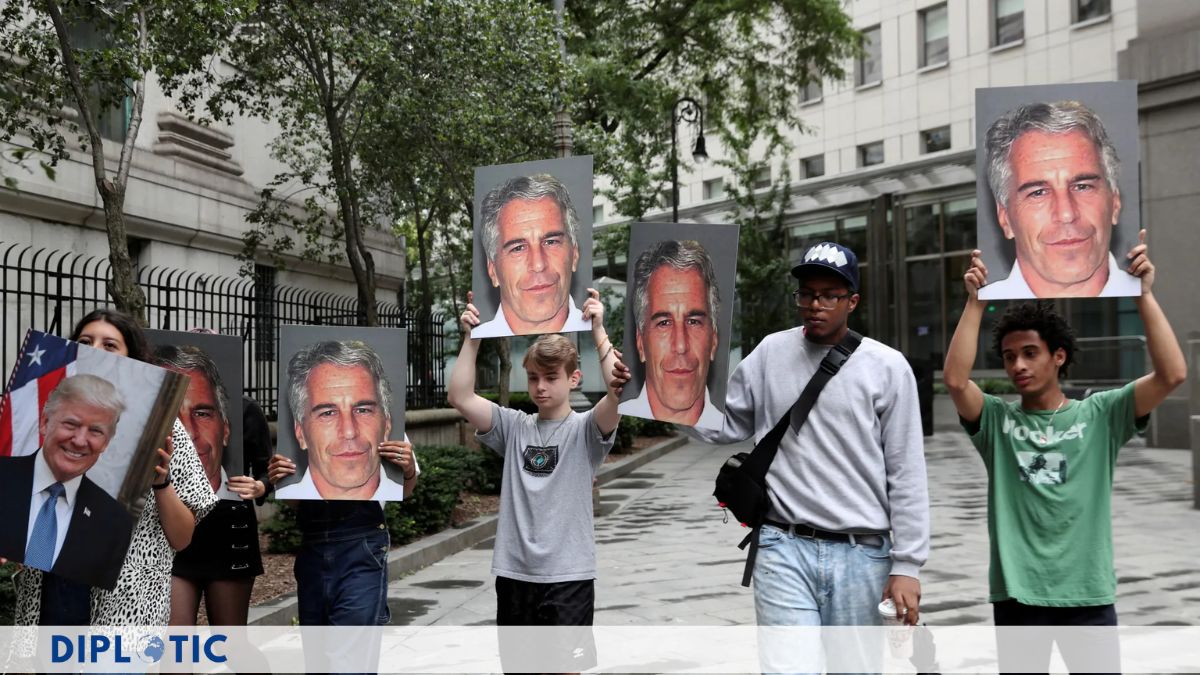
On August 5, 2025, the House Oversight Committee, led by Republican Chairman James Comer, dropped a bombshell: subpoenas for former President Bill Clinton, former Secretary of State Hillary Clinton, and a slew of former Justice Department and FBI heavyweights, demanding testimony about Jeffrey Epstein’s “horrific crimes.” The move, sparked by bipartisan votes in July, follows outrage over the DOJ’s refusal to release more Epstein files, despite President Donald Trump’s campaign pledge for transparency. With depositions set for October and a looming deadline for DOJ records, the probe could unearth new details about Epstein’s network—or just fuel more political mudslinging. Is this a genuine quest for justice or a circus to score points? With a sharp eye and a skeptical grin, let’s cut through the noise, trace the connections, and see what’s really at stake.
A Bipartisan Firestorm Ignites
The subpoenas stem from two motions passed on July 23, 2025, by the House Oversight Subcommittee on Federal Law Enforcement, defying GOP leaders like House Speaker Mike Johnson, who tried to bury the Epstein issue before the August recess. Rep. Summer Lee (D-PA) pushed for the DOJ to hand over “full, unredacted” Epstein files, while Rep. Scott Perry (R-PA) expanded the probe to include depositions from high-profile figures. Three Republicans—Nancy Mace, Brian Jack, and Perry—joined Democrats in an 8-2 vote, a rare bipartisan jab that puts pressure on Trump’s DOJ, led by Attorney General Pam Bondi. The committee also subpoenaed Ghislaine Maxwell, Epstein’s convicted associate, for an August 11 deposition, though her testimony’s reliability is questioned.
The targets are a who’s-who of power: Bill Clinton (deposition October 14), Hillary Clinton (October 9), former Attorneys General Merrick Garland (October 2), William Barr (August 18), Jeff Sessions (August 28), Alberto Gonzales (August 26), Loretta Lynch (September 24), and Eric Holder (September 17), plus former FBI Directors James Comey (September 10) and Robert Mueller (September 3). The DOJ has until August 19 to deliver Epstein-related records, with victim details redacted. Comer’s letters cite the need to probe federal handling of Epstein’s case, including his controversial 2008 non-prosecution agreement in Florida.
The Clinton Connection: Solid or Speculative?
Bill Clinton’s ties to Epstein are well-documented. He flew on Epstein’s private jet, the “Lolita Express,” at least four times between 2002 and 2003, per flight logs. Comer’s letter to Clinton alleges he “pressured” Vanity Fair in 2002 not to publish sex trafficking claims about Epstein, a claim sourced from Virginia Giuffre’s 2015 affidavit. Giuffre, an Epstein victim, also alleged Clinton was “close” with Maxwell, who’s serving 20 years for sex trafficking. “Given your past relationships with Mr. Epstein and Ms. Maxwell, you have information relevant to our investigation,” Comer wrote. Posts on X from users like @RealAlexJones and @bennyjohnson amplified the news, with some, like @sxdoc, citing actor Kevin Spacey’s claim of being on the jet with Clinton and “young girls.”
Hillary Clinton’s subpoena is shakier. Comer’s letter vaguely states, “Your family appears to have had a close relationship with both Jeffrey Epstein and his co-conspirator Ghislaine Maxwell,” leaning on her marriage to Bill rather than specific evidence. He suggests she “may have knowledge” of federal efforts to combat sex trafficking, a broad claim tied to her time as Secretary of State (2009-2013). Critics, including Rep. Robert Garcia (D-CA), argue the Clintons’ inclusion is politically motivated, noting no subpoena was issued for Alex Acosta, the former U.S. Attorney who signed Epstein’s 2008 deal and later served as Trump’s Labor Secretary.
Trump’s Shadow: A Double-Edged Sword
The Epstein saga is a minefield for Trump. His 15-year friendship with Epstein, documented from the late 1980s to 2004, included parties at Mar-a-Lago and a 2003 birthday letter described by The Wall Street Journal as “bawdy.” Trump’s name appears in DOJ files, per a May 2025 briefing by Bondi, though no wrongdoing is alleged. Trump has distanced himself, claiming he cut ties after a 2004 falling-out and helped prosecutors in Epstein’s 2006 Florida case. Yet his base is furious over the DOJ’s July 2025 memo stating no “client list” exists and Epstein died by suicide, contradicting conspiracy theories Trump once fueled.
Trump authorized Bondi to seek grand jury transcripts, but a Florida judge denied the request on July 24, 2025, with a New York case pending. He’s also greenlit a DOJ meeting with Maxwell, though her attorney, David Oscar Markus, says she’d testify only with immunity, which Comer rejected. Democrats, led by Garcia, are pushing a discharge petition with Rep. Thomas Massie (R-KY) and Ro Khanna (D-CA) to force a House vote on releasing the files, set for September.
Political Chess or Pursuit of Justice?
The subpoenas reflect a rare GOP-Democrat alliance, but motives vary. Democrats like Lee and Garcia frame it as a transparency win, with Garcia saying, “This is a huge win for the American people.” Republicans like Mace and Perry, defying Trump’s call to “move on,” may be appeasing voters demanding answers. Yet the inclusion of Democratic figures like the Clintons, Comey, and Mueller—while omitting Acosta—suggests a GOP tactic to deflect from Trump’s ties. X posts from @w_terrence and @EricLDaugh hype the Clintons’ subpoenas, framing them as a blow to Democrats.
The DOJ’s resistance, citing victim privacy and the absence of a “client list,” complicates matters. Comer’s probe aims to reform sex trafficking laws and non-prosecution agreements, but the 2008 Florida deal, which let Epstein plead guilty to lesser charges, remains a sore point. If Bondi defies the August 19 deadline, a contempt vote could loom, though GOP unity makes it unlikely.
What’s Next? A Ticking Clock
With Congress on recess until September, the focus shifts to the DOJ’s response and Maxwell’s deposition. The Clintons’ October dates give them time to prepare, but their testimony could reignite scrutiny of Epstein’s elite network. The broader probe, covering officials across four administrations, risks becoming a sprawling political spectacle. Senate Republicans like Rand Paul and Ron Johnson show little appetite for parallel investigations, leaving the House as the main battleground.
So, is this about uncovering truth or settling scores? The bipartisan vote suggests a shared hunger for answers, but the selective targeting and Trump’s flip-flopping muddy the waters. Epstein’s shadow looms large, and with X buzzing and victims like Giuffre still seeking justice, the fight for transparency is far from over. For now, the subpoenas are a bold move—but whether they yield clarity or chaos remains anyone’s guess.




