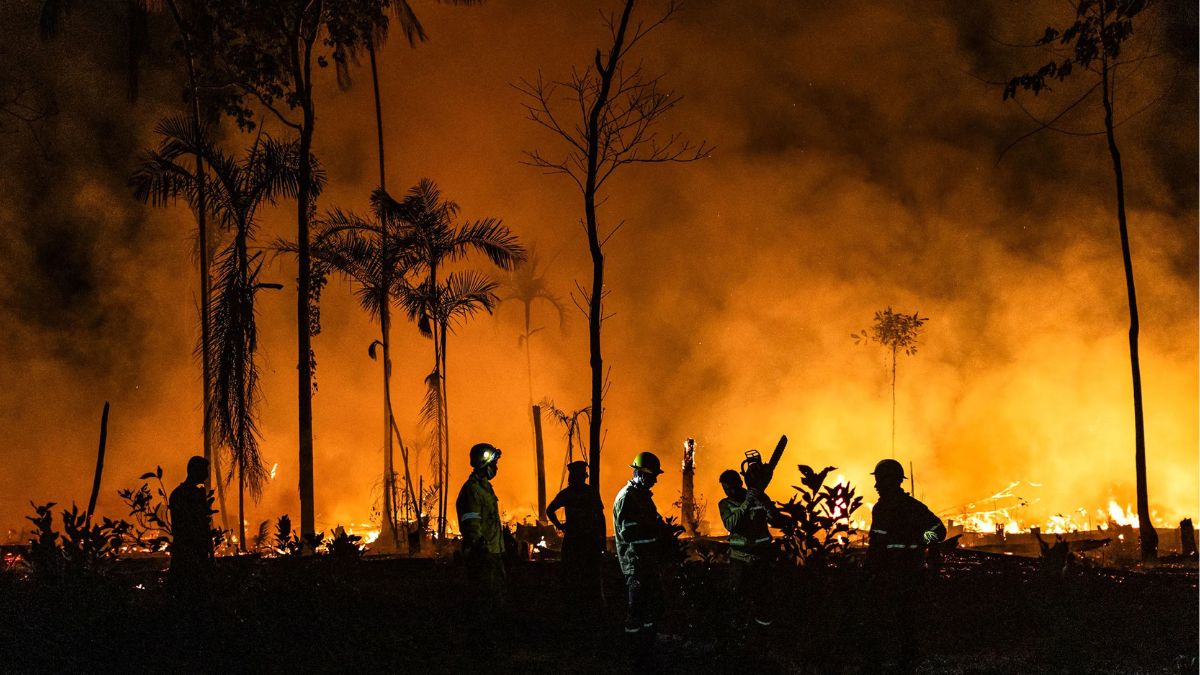
Imagine a world where rising seas swallow entire island nations, forcing families to pack up generations of memories and cross borders they never dreamed of crossing. Or farmers in parched lands abandoning ancestral fields, swelling cities that can’t keep up. This isn’t science fiction—it’s the creeping reality of climate change, where weather disasters are rewriting human maps. As of September 2025, with record floods in Bangladesh displacing millions and heatwaves scorching Pakistan’s breadbasket, experts warn that climate migration could dwarf traditional refugee flows driven by war or persecution. Drawing on theories like push-pull factors—where environmental “pushes” like droughts force people out while “pulls” like jobs draw them in—this debate isn’t just about numbers; it’s a clash of ethics, borders, and global fairness. Will it spark a humanitarian catastrophe on par with Syria’s exodus, or can adaptation and justice avert the storm? This fact-check unpacks five hotly debated claims, blending historical lessons, philosophical angles, and on-the-ground insights from sources like the UN and IPCC. Get ready for a revealing look at why this “silent crisis” could redefine who we protect—and why we often fail to.
The Claims at the Heart of the Debate
Climate migration—people displaced by environmental changes like floods, droughts, or rising seas—has moved from fringe worry to global headline. Rooted in ideas from geographer Ellsworth Huntington’s environmental determinism, which links climate to human movement, it challenges old refugee definitions tied to politics. Optimists see solutions in adaptation; pessimists foresee chaos. Here are five major claims we’ll test, cross-checked with views from the UNHCR, IPCC, and migration scholars:
- Climate change is already causing mass migrations that rival traditional refugee crises in scale and urgency.
- International laws treat climate migrants the same as refugees, providing them full protection.
- Wealthy countries will take in most climate migrants, sharing the global burden fairly.
- Climate migration will lead to widespread conflicts and instability in receiving areas.
- Strong adaptation measures can stop or reverse the migration wave before it becomes a crisis.
Claim 1: Rivaling Traditional Refugee Crises?
Many say climate change is sparking movements so vast they eclipse wars or persecutions, based on push-pull theory where environmental stress acts as an invisible force.
Check: Historically, migration has always intertwined with nature—think the Dust Bowl’s 1930s exodus in the U.S., where drought pushed farmers west, or Ireland’s potato famine blending crop failure with British policies. Philosophically, this claim draws on global justice ideas from thinkers like John Rawls, arguing rich nations’ emissions create moral debts. Logically, if climate acts as a “threat multiplier,” amplifying poverty and conflict, it should drive refugee-like flows. Cross-references from the IPCC’s 2022 report (updated in 2025 assessments) describe it as a “slow-onset” driver, like sea-level rise in the Pacific, forcing entire communities to relocate. The UN’s 2023 Human Development Report echoes this, noting how Bangladesh’s river erosion has displaced more people annually than some war zones.
But here’s the rub: Unlike acute refugee crises from bombs or genocide, climate migration is gradual, blending with economic or political pushes, making it hard to isolate. UNHCR’s 2025 guidelines highlight this overlap—Pacific islanders fleeing rising waters mix with job seekers. Ethically, this creates contradictions: Wealthy polluters like the U.S. and EU push for “durable solutions” abroad while resisting borders at home. Socially, it burdens low-income areas first, as in Africa’s Sahel where herders clash over shrinking lands. Insight: It’s urgent, but the “rival” label oversimplifies— a creeping giant, not a sudden stampede. Trade-off: Recognizing it as a crisis could unlock aid, but risks overwhelming systems meant for political refugees.
Verdict: Misleading. It’s building to crisis levels but differs in speed and cause—a hybrid threat, not a direct rival.
Claim 2: Laws Provide Full Refugee Protection?
The idea: Existing international rules, like the 1951 Refugee Convention, cover climate migrants just as they do those fleeing persecution.
Analysis: The convention’s core—protection from refoulement, or forced return—stems from post-World War II philosophy of universal human rights, aiming to shield the vulnerable. Logically, if climate harm is a “well-founded fear of persecution,” it should fit. But cross-checks from UNHCR’s 2025 position paper clarify: The convention focuses on political, not environmental, threats—climate migrants often lack this link. The Nansen Initiative (2012, evolved into the 2015 Platform on Disaster Displacement) pushes for “soft law” solutions, but these are voluntary, not binding.
Historically, gaps echo past oversights—like how colonial borders ignored nomadic herders in Africa, leading to today’s resource wars. Ethically, this raises hypocrisies: Nations that signed the Paris Agreement vow climate action but balk at migrant rights, a strategic dodge to avoid blame. Socially, it leaves people in limbo—Bangladeshi families crossing to India face deportation despite floods. Geopolitically, small islands like Tuvalu lobby the UN for recognition, but big powers resist, fearing floods of claims. Insight: Laws lag reality, treating symptoms not causes. Trade-off: Expanding definitions could strain resources, but ignoring them invites injustice. Wider angle: Philosophers like Hannah Arendt would argue this erodes the “right to have rights,” leaving the displaced stateless.
Verdict: False. Current laws fall short, offering patchwork aid at best—a legal blind spot in a warming world.
Claim 3: Wealthy Nations Will Absorb the Burden?
Proponents argue that rich countries, as major emitters, have a duty and capacity to host climate migrants, per principles of climate justice.
Scrutiny: Global justice theory, inspired by Rawls’ veil of ignorance, suggests emitters should bear costs fairly—logically, nations like the U.S. (historically top polluter) could integrate migrants via work visas. Cross-references from the UN’s 2024 Global Compact on Migration highlight pledges for “safe pathways,” with examples like Australia’s Pacific labor deals. The EU’s 2025 Green Deal includes adaptation funds, theoretically easing pressures.
Yet, logic uncovers resistance: Fortress Europe policies, like Italy’s 2025 migrant pushbacks, prioritize security over solidarity. Historically, this mirrors colonial exploitation—Europe drained resources from colonies, now shuts doors to the fallout. Ethically, it’s a hypocrisy: Leaders at COP29 preached equity but funded walls more than welcomes. Socially, receiving areas face tensions—U.S. border towns strain under heat-driven Central American flows. Geopolitically, China’s Belt and Road builds infrastructure in vulnerable spots, potentially creating dependency without migration solutions. Insight: Absorption is uneven; low-income countries host 80% of migrants already. Trade-off: Open doors could boost economies with young labor, but sparks backlash against “job stealers.” Angle: Culturally, integration challenges clash with xenophobia, testing multicultural ideals.
Verdict: Misleading. Pledges exist, but actions lag—a shared burden that’s anything but equal.
Claim 4: Sparking Widespread Conflicts?
The warning: Overcrowded havens will breed fights over resources, turning migration into a security threat.
Probe: Conflict theory, from scholars like Thomas Homer-Dixon, sees environmental stress as a “multiplier” for violence—logically, scarce water or jobs could ignite clashes. Cross-references from the World Bank’s 2025 Groundswell report describe scenarios where Indian Ocean islands’ exodus strains neighbors. Historical parallels include Syria’s 2006-2011 drought fueling civil war unrest.
But reasoning tempers this: Not all migration leads to war—push-pull dynamics often resolve peacefully, as in Vietnam’s Mekong Delta relocations. Ethically, blaming migrants ignores root causes like inequality. Socially, host communities can benefit from diversity, per integration studies, but poor planning breeds resentment. Politically, this claim justifies crackdowns—a strategic miscalculation by leaders fearing votes. Geopolitically, it distracts from cooperation, like ASEAN’s climate pacts. Insight: Conflicts arise from mismanagement, not migration itself. Trade-off: Viewing it as a threat hardens borders; as an opportunity, it fosters alliances. Angle: Philosophically, it questions Kant’s cosmopolitanism—global citizens in a divided world?
Verdict: Uncertain. Potential exists, but it’s not inevitable—a risk amplified by poor governance.
Claim 5: Adaptation Can Prevent the Crisis?
Believers hold that smart planning—dikes, crop shifts—will keep people home, averting mass moves.
Analysis: Resilience theory, from ecologists like C.S. Holling, emphasizes building buffers against shocks—logically, investments in Bangladesh’s embankments or Kenya’s agroforestry could stem flows. Cross-references from the IPCC’s 2023 adaptation chapter (2025 updates) stress community-led efforts as effective. Historical success: The Netherlands’ sea walls tamed floods, inspiring global models.
Yet, logic reveals limits: Adaptation costs trillions, unaffordable for poor nations, per UN estimates. Ethically, it’s unfair—emitters fund little, leaving vulnerable to cope alone. Socially, it displaces locals during projects, like India’s dam relocations sparking protests. Politically, short-term thinking prevails, a hypocrisy in “net-zero” pledges without cash. Geopolitically, it shifts blame southward. Insight: Adaptation buys time, not eternity—some migration is baked in. Trade-off: Focus on it diverts from justice; ignoring it overwhelms systems. Angle: Culturally, it challenges indigenous knowledge, often sidelined in top-down plans.
Verdict: True, but Limited. It helps, but can’t halt all flows—a vital tool, not a total fix.
Beyond Borders: The Deeper Stakes
Climate migration’s shadow stretches far, blending science with soul-searching. Historically, it echoes the Great Migration of African Americans fleeing Jim Crow, where environment met injustice—today’s version globalizes that pain. Philosophically, it probes Rawls’ difference principle: Can unequal worlds justify unequal suffering? Socially, women and children bear the brunt, trekking with vulnerabilities, per gender studies. Economically, remittances from migrants could fund adaptation, but exploitation abroad sours the gain. Politically, it tests democracies—populists like Trump’s wall echo fears, while progressives push equity. Wider angle: As UNHCR urges in 2025, redefining “refugee” ethically demands shared responsibility, lest it fracture global ties. The wit? A crisis born of inaction, now demanding action we pretend to plan. For prevention, insights call for emission cuts and funds—else, migration becomes the symptom we can’t ignore.