

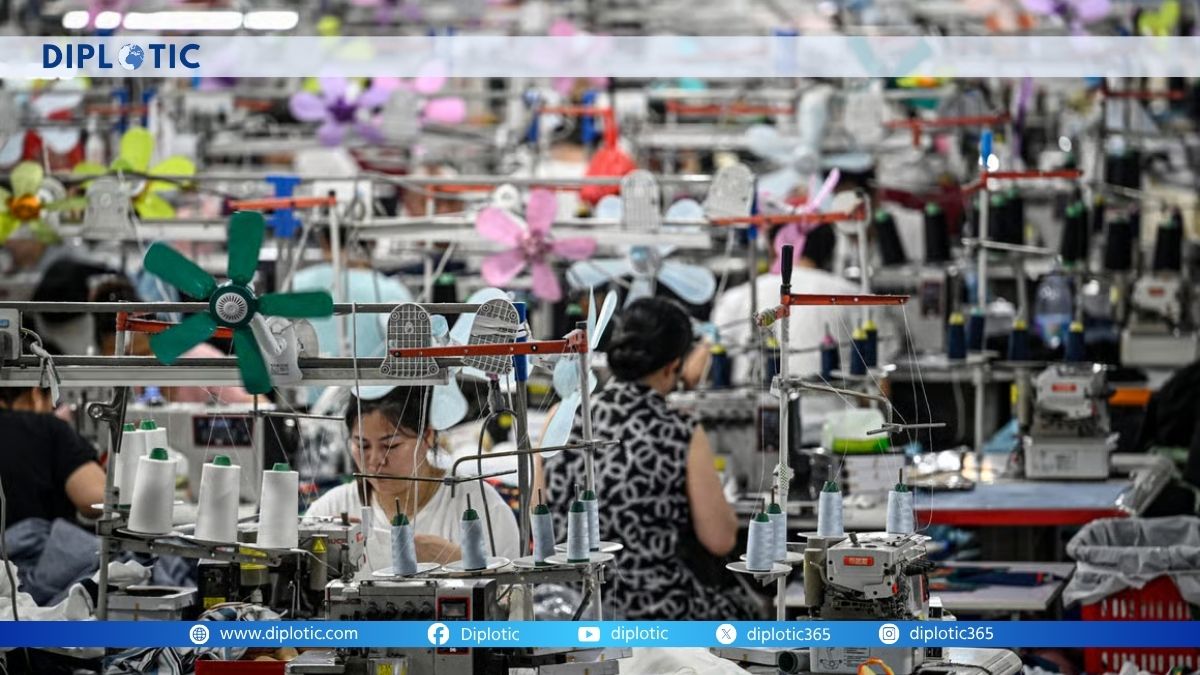
In recent years, European markets have witnessed a surge of cheap Chinese products, ranging from steel and tires to batteries and electric vehicles. This sudden flood of low-priced goods is often described as “China’s market dump”—a situation where products are sold abroad at prices lower than their actual production cost or home-market value. However, this is not merely a trade strategy; rather, it is the visible outcome of a deeper economic problem inside China—weak domestic demand and industrial overcapacity.
The root cause of this dumping lies in China’s own economy. After the property market crisis began around 2021, domestic consumption in China declined sharply. The fall in housing investment and the slowdown in household spending created a huge gap between supply and demand. Factories that once relied on China’s massive internal market suddenly faced shrinking orders. To keep production running and protect jobs, Chinese manufacturers began looking outward—toward the European market.
Evidence from major financial institutions supports this view. A recent European Central Bank (ECB) report notes that China’s surge in exports to Europe started before new trade tensions with the United States and coincided with a decline in domestic demand. Similarly, the World Bank has pointed out that China’s economy is experiencing low inflation and weak consumer spending, forcing industries to rely more on foreign markets for growth.
European countries have started to feel the pressure of this trend. Several European manufacturers, especially in steel, chemical, and automotive sectors, have complained that Chinese products are being sold at unfairly low prices. In response, the European Commission has launched a number of anti-dumping investigations—including those on tinplate steel and tires—and even imposed duties on some Chinese imports. These actions highlight the seriousness of the problem and the growing concern that cheap imports could harm European industries and jobs.
Inside China, four major forces are driving this export wave.
First, the property sector slump has reduced internal demand for materials like steel and cement.
Second, deflation and weak consumption mean households are not spending enough.
Third, overcapacity in manufacturing sectors—built during years of heavy investment—has left factories producing far more than China’s consumers can buy.
Finally, government policies and subsidies encourage firms to keep producing and exporting even when profits are low, in order to sustain employment and economic stability.
For Europe, this situation brings both benefits and challenges. On one hand, European consumers enjoy cheaper goods, and industries that use Chinese materials can reduce their costs. On the other hand, European producers face intense price competition, threatening their survival and long-term industrial strength. This dilemma has forced European leaders to consider stronger trade defenses, while still trying to maintain good economic relations with China.
In conclusion, China’s European market dump is not simply an act of economic aggression, but a symptom of deeper weaknesses within China’s domestic economy. Weak demand at home, combined with excessive production capacity, has pushed Chinese factories to seek foreign buyers. The result is a wave of low-cost exports that reshapes global trade dynamics and challenges Europe’s economic balance. To protect its industries while maintaining fair trade, Europe must respond with balanced policies—combining trade defense measures, industrial innovation, and diplomatic engagement. Only then can both regions move toward a sustainable and fair economic partnership.




