

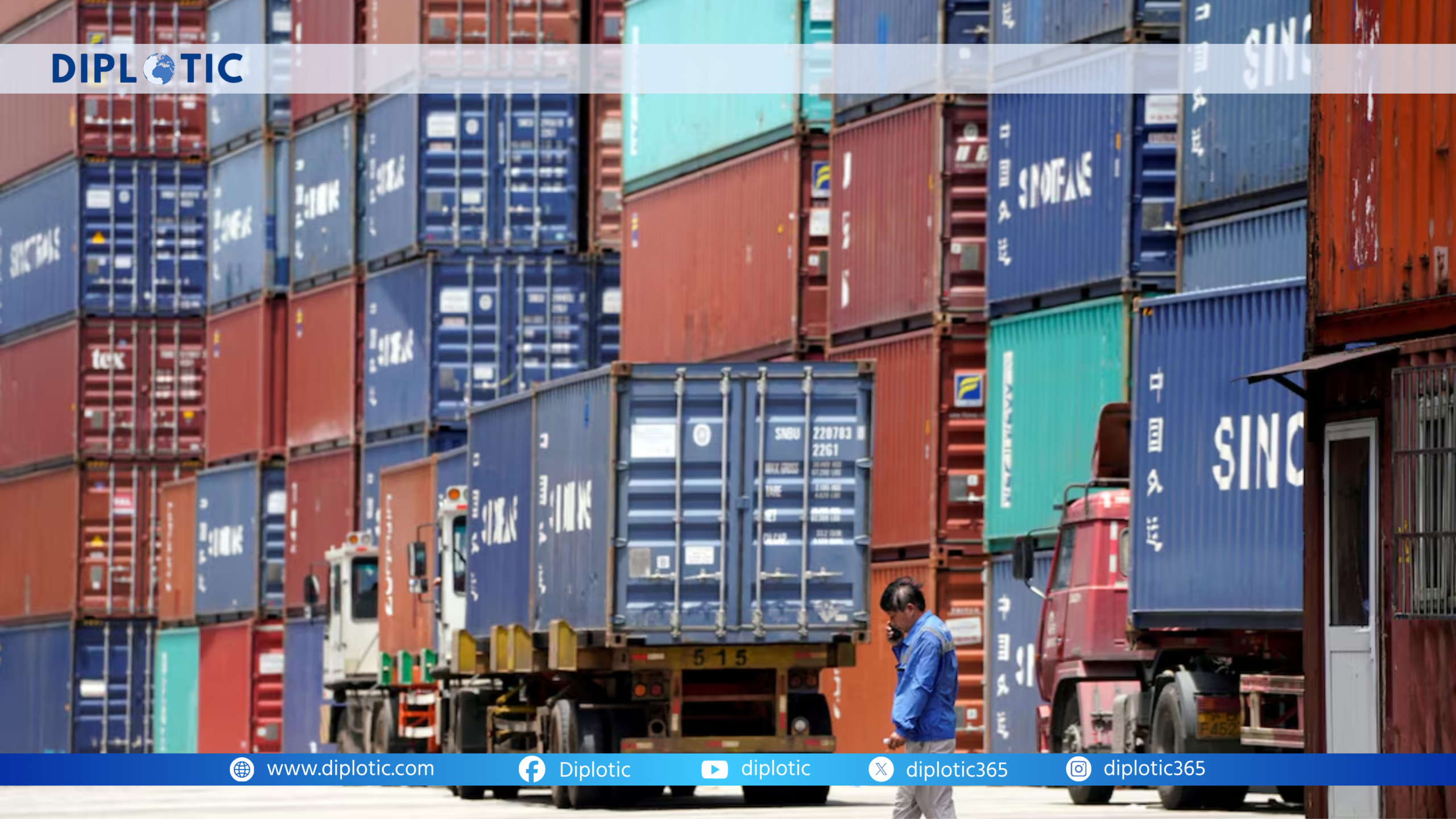
When Indonesia and the United States signed the Agreement on Reciprocal Trade (ART) on February 19, 2026, the deal contained a provision that immediately caught the attention of trade analysts worldwide . Indonesia agreed to “implement measures that have the same restrictive effects” as US customs duties or sanctions on “third countries” . While US officials carefully avoided naming any specific rival, the language was widely interpreted as aimed at constraining Chinese exports that might be transshipped through Indonesia to circumvent American tariffs .
For many commentators, this was enough to predict retaliation from Beijing. Some economists speculated that China might impose non-tariff barriers or pursue legal action against Indonesian goods in multilateral forums . Yet a closer examination of the geopolitical economics suggests this framing misunderstands both China’s incentives and the real dynamics at play. China is not preparing to hit back at Jakarta. If it reacts at all, it will target the United States, not Indonesia . This explainer examines why Beijing is likely to absorb this diplomatic setback, what the deal actually means for trade flows, and what it reveals about the complex balancing act facing Southeast Asian nations caught between superpower rivals.
What Exactly Is in the US-Indonesia Trade Agreement?
The Agreement on Reciprocal Trade signed in February establishes a 19 percent tariff level on many goods traded between Indonesia and the United States, restructuring a significant portion of their commercial relationship . The pact, which still requires legislative ratification in both countries, represents a substantial deepening of economic ties between Washington and Jakarta .
The provision that has drawn the most attention commits Indonesia to implementing measures with “the same restrictive effects” as US customs duties or sanctions on third countries . While the text does not name China explicitly, the intent is clear: to prevent Chinese goods from using Indonesia as a transshipment point to enter US markets while avoiding American tariffs .
For the Trump administration, which has consistently sought to pressure Beijing through trade measures, this provision serves multiple purposes. It tightens the net around Chinese exports, ensures that US tariffs are not circumvented through third countries, and signals to other Southeast Asian nations that deeper trade ties with Washington come with expectations about managing relations with Beijing .
For Indonesia, the deal offers tangible benefits. The 19 percent tariff level provides preferential access to the US market for Indonesian goods, supporting President Prabowo Subianto’s economic development agenda. It also strengthens Jakarta’s position as a non-aligned actor capable of negotiating favorable terms with both major powers .
Why Do Analysts Expect China to Retaliate?
The logic behind predictions of Chinese retaliation is straightforward. For years, Beijing has positioned itself as Indonesia’s most important economic partner. China is Indonesia’s largest trading partner, with massive volumes of goods flowing between them under preferential terms, including through ASEAN frameworks . Any agreement that potentially restricts Chinese exports, even indirectly, could be interpreted as a challenge to that position.
Moreover, China has historically responded forcefully when it perceives that its economic interests are being undermined. Past disputes with Australia over COVID origins, with Lithuania over Taiwan representation, and with Norway over the Nobel Peace Prize all resulted in trade restrictions that caused real economic pain . The pattern suggests that Beijing is willing to use economic leverage to enforce political compliance.
The ART provision targeting transshipment touches on a sensitive area for China. As US tariffs have increased, Chinese exporters have sought alternative routes to American markets, including through Southeast Asian countries that can add value and repackage goods. Any agreement that closes these loopholes directly affects Chinese commercial interests.
When Beijing’s foreign ministry issued its now-familiar line that the deal “should not harm any third party,” analysts who follow China closely recognized the phrase as standard boilerplate . But for many observers, it was enough to sound alarms about possible economic retaliation.
Why Won’t China Retaliate Against Indonesia?
Despite these concerns, a closer look at China’s actual behavior and strategic calculus suggests retaliation is unlikely. The key misunderstanding is that China does not see Indonesia as the aggressor; it sees the United States as the source of pressure .
Beijing’s rhetorical framing reflects this distinction. By casting the United States as the provocateur, China positions itself as a defender of trade multilateralism while leaving room for continued engagement with Jakarta . This is not a new approach. When Panama shifted allegiance away from China’s Belt and Road Initiative, Beijing protested but did not follow through with punitive trade measures . That was not because Panama’s decision had no impact—it did, in symbolic and investment terms—but because it did not directly threaten China’s core economic interests .
China’s tolerance for these kinds of setbacks is high when the geopolitical and commercial stakes are peripheral. It becomes punitive only when strategic interests feel existentially threatened—such as control over a critical resource or a chokepoint in global commerce . Indonesia’s ART, while concerning, does not rise to that level.
The economic integration between China and Indonesia also argues against retaliation. Chinese investments in Indonesia are substantial and growing, spanning infrastructure, manufacturing, and digital economy sectors. These are not symbolic projects; they represent real Chinese capital and livelihoods intertwined with the Indonesian economy . Beijing is unlikely to jeopardize that for a provision that, in isolation, shifts leverage only modestly.
There is also a strategic element to Beijing’s restraint. Asia is an arena of intense economic competition between the United States and China. Beijing knows that burdening Indonesia with tariffs or exclusionary practices risks pushing Jakarta closer to Washington in an already fraught relationship . This would be a lose-lose strategy: either China alienates Jakarta and forfeits influence, or it refrains from retaliation, accepts the trade deal as a reality of great-power competition, and focuses on expanding commercial ties where it holds a comparative advantage. The latter is far more rational .
What Would Trigger Actual Chinese Retaliation?
If China were to retaliate, it would not be over this trade deal itself. Beijing’s pattern over the past decade shows selective retaliation only when measured actions directly threaten its core interests . That means when foreign powers impose tariffs or sanctions that meaningfully disrupt Chinese industries, or when they challenge territorial or strategic assets central to China’s security calculus .
Adjusting tariff rates or negotiating reciprocal terms with Indonesia does not reach that threshold. The ART provision, while inconvenient, does not fundamentally alter China’s ability to access US markets or compete globally. It closes one transshipment route, but others remain available through Vietnam, Malaysia, Mexico, and elsewhere.
For China to retaliate against Indonesia, Jakarta would need to take actions that Beijing interprets as existential threats—such as formally joining a US-led military alliance aimed at containing China, or seizing Chinese assets in violation of international law. A trade agreement with provisions designed to curb transshipment, negotiated as part of normal commercial diplomacy, does not qualify.
What Does This Reveal About Indonesia’s Balancing Act?
The episode highlights the increasingly difficult position facing Southeast Asian nations as US-China competition intensifies. Indonesia, like its neighbors, seeks to maintain good relations with both superpowers while advancing its own national interests. The ART with Washington advances economic goals; continued engagement with Beijing advances others.
President Prabowo’s government has been careful to frame the deal not as a choice between powers but as part of a diversified strategy. Indonesia continues to participate in China’s Belt and Road Initiative, welcomes Chinese investment, and maintains robust trade ties. The ART is an addition to this portfolio, not a replacement.
But the provision targeting Chinese transshipment illustrates how even deals framed as purely commercial carry geopolitical implications. Washington is increasingly using trade agreements to advance its strategic competition with Beijing, asking partners to take positions that may complicate their relations with China . For countries like Indonesia, navigating these demands requires constant calibration and careful messaging.
The fact that China has signaled restraint suggests Beijing understands this dynamic. Rather than punishing Indonesia for engaging with Washington, China is likely to compete by offering even more attractive terms of engagement. This could mean accelerated investment, expanded market access, or enhanced cooperation in areas where China holds advantages .
What Does This Mean for the Future of US-China Competition in Southeast Asia?
The US-Indonesia trade deal and China’s muted response offer lessons for the broader trajectory of superpower competition in the region. First, they demonstrate that Southeast Asian nations have agency. While great powers exert pressure, countries like Indonesia can negotiate agreements that serve their interests without automatically triggering retaliation .
Second, they show that China’s response to perceived challenges is more nuanced than often portrayed. Beijing tolerates significant diplomatic and economic friction before resorting to punitive measures, particularly when the offending party is a valuable partner with which it has deep ties .
Third, they reveal that the competition between Washington and Beijing will increasingly be fought through positive inducements rather than negative sanctions. Both powers recognize that alienating Southeast Asian nations is counterproductive. The more effective strategy is to offer better terms—more investment, more market access, more cooperation—that make partners want to deepen ties .
For Indonesia, this competition creates opportunity. By maintaining relationships with both sides, Jakarta can extract concessions and investments that might not be available in a less contested environment. The challenge is managing these relationships without being forced to choose, and without allowing short-term gains to compromise long-term strategic autonomy.
Conclusion
The US-Indonesia trade agreement has provoked speculation about Chinese retaliation, but a closer look suggests such predictions are misplaced. Beijing sees Washington, not Jakarta, as the source of pressure, and its strategic calculus argues against punishing a valuable partner for a relatively modest diplomatic setback. The provision targeting Chinese transshipment, while significant, does not threaten China’s core interests in the way that would trigger punitive measures.
This episode reveals important truths about the current geopolitical landscape. Southeast Asian nations can and will pursue diversified strategies that engage both superpowers. China’s response to such strategies is more calibrated than often assumed. And the competition between Washington and Beijing will increasingly be fought through positive inducements rather than negative sanctions.
For Indonesia, the challenge is to maintain this balancing act over the long term. Each agreement with one side carries implications for relations with the other. The ART is the latest in a series of such calculations, and it has passed without major incident. But as superpower competition intensifies, the margins for maneuver may narrow. The question for Jakarta—and for all of Southeast Asia—is how long it can continue to navigate between giants without being forced to choose. For now, the answer appears to be: longer than many assume.




