

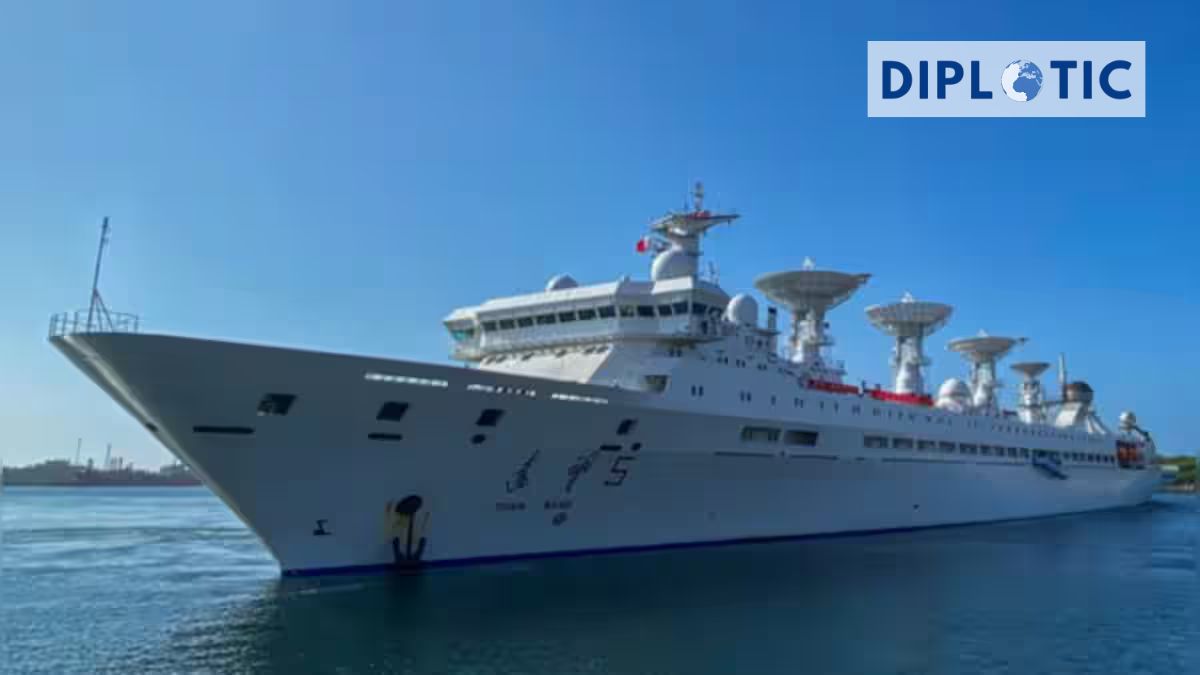
Why China has increased surveillance ship activity in the Indian Ocean just as India prepares a major missile test, exploring strategic motives, regional history, and future security implications.
A rising mystery as surveillance ships enter the region
In recent weeks, reports from maritime monitoring networks have drawn attention to a quiet but noticeable increase in Chinese surveillance vessels operating across the Indian Ocean. This movement comes at the same time India is preparing a major missile test, raising questions about why Beijing has sent so many ships into waters that sit far from its shores. While both countries often monitor each other’s activities, the timing and scale of China’s deployment invite closer examination. The Indian Ocean is not an empty space; it is a busy crossroads for global trade, energy routes, and naval presence. When unusual activity occurs here, it often hints at deeper strategic interests.
The ships involved are not ordinary research vessels. Many analysts note that these platforms often carry advanced sensors capable of tracking missile launches, submarine movements, and electronic signals. Their presence increases attention toward India’s upcoming test, which is believed to be part of its long-range missile program. India has tested such systems before, but this moment appears to have drawn a more active response from China.
This opening question becomes even more important when placed in the context of growing strategic competition. For more than a decade, India and China have developed stronger naval footprints in the region. Their political relationship has also been tense since the border clashes of recent years. Against that backdrop, Beijing’s sudden surge of surveillance ships feels like part of a larger pattern rather than an isolated decision.
A strategic ocean that has become a global competition ground
To understand the purpose of China’s ships, it helps to see the Indian Ocean as a strategic puzzle. About one-third of global shipping passes through its waters, and many countries depend on these routes for energy and trade. China in particular relies heavily on oil shipped from the Middle East and Africa. As its economy grew, China expanded its naval reach to secure these flows, building ports, research outposts, and logistical points across the region.
India, meanwhile, considers the northern Indian Ocean as its primary security space. For decades, it has operated with limited competition here, using its geography to maintain strong naval influence. That balance began shifting when China launched the Belt and Road Initiative, which included port projects in Sri Lanka, Pakistan, and East Africa. Although these projects are officially commercial, India has long suspected dual-use purposes.
This history makes surveillance activity more sensitive. When a Chinese ship positions itself near areas that can detect missile tests, the move is seen not only as intelligence gathering but as strategic signaling. It shows how far China is willing to go to monitor developments that could shape the regional military balance. India’s response has also grown sharper over the years. It has increased patrols, strengthened partnerships with countries like Australia and Japan, and invested in new missiles, satellites, and naval systems.
Both nations now operate in a space where each move is observed with caution. A missile test by India can trigger data-collection missions by China, while China’s growing ocean footprint can trigger new Indian deployments. What once were routine actions have become possible indicators of shifting power.
Why India’s missile test matters to China
The upcoming Indian missile test is more than a military exercise. Long-range systems help India develop stronger deterrence, and they send signals about how it plans to manage its strategic needs. China monitors these developments closely because missiles can influence balance of power calculations. Even though India maintains a no-first-use nuclear policy, the range and accuracy of its systems can affect how other nations view future scenarios.
China’s surveillance ships are capable of collecting detailed telemetry data during such tests. This information helps analysts understand how reliable a missile is, how its guidance system performs, and how quickly it can reach targets. The presence of multiple ships suggests that China expects the test to reveal important new performance indicators.
India generally issues public notices about planned missile tests to ensure safety, and it is likely doing so again. But the broader question is why China feels the need to send multiple vessels at once. Some experts argue that Beijing wants to refine its understanding of India’s capabilities as regional tensions have risen. Others suggest China wants to show it can operate freely in distant waters, even in areas considered close to India’s sphere of influence.
Whatever the reason, the timing shows a level of seriousness. Missile programs are often among the most closely watched areas of military development. When a country prepares a major test, competitors usually try to gather as much information as possible. China’s decision to deploy multiple surveillance ships indicates a desire to reduce uncertainty about India’s growing capabilities.
What this moment reveals about the future
China’s recent movements in the Indian Ocean will not be the last. As both countries expand their naval and missile programs, the region is likely to see more intelligence-gathering missions, more patrols, and more attempts to shape influence. The presence of spy ships highlights how fast the security environment is changing. What once required quiet diplomacy now unfolds openly on global tracking maps for the world to see.
India is also unlikely to scale back its military modernization. Its missile programs, space systems, and naval expansion reflect long-term planning shaped by both national security needs and regional competition. China’s activities simply reinforce why India believes these programs are important.
In the broader picture, this interaction shows how the Indian Ocean has become a central stage for power competition. Each movement, whether a missile test or a surveillance ship arrival, reflects a deeper contest for advantage. The challenge for the region is ensuring that these actions do not escalate into direct confrontation.
As China’s spy ships circle the ocean and India prepares its test, the moment serves as a reminder of how today’s military decisions echo far beyond the horizon. What happens now will shape how both countries navigate the strategic waters of the future.




