

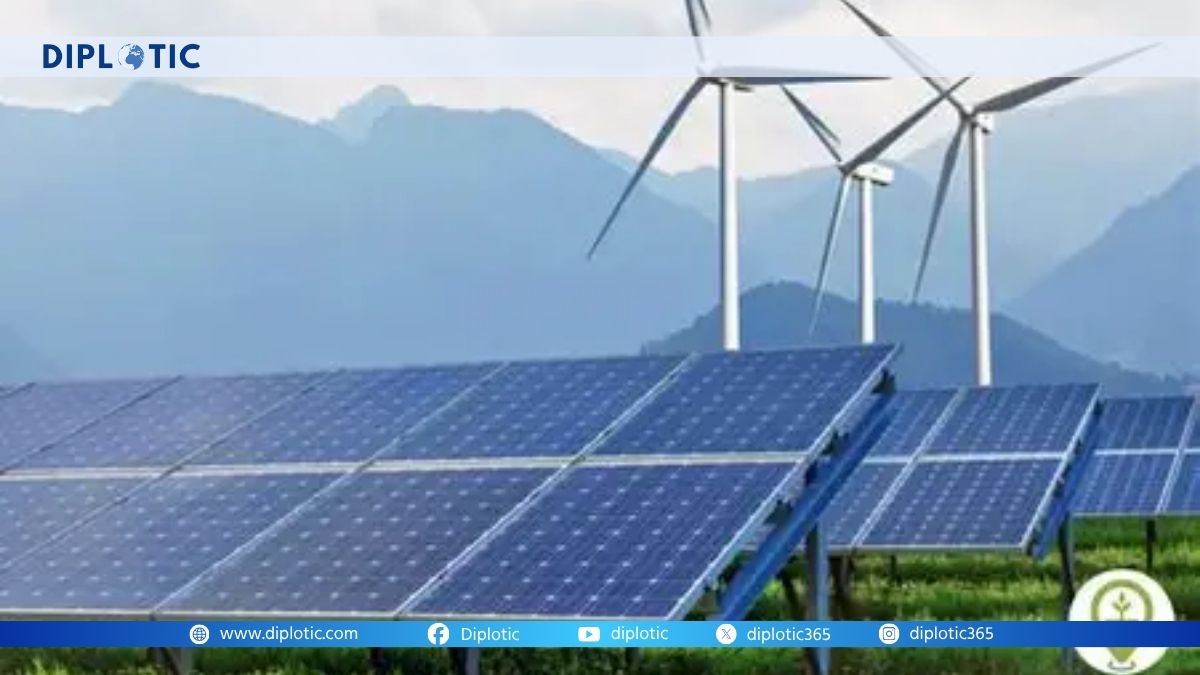
By 2025, global energy demand has surged due to electric cars, data centers, and growing populations, but fossil fuels like coal and oil are hitting walls from climate rules and high costs. Into this mix steps China, already building more solar panels and wind turbines than everyone else combined. Its factories churn out cheap, reliable gear that floods markets worldwide, reshaping trade and alliances. Yet, as the U.S. pulls back under new policies favoring oil and gas, and Europe fights to hold onto its wind tech edge, a big question emerges: Will China’s grip on renewables give it too much sway in a time of tense rivalries between big nations? This story explores how renewables are set to rule energy, why China is racing ahead, and what it means for global power plays, blending hard data with voices from the ground to show the human stakes behind the tech.
What Makes Renewables the Clear Path Forward for Global Energy?
The shift to solar and wind isn’t a maybe—it’s locked in by math and momentum. Electricity demand worldwide jumped 2.6% in the first half of 2025 alone, hitting new records as heatwaves crank up air conditioning and AI data centers guzzle power. Think about it: In the U.S., Europe, and China, new needs from electric vehicles and tech hubs could add hundreds of gigawatts by 2030. But burning more coal or gas to meet this? That’s a dead end. Fossil fuels face steep hurdles—stricter carbon taxes in Europe, methane leak rules worldwide, and investor pullback as green funds pour $1.8 trillion into clean tech yearly. Coal plants, once kings, now idle more often because solar and wind costs have plummeted 85% since 2010, making them cheaper than new gas in sunny or windy spots.
Take the numbers: Renewables hit 34.3% of global electricity in early 2025, edging out coal’s 33.1% share for the first time. Solar alone covered 83% of demand growth, adding 306 terawatt-hours—enough to light up entire countries. Wind chipped in 97 terawatt-hours, up 7.7%. In places like Pakistan, solar went from zero to 30% of the power mix in six years, slashing bills for families tired of blackouts. Hungary and Chile show similar leaps, with wind farms stabilizing grids hit by droughts. These aren’t rich-nation luxuries; in Africa and South Asia, cheap Chinese panels mean off-grid villages get lights without diesel generators.
But why the roadblock for fossils? Beyond costs, it’s physics and politics. Warmer oceans fuel fiercer storms, hiking insurance for oil rigs, while the Paris Agreement pushes 190 countries to cut emissions—peaking global CO2 by 2025 in best-case views. Nuclear helps, but slow builds limit it to 10% growth by decade’s end. Batteries and smart grids fix renewables’ weather dips, storing midday sun for night use. Still, challenges linger: In developing spots, high upfront costs slow rollout, and grids need upgrades to handle variable flows. Yet, as Ember’s 2025 review notes, clean power met all demand hikes in Asia, dropping fossils 2% there. This isn’t just green talk—it’s jobs (millions in panel assembly) and security (less oil import fights). Parallel to this, EVs boom: China sold 10 million in 2024, cutting gas needs. The U.S. sees data centers double power use by 2030, but policies there favor fossils, risking blackouts if renewables lag. Europe bets big on wind to hit 43% clean by 2030, but supply snags test resolve. Overall, renewables’ rise isn’t optional—it’s the only scalable fix for a world needing 8,300 gigawatts more clean capacity by 2030, triple 2015 levels. As demand swells, ignoring this path invites energy crunches and climate hits that no economy survives.
How Did China Turn Into the Unmatched King of Solar and Wind Gear?
China’s clean energy sprint started as a survival play, not a green dream. Two decades ago, leaders eyed oil shocks and coal smog choking cities, betting big on self-reliance. By 2025, that gamble pays off: The country added 357 gigawatts of wind and solar in 2024 alone—hitting 2030 goals six years early—and in early 2025, wind-plus-solar capacity topped coal’s for the first time. Factories in Guangdong and Inner Mongolia pump out 80% of global panels and 60% of turbines, prices so low they undercut rivals by 20-40%. In April 2025, solar and wind hit 26% of China’s electricity, a record, with solar generation spiking 48% year-over-year to 254 terawatt-hours.
This dominance spans the chain—from mining rare earths (60% global share) to shipping finished blades. State loans and land grants fueled mega-bases: 503 gigawatts planned for 2025-2030, powering equivalents of Indonesia or Turkey. Exports soared—$20 billion in August 2025, up 26% for EVs and 23% for batteries—via Belt and Road deals in Africa and Latin America. A factory worker in Baoding told reporters, “We work shifts to meet orders; it’s not just jobs, it’s feeding families while cleaning our air.” Yet, it’s not flawless: Overbuilds mean thin margins, and coal lingers at 60% of power, though emissions dipped in May 2025 as renewables surged.
Compare to others: The U.S. tripled renewables in a decade to 2025 but trails, adding 81% new capacity from solar and batteries—yet policies now stall it. Europe leads consumption per capita but builds slower, eyeing 425 gigawatts wind by 2030. India races with solar bids, but China’s scale dwarfs: It installed more in May 2025 than Poland’s yearly total. Background context? Post-2008 crisis, Beijing funneled billions into R&D, birthing giants like CATL (world’s top battery maker). Now, this locks in advantages—cheaper tech speeds global shifts, but ties nations to Beijing’s supply. Related angles: In Brazil, Chinese firms build solar farms, easing Amazon dams’ eco-hits; in Saudi Arabia, they blend wind with oil diversification. But whispers grow: Subsidies as high as 40% of revenues distort markets, per OECD. Still, for a nation peaking emissions early, it’s strategic gold—energy independence plus export clout. As one analyst put it, “China didn’t chase climate; climate chased China’s factories.”
Why Is the U.S. Falling Behind in This Race, and Can It Catch Up?
America’s clean energy story twists like a plot turn: From Biden’s 2022 Inflation Reduction Act spurring $300 billion in factories, to 2025’s Trump rollback hitting pause. Executive orders axed wind permits, revoked solar tax credits by 2030 (early from 2032), and fast-tracked oil leases—slashing projected renewables growth 50%. Offshore wind halted, public-land solar slowed; $8 billion in projects canceled by May. Result? Fossils rose to fill gaps, with gas eyed for AI data centers needing 18 gigawatts more by decade’s end. A Texas wind farmer shared, “We had deals lined up; now banks hesitate, and crews sit idle.”
This echoes first-term cuts, but 2025 bites harder amid rivalry. Demand grows—EVs up 11%, buildings electrify—but policy favors “energy dominance” via drilling, ignoring renewables’ 81% of new 2025 capacity pre-cuts. Europe contrasts: Despite wind dips from droughts, it holds 19% global turbine production, pushing Net Zero Act for local builds. China? Untouchable, with 60% wind share. U.S. strengths—innovation hubs like California’s batteries—fade without incentives; exports lag as Chinese gear floods markets.
Catch-up odds? Slim. Even if policies flip, supply chains rebuilt take years; China widened leads monthly. Parallel view: States like Ohio thrive on IRA holdovers, adding solar sans federal help. But nationally, it’s a lag: Renewables tripled since 2015, yet fossils flatline slower than peers. Geopolitics amps stakes—U.S. gas exports woo Ukraine, but renewables could bind allies greener. For workers, it’s raw: 300,000 EV sales Q1 2025, but factory closures hit Rust Belt. As one policy expert noted, “America innovates, China manufactures—we need both, or we lose the board.”
What Hidden Dangers Does China’s Renewables Edge Pose in a Tense World?
Power isn’t just watts—it’s leverage, and China’s clean throne reshapes maps. Dominating 70% solar output and key minerals (lithium, cobalt), Beijing wields tools like rare-earth curbs in U.S. trade spats, now eyeing renewables. In 2025, BRI funnels $11 billion yearly to green projects in 150 nations—68% renewables—forging ties from Pakistan’s solar grids to Africa’s wind farms. A Kenyan engineer said, “Chinese panels lit our village cheap; no more kerosene fumes.” But risks lurk: Supply cuts could stall transitions, as Europe frets over turbine blades (China 40% share).
Geopolitics heats: U.S. tariffs on Chinese EVs and panels spark “friend-shoring,” but hikes costs 20%, slowing EU wind to 43 gigawatts added by 2030. India bans neighbor investments to dodge dominance; Vietnam weighs U.S. gas vs. Chinese batteries. Broader: As fossils peak—coal 2025, oil mid-decade—China’s exports cut import needs, freeing cash for navy or tech. Yet, vulnerabilities show: Domestic coal reliance (50% power) and weather variability test grids. Allies like Russia sell gas, but renewables bind Global South—Brazil’s hydro-solar hybrids via Beijing loans ease U.S. sway.
Different angles: For climate, it’s boon—cheap tech triples global capacity to 8,300 gigawatts by 2030. But equity? Poor nations debt-trap on BRI; Western firms sue polluters like Shell for Haiyan-like risks. OpenAI warned Washington: China’s edge powers AI race, as its grids handle data booms sans U.S.-style lags. In rivalry era, this monopoly echoes OPEC but greener—Beijing could “green-wash” influence, tying aid to panels. As Krugman flags, ignoring it invites repeats of rare-earth squeezes. Still, cooperation glimmers: Sunnylands pact triples renewables jointly. The danger? Fragmented chains raise prices, delay cuts—unless rivals build bridges, not walls.
How Can the World Harness China’s Lead Without Losing Its Balance?
China’s renewables reign isn’t fate—it’s a fork where smart plays turn rivalry to reset. By 2025, its boom slashed global panel prices 10%, speeding shifts in India (solar records) and Chile (wind surges), proving shared wins. But as U.S. drills and Europe tariffs, emissions peak unevenly—China’s early, others lag—risking 2°C overshoot. Tie-back: This echoes 1990s liberalization, when Asia’s factories globalized trade; now, green chains could unite or divide.
Forward: Diversify sans walls—U.S. revives IRA for domestic batteries, Europe scales to 1,300 gigawatts wind by 2050 via local rules. Global pacts like COP tripling renewables need teeth: Finance for South’s grids, methane slashes from fossils. China? Ease subsidies for fair play, per OECD, unlocking exports sans backlash. For all, it’s people: Filipino typhoon survivors need resilient solar; Texas families, stable jobs. Broader implications? A balanced shift curbs wars over oil, boosts equity—women in Indian villages powering homes, not fetching wood. As 2025 closes with renewables at 90% new capacity, the call is clear: Compete to innovate, collaborate to deploy. In this great-power chess, the board’s energy—and so is our shared future.




