

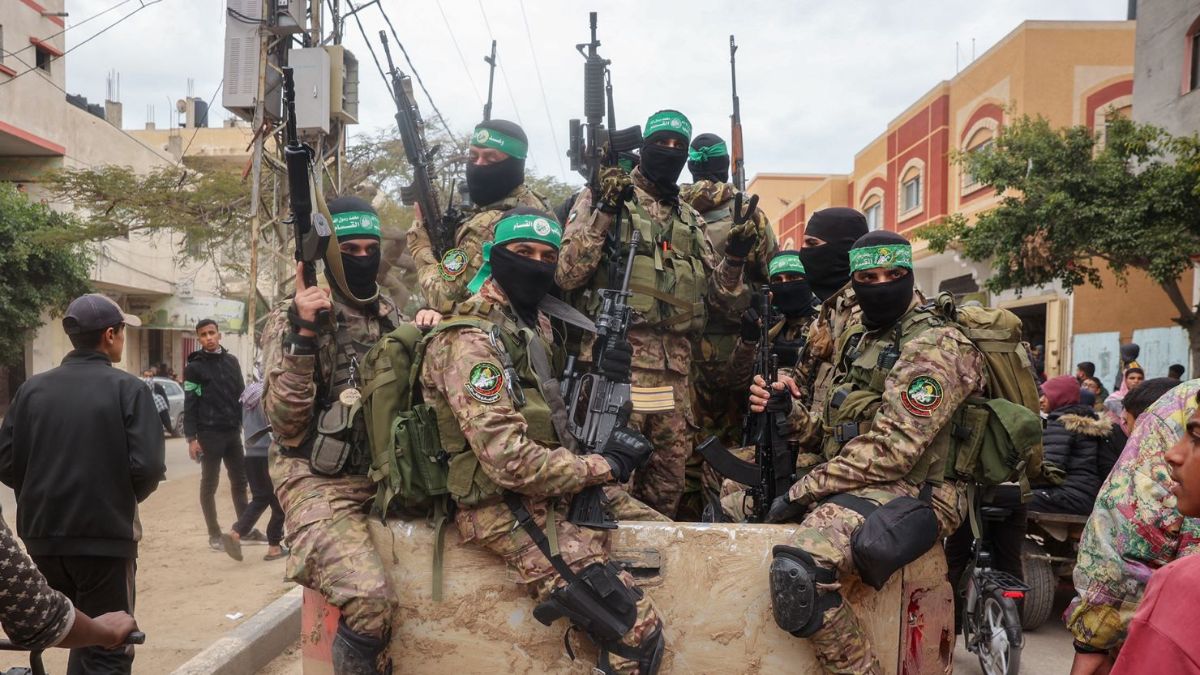
The world’s eyes are glued to the Middle East, where the latest attempt at a ceasefire between Israel and Hamas has crumbled like a house of cards. Former President Donald Trump, never one to shy away from a microphone, dropped a bombshell on Friday, claiming Hamas “didn’t want to make a deal” and, in his words, “they want to die.” The statement, delivered with his signature bluntness outside the White House, paints a grim picture of a stalled peace process and a humanitarian crisis spiraling out of control in Gaza. But what’s really going on here? Is Hamas digging in its heels to keep hostages as bargaining chips, or is there more to this mess than meets the eye? Let’s dig into the muck and figure it out.
Trump’s Take: Hamas’s Motives and Israel’s “Job”
Trump’s remarks came hot on the heels of the United States pulling out of ceasefire negotiations on Thursday, a move that sent shockwaves through diplomatic circles. Standing on the White House lawn, he didn’t mince words: “It was too bad, Hamas didn’t really want to make a deal. I think they want to die and it’s very, very bad.” The former president suggested Hamas is clinging to its remaining hostages down to the “final” few, by his count to maintain leverage. “It got to a point where you’re going to have to finish the job,” he added, a not-so-subtle nod to Israel’s ongoing military campaign in Gaza.
“They want to die.”
Donald Trump, on Hamas’s refusal to negotiate
This isn’t just Trump being Trump, tossing out provocative one-liners to grab headlines. His comments reflect a growing frustration within parts of the U.S. administration, echoed by special envoy Steve Witkoff, who said Hamas wasn’t negotiating in “good faith.” According to Witkoff, the group’s latest response to a ceasefire proposal was a non-starter, prompting the U.S. to walk away from the table. But here’s where it gets murky: what exactly does Hamas want, and why is the U.S. so quick to pin the blame solely on them?
The Humanitarian Crisis: Gaza Starves While Allies Squirm
While diplomats bicker, Gaza is starving. Literally. A U.N. World Food Programme report this week laid bare the catastrophe: a quarter of Gaza’s population is teetering on the edge of famine, with nearly 100,000 women and children suffering from severe malnutrition. Last month, a U.N.-backed study found that 96 percent of Gazans are grappling with crisis-level food insecurity, with a “high risk” of famine looming large. The numbers are staggering, and the human toll is impossible to ignore.
“The situation in Gaza has gone beyond the world’s worst fears.”
Australian Prime Minister Anthony Albanese
America’s allies are starting to lose patience. On Thursday, French President Emmanuel Macron made history by announcing France would become the first G7 nation to recognize a Palestinian state a move that sent ripples through the international community. Across the globe, Australian Prime Minister Anthony Albanese didn’t hold back, declaring the situation in Gaza a humanitarian disaster of epic proportions. These aren’t just words; they’re a direct challenge to Israel’s military approach and, by extension, to the U.S.’s unwavering support for it.
Trump, when asked about Macron’s bold move, shrugged it off with a smirk. “He’s a very good guy,” he said of the French president, before adding, “What he says doesn’t matter.” Ouch. That’s classic Trump dismissing an ally’s stance with a verbal flick of the wrist. But it raises a question: if even America’s closest partners are breaking ranks, how sustainable is the current U.S.-Israel strategy?
Israel’s Response: Aid Drops and a Reluctant Ally
Amid the diplomatic firestorm, Israel has reportedly agreed to allow a new round of foreign aid drops into Gaza in the coming days. This comes after Trump revealed he’d spoken with Israeli Prime Minister Benjamin Netanyahu, though he was cagey about the details. “Sort of disappointing,” was all he’d say about the call. What’s disappointing? The lack of progress? Netanyahu’s stance? Or something else entirely? Trump’s not telling, and that silence speaks volumes.
A U.S. official, speaking on condition of anonymity, shared that the Trump administration is increasingly worried about the crisis in Gaza. Behind closed doors, senior officials are scrambling to figure out how to respond without alienating Israel, a key ally. The balancing act is tricky: on one hand, the humanitarian disaster demands action; on the other, Israel’s security concerns and its insistence on neutralizing Hamas can’t be ignored. It’s a tightrope, and the administration is wobbling.
What’s Really at Stake?
Let’s cut through the fog. Hamas’s refusal to budge on hostages could be a desperate play to maintain relevance in a conflict where they’re increasingly cornered. But Trump’s “they want to die” quip oversimplifies things. Hamas isn’t a monolith; it’s a fractured group with hardliners and pragmatists vying for control. Some factions might see a ceasefire as a chance to regroup, while others view it as surrender. Without insight into their internal dynamics something the public rarely gets it’s hard to say what’s driving their stance.
Meanwhile, Israel’s military campaign, backed by the U.S., is under fire for its human cost. The famine risk in Gaza isn’t just a statistic; it’s a moral indictment. Allies like France and Australia are signaling they won’t sit idly by while civilians starve. Macron’s recognition of a Palestinian state is a shot across the bow, a warning that the international community’s patience is wearing thin. And yet, Trump’s dismissal of Macron suggests the U.S. isn’t ready to pivot not yet, anyway.
“You’re going to have to finish the job.”
Donald Trump, on Israel’s military campaign
What does “finish the job” mean? For Trump, it’s likely a call for Israel to crush Hamas once and for all. But at what cost? The U.N.’s warnings about famine and malnutrition suggest the price is already too high. And with allies like France taking unilateral steps, the U.S. risks being left in the diplomatic dust.
Where Do We Go From Here?
The collapse of ceasefire talks isn’t just a setback; it’s a warning sign. The longer this drags on, the worse the humanitarian crisis gets, and the harder it becomes to find a way out. The U.S. pulling out of negotiations might feel like a power move, but it leaves a vacuum that others like France are starting to fill. Israel’s aid drops are a step, but they’re a Band-Aid on a gaping wound. And Hamas? If Trump’s right, they’re playing a dangerous game, banking on hostages to keep their leverage.
I’m no expert, but it seems like we’re stuck in a cycle of bad choices and worse outcomes. The truth is, nobody’s hands are clean here not Hamas, not Israel, not the U.S. The question is whether anyone has the guts to break the cycle before Gaza becomes a graveyard. For now, the world watches, waits, and hopes for a miracle. But miracles are in short supply these days.




