

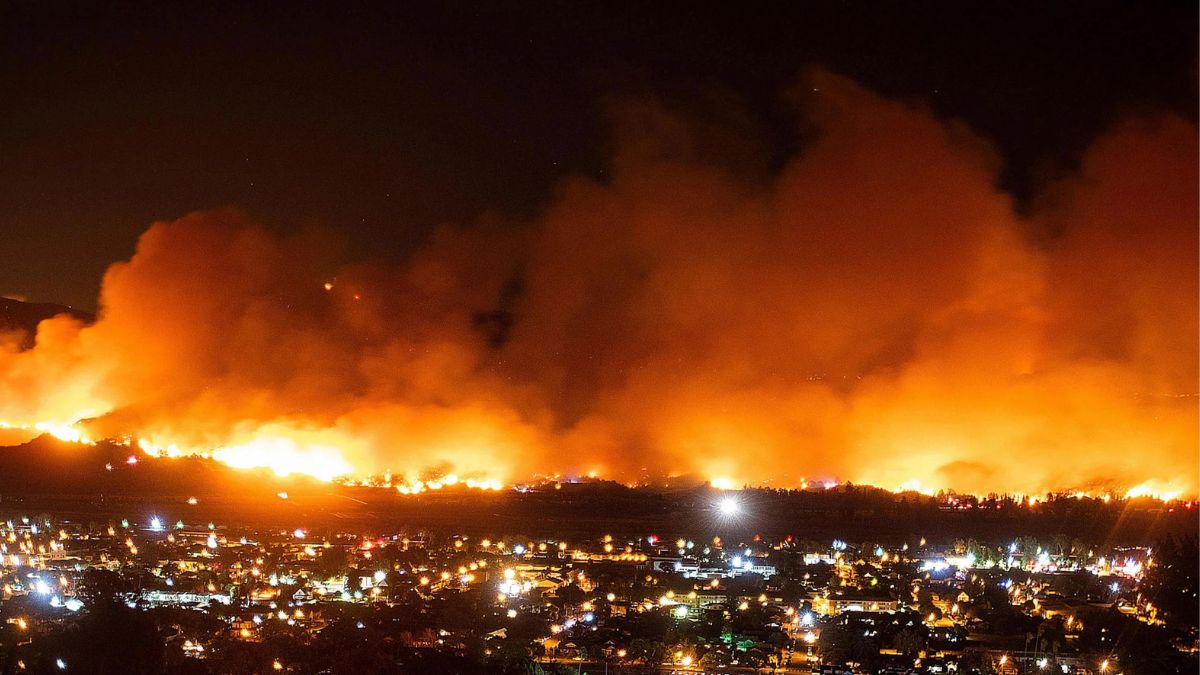
In January 2025, wildfires razed through Los Angeles, consuming a path of ash, taking over 30 lives, and consuming over 10,000 structures. These fires, kindled by record temperatures, drought, and powerful Santa Ana gusts, were not an anomalous freak episode—but a part of a larger, worldwide problem.
Now, a new report, conducted by World Weather Attribution (WWA), confirms, in no uncertain terms, what climate scientists have long predicted: Climate change increased these wildfires’ probability.
“We calculated that factors contributing to the LA wildfires are 35% more likely in terms of climate change,” Dr. Clair Barnes, first report author at Imperial College London, clarifies.
And it’s not specific to California alone. In Canada and Australia, in Greece and Brazil, wildfires become larger, deadlier, and in larger quantities. In case no one’s getting it, these will intensify in future.
The Science: How Climate Change Ignites Fires
Fires have long been part of life, but human-fueled climate change is driving them to occur with increased intensity, severity, and with growing frequency. How? Let’s dissect:
Higher Temps Equal Greater Fuel: The planet is 1.2°C (2.2°F) warmer today compared to pre-industrial times. Warmer atmosphere parches foliage, turns forests into tinderboxes, and then into a wildfire’s dream source of fuel. The wildfire duration lasts 23 days longer today compared to 19th-century times.
Droughts Get Wider, Longer, and Deeper: LA’s arid stretch between October and December 2024 was 2.4 times likelier due to climate change. The two successive wet winters (2022-2023) fueled excessive foliage and tree growth, and then the foliage withered in 2024, providing a perfect base for fires.
The Santa Ana Winds: Lethal Accelerator: The strong, arid Santa Ana winds have a deadly track record for starting fires. The strong gusts can transform tiny embers into behemoth fires in a span of a matter of a few hours. Drought and strong winds in combination make fires almost impossible to contain.
Climate Whiplash: Wet to Bone-Dry in a Flash: The fires in LA represented a perfect case of “climate whiplash”—a phenomenon in which years of deluging rain (which stimulate leaf and foliage growth) are instantly replaced with record drought (which dries out that same foliage, turning it into tinderbox material, ready to burn at a moment’s notice). The same script produced record Canadian fires in 2023 and 2019–2020 fires in Australia.
“We’re seeing an undeniable trend,” insists Dr. Friederike Otto, a report co-author. “Climate change is creating extreme wet and dry cycles, and putting fire conditions in a much worse state.”
It’s a Global Emergency
Although long-fire-plagued in California, wildfires no longer stop at traditional arid areas.
Canada (2023): 18 million hectares torched, an area larger than Greece.
Australia (2019-2020): “Black Summer” fires consumed 186,000 km² and killed 3 billion animals.
Europe (2022-2024): Fatal fires swept through Greece, Spain, and Portugal, even creeping in the Arctic Circle.
Amazon & Siberia (2024): Amazonian and Russian taiga fires in 2024 will spew enormous volumes of CO₂, driving climate change.
The Cost in Humans: Not Merely Flames
Health and Toxicity
Smoke in wildfires carries PM2.5 toxins, and brings about:
Lung disease (asthma, bronchitis, and COPD).
Attacks and strokes through poor air.
Increased long-term contact with cancer.
Emergency room admissions in hospitals rose 50% during fires in LA.
Devastating to Business
The 2025 LA fires have an estimated $12 billion in damages.
Insurance companies have increased premiums, pricing out homeowners in high-fire areas.
Small businesses and small farms are taking a pounding in loss.
Climate Refugees and Homeless Crises
Millions of Californians have fled to safer areas like the Pacific Northwest.
A reflection of global migration patterns—with wildfires, flooding, and heatwaves displacing millions globally.
“People think about climate refugees and imagine them ‘refugees’ from poor countries. But in America, we’re seeing migration through wildfires,” says Prof. Gabi Hegerl, University of Edinburgh climate expert.
Solutions: Can We Stop the Worst?
Some fires will happen naturally, but we can make them less potent and fewer in number.
Cut Emissions of Fossil Fuels—Now
– The more coal, oil, and gas we burn, the warmer and drier our world will become.
– Governments need to cut emissions sharply in line with the Paris Climate Agreement.
Smarter Landscape Management
– Controlled burns (employed for centuries in Indigenous communities) can reverse fuel loads.
– Thinning forests & making firebreaks can halt megafires in its track.
– Improved building codes (fire-resistant homes, defensible space) can save lives.
Invest in AI and Fire Forecasts
– AI algorithms can identify and halt fires in its early stage.
– Monitoring with satellite technology allows for quick response to fires.
Get Communities Ready
– Fire drills, evacuation plans, and refuges need to become standard in high-fire areas.
– Governments need to make cheap refugia for displaced individuals and cheap fire insurance a reality.
What Do You Believe?
Do controlled burns deserve to grow, even with temporary air pollution?
Do insurance companies need to refuse cover for homeowners in high-fire areas?
How can governments best handle fire suppression and long-term use of lands?




