

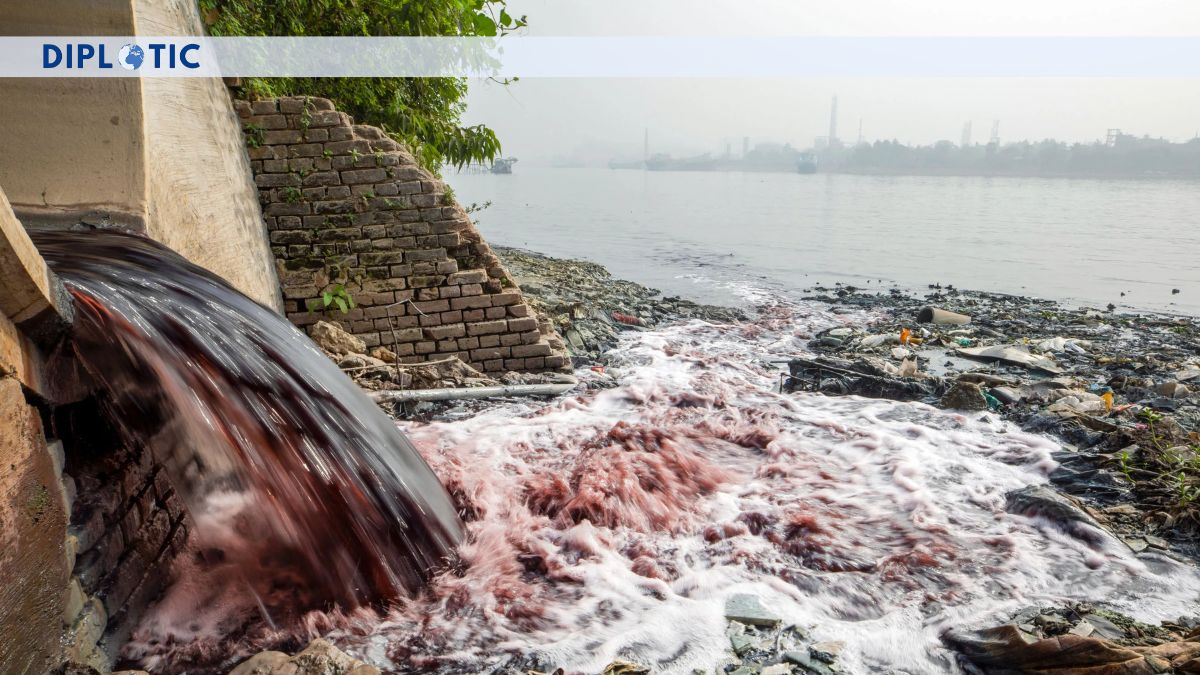
Dhaka’s Buriganga River faces a devastating pollution crisis driven by sewage, toxic industrial waste, and unchecked urban growth. The alarming environmental damage, public health risks, and bold solutions are shaping the river’s fight for survival.
The Lifeline of Dhaka
Flowing along the southwestern edge of Dhaka, the Buriganga River has long been more than a waterway. It has been the economic artery, cultural heart, and historical backbone of the city. For centuries, trade boats moved along its currents, sustaining livelihoods and connecting communities.
Today, however, the Buriganga symbolizes one of South Asia’s most urgent environmental disasters. Once a vibrant lifeline, the river now struggles under a suffocating burden of untreated sewage, toxic industrial effluents, plastic waste, and encroachment.
The crisis is severe, systemic, and deeply intertwined with Dhaka’s explosive urban expansion.
A River Overwhelmed by Urban Growth
Dhaka’s rapid transformation into a megacity has come at a staggering environmental cost. With a population exceeding 20 million in the greater metropolitan area, infrastructure development has failed to keep pace with urban growth.
Much of the city’s domestic sewage flows directly into canals that empty into the Buriganga. Inadequate wastewater treatment facilities mean that untreated human waste, detergents, chemicals, and organic pollutants enter the river daily.
Solid waste management challenges compound the problem. Plastic bags, discarded packaging, and household refuse clog tributaries and choke the river’s surface. During the dry season, pollution concentrations intensify as water flow declines, turning sections of the Buriganga dark and foul-smelling.
The river’s transformation from a living ecosystem to a heavily contaminated channel reflects a broader governance gap in urban planning.
Toxic Industrial Discharge
Perhaps the most destructive contributor to the Buriganga’s pollution crisis has been unregulated industrial activity. For years, hundreds of tanneries operated in the Hazaribagh area, discharging chromium, sulfur compounds, and other hazardous chemicals directly into the river.
In response to mounting public pressure, the government relocated many tanneries to Savar. However, environmental compliance and effluent treatment enforcement remain inconsistent. Reports indicate that some industries continue to release untreated waste into surrounding waterways that eventually connect to the Buriganga.
Textile dyeing units, small manufacturing workshops, and informal industries further add to the toxic load. Heavy metals accumulate in river sediments, posing long-term ecological and human health risks.
The absence of strict monitoring and accountability has allowed pollution to persist despite relocation efforts.
Ecological Collapse
The ecological consequences are devastating. Dissolved oxygen levels in parts of the river often drop below survivable thresholds for aquatic life. Fish populations have sharply declined, disrupting traditional fishing livelihoods.
The riverbanks, once lined with biodiversity, now host contaminated mud and invasive waste. Aquatic vegetation struggles to survive in polluted conditions, further destabilizing the ecosystem.
Sedimentation combined with illegal encroachment has narrowed the river’s width, reducing its natural ability to flush pollutants. This physical degradation intensifies water stagnation and accelerates contamination.
The Buriganga’s ecological collapse is not merely an environmental tragedy—it is an economic and social crisis for communities dependent on its resources.
Public Health at Risk
Communities living along the river face serious health threats. Direct exposure to polluted water increases the risk of skin diseases, gastrointestinal infections, and respiratory problems due to foul odors and airborne pollutants.
Contaminated fish can introduce heavy metals into the food chain, raising long-term health concerns. Informal settlements near the river often lack access to clean water and sanitation, compounding vulnerability.
Healthcare experts warn that chronic exposure to polluted environments can contribute to increased rates of kidney damage, liver disorders, and other systemic illnesses.
The Buriganga crisis illustrates the dangerous intersection between environmental degradation and public health inequity.
Government Efforts and Policy Gaps
Bangladesh has introduced several initiatives aimed at restoring the Buriganga. Riverbank eviction drives have targeted illegal encroachments. Monitoring units have been deployed to oversee industrial compliance. Wastewater treatment plant projects are underway to reduce untreated discharge.
Yet enforcement gaps remain a major obstacle. Regulatory agencies face resource constraints, while political and economic pressures sometimes weaken accountability.
Fragmented governance between municipal authorities, environmental regulators, and industrial bodies limits coordinated action. Infrastructure investments have not consistently translated into measurable water quality improvements.
Without transparent data reporting and independent oversight, policy commitments risk falling short of meaningful restoration.
The Promise of Wastewater Treatment Reform
A sustainable turnaround depends heavily on expanding and modernizing sewage treatment infrastructure. Dhaka’s existing wastewater capacity covers only a fraction of total output.
Investment in advanced treatment plants capable of removing chemical contaminants and biological waste is critical. Public-private partnerships could mobilize financing for long-term infrastructure upgrades.
Additionally, decentralized treatment systems in densely populated neighborhoods may reduce pressure on central facilities. Integrating stormwater management with wastewater systems can prevent overflow during monsoon seasons.
Strategic infrastructure reform is essential for reversing decades of neglect.
Community Engagement and Environmental Awareness
Civil society organizations and environmental activists have played a pivotal role in raising awareness about the Buriganga’s decline. Public campaigns, river clean-up drives, and investigative journalism have kept the issue in national discourse.
Increased citizen monitoring using digital tools can strengthen accountability. Transparent publication of water quality data empowers communities to demand action.
Educational initiatives highlighting the river’s historical and cultural significance may foster a renewed sense of stewardship among younger generations.
Restoring the Buriganga requires not only technical solutions but also a cultural shift toward environmental responsibility.
Climate Change and Compounding Pressures
Climate change adds another layer of urgency. Rising temperatures and erratic rainfall patterns influence water flow dynamics. Prolonged dry spells reduce dilution capacity, intensifying pollution concentrations.
Meanwhile, heavier monsoon rains can overwhelm drainage systems, flushing accumulated waste into the river in sudden surges.
Climate resilience planning must therefore integrate pollution control strategies, ensuring that infrastructure upgrades withstand extreme weather variability.
A Blueprint for Revival
Reviving the Buriganga demands bold, coordinated action. First, strict enforcement of industrial effluent standards is non-negotiable. Violations must result in substantial penalties to deter non-compliance.
Second, accelerated investment in sewage treatment infrastructure is vital. Transparent timelines and measurable benchmarks can restore public trust.
Third, integrated urban planning should prioritize river conservation, preventing further encroachment and restoring natural floodplains.
Finally, regional knowledge exchange with other river restoration initiatives in South Asia could provide valuable technical insights.
The Buriganga’s future remains uncertain, but not irreversible. History shows that severely polluted rivers can recover when political will, scientific expertise, and public engagement converge.
For Dhaka, restoring the Buriganga is more than an environmental imperative. It is a test of sustainable urban governance and a symbol of national resilience.
The river that once powered the city’s rise deserves a determined, transformative response one capable of turning sewage into solutions and crisis into opportunity.




