

A Local Blaze in a Global Pattern
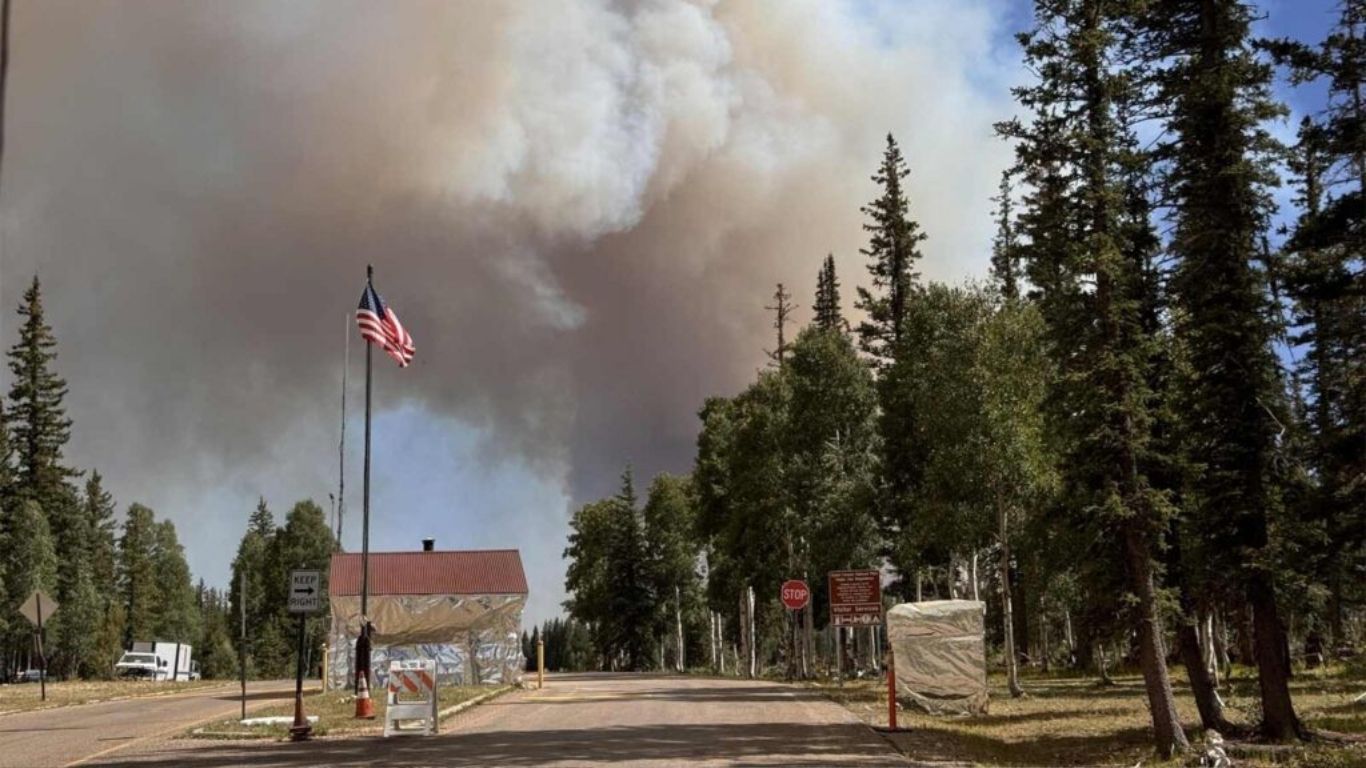
On Sunday afternoon, flames tore through Buckley Draw Canyon, quickly consuming an estimated 250 to 300 acres of parched grass and brush near Provo, Utah. What began around 4:50 p.m. as a relatively localized incident became, within hours, a sprawling operation involving helicopters, air tankers, and ground crews racing against shifting winds. Residents watched from a church parking lot as the drama unfolded in the sky—red streaks of retardant, water drops arching against the backdrop of smoke. To many, it felt like an extraordinary spectacle. To experts, however, it was another entry in the growing ledger of American wildfires that are no longer seasonal aberrations but systemic events tied to climate stress, land-use patterns, and political inertia.
This fire, though small by the standards of recent megafires in California or Oregon, illustrates how fragile landscapes across the American West have become tinderboxes. The U.S. Forest Service’s initial relief—that winds were pushing the fire uphill rather than toward residential zones—was itself an admission of how closely human habitation now borders fire-prone wilderness. This intermingling of suburb and canyon, of subdivision and forest, is not accidental. It is the direct consequence of decades of development policies that encouraged sprawl into wildland areas while underinvesting in both ecological resilience and fire prevention. Scholars of environmental history have long noted that fire in North America was once understood differently—controlled burns and indigenous fire stewardship were integral to ecological balance—but modern policy has transformed fire into a catastrophic event rather than a cyclical one.
Climate Crisis Meets Policy Paralysis
The Buckley Draw fire cannot be separated from the larger climate crisis reshaping the West. Rising summer temperatures, prolonged droughts, and unpredictable wind patterns have altered fire dynamics in ways that traditional firefighting approaches struggle to contain. According to climate scientists, the frequency of “fire weather days”—those with low humidity, high heat, and erratic winds—has doubled in parts of the western United States over the last two decades. Fires are burning longer into the autumn months and igniting earlier in the spring, turning what was once “wildfire season” into a year-round phenomenon.
Yet despite mounting evidence, U.S. policy remains trapped in a cycle of reactive funding. Billions are poured into emergency suppression efforts each summer, while comparatively little is allocated to preemptive measures such as fuel reduction, prescribed burns, or reforestation strategies that could limit the severity of future blazes. Analysts have argued that this imbalance reflects a deeper structural issue: politicians reap visible credit for sending planes and firefighters to battle flames on television, but they gain little political capital from investing in the quiet, long-term work of ecological resilience.
The Buckley Draw incident is particularly revealing because it highlights not only the climate dimension but also the social one. Nearly 100 spectators gathered to watch the blaze, some expressing awe, others sorrow, as if it were both entertainment and tragedy. Their presence underscores how wildfires have been normalized as public spectacle, even as their costs spiral. This normalization has political consequences. When fire becomes an expected summer backdrop rather than a shocking disruption, the urgency to reform policy weakens further. What should be seen as systemic crisis risks being absorbed as seasonal routine.
The Future Written in Ash
The crucial question is whether the United States can break out of this cycle before its fire burden escalates into an unmanageable crisis. Current projections suggest that by mid-century, vast swaths of the West will face fire regimes unprecedented in both scale and frequency. The ecological toll is only one dimension. Insurance markets in fire-prone areas are already collapsing, with major carriers withdrawing coverage, leaving homeowners exposed and local economies destabilized. The firefighting workforce itself is under strain, with seasonal crews pushed into year-round labor without adequate compensation, creating morale and retention crises that undermine readiness.
The parallels to other neglected threats are striking. Much like the pandemic preparedness failures of the past two decades, the fire crisis reflects an American political culture that invests heavily in emergency response while underfunding prevention. The structural incentives of the political system discourage foresight. But the costs of inaction are cumulative. Each year’s blaze leaves behind scarred landscapes, disrupted ecosystems, and billions in damages, setting the stage for more severe fires in subsequent seasons.
Comparisons with international approaches are instructive. Countries like Australia, with a similarly fire-prone landscape, have invested in both large-scale public education campaigns and the integration of indigenous fire practices into contemporary management. The United States, by contrast, remains caught in a cycle of suppression, litigation, and reconstruction. Unless this pattern changes, the Buckley Draw fire will not be remembered as an anomaly but as another chapter in a growing archive of preventable disasters. Historical precedent suggests that environmental crises only force systemic change once they reach catastrophic visibility. The grim implication is that Americans may not act decisively until the flames threaten cities on a scale too vast to ignore.
For now, Provo’s residents may breathe easier as helicopters trace lines of defense above their mountains. But the broader firestorm—ecological, political, and economic—remains far from extinguished.




