

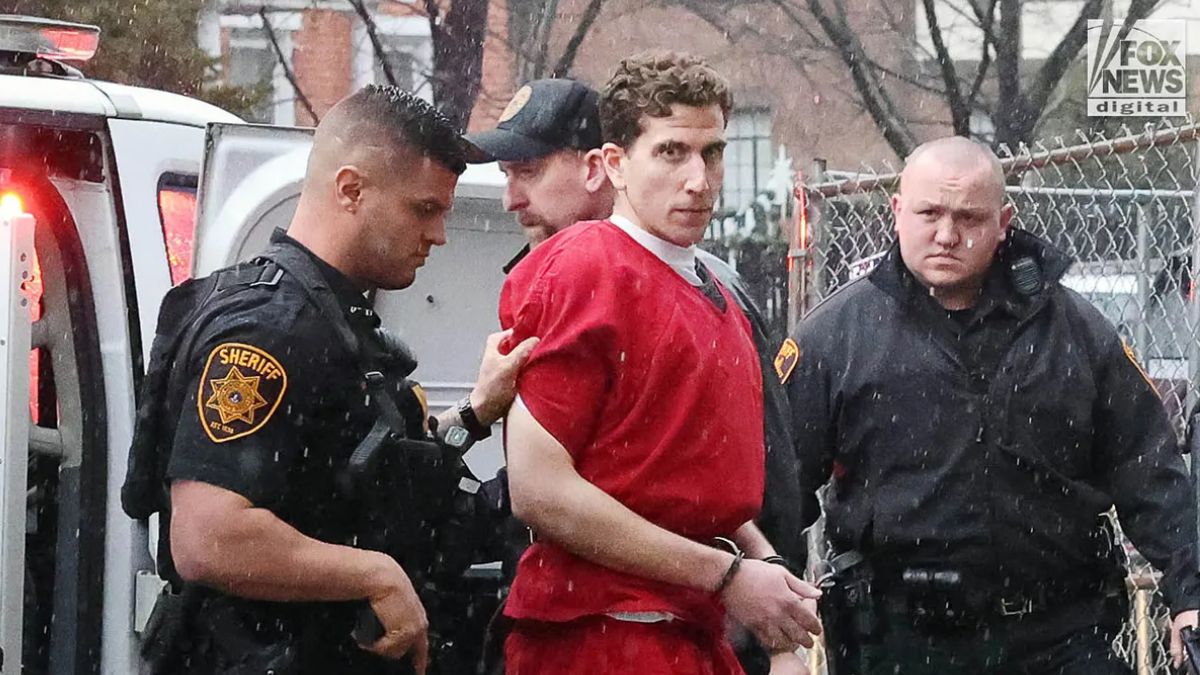
On July 23, 2025, Bryan Kohberger, the 30-year-old former criminology PhD student, faced sentencing in Boise, Idaho, for the 2022 murders of four University of Idaho students. His guilty plea on July 2, 2025, to four counts of first-degree murder and one count of burglary secured him four consecutive life sentences without parole, plus 10 years for burglary, dodging the death penalty. The Ada County Courthouse was a crucible of raw emotion as victims’ families and survivors delivered searing impact statements, confronting Kohberger’s impassive silence. Yet, with no motive revealed and the murder weapon still missing, the sentencing left a fractured sense of closure, exposing the limits of justice in a case that gripped the nation. Here’s a sharp, unflinching look at the day, the crime, and its unresolved shadows, served with a skeptical eye on whether punishment can ever match the pain.
The Sentencing: Life Sentences, Lingering Questions
Kohberger, once a scholar studying crime, stood in jail-issued clothing as Judge Steven Hippler handed down four life sentences without parole for the murders of Ethan Chapin, Xana Kernodle, Madison Mogen, and Kaylee Goncalves, plus 10 years for burglary, all to run consecutively. The plea deal, finalized weeks earlier, ensured no appeals, locking Kohberger away for life. Hippler called him a “coward” who “slithered” into the victims’ home, noting that even if forced to speak, Kohberger’s truthfulness would be dubious. Kohberger, gaunt and expressionless, offered no statement, leaving the courtroom without answers to why he killed or why he spared two roommates.
The sentencing, following a plea that preempted an August 2025 trial, was a pragmatic resolution but a bitter one for some. Prosecutors argued it saved judicial resources and spared families decades of appeals, but the absence of a motive or full confession left a void. The courtroom, packed with grieving families and media, became a stage for catharsis, but not completion.
Victim Impact Statements: Pain and Defiance
The heart of the hearing was the victim impact statements, a raw outpouring of grief and rage. Kristi Goncalves, Kaylee’s mother, expressed fury that Kohberger avoided execution, predicting prison would be his “hell.” “You’ll always be remembered as a loser, an absolute failure,” she told him. Her daughter Alivea drew applause, calling Kohberger a “delusional, pathetic, hypochondriac loser” and declaring, “You didn’t win, you just exposed yourself as a coward.” Steve Goncalves, Kaylee’s father, faced Kohberger directly: “You tried to break our community apart. You failed.”
Madison Mogen’s mother, Karen Laramie, via her lawyer, refused to address Kohberger, deeming his acts “too heinous” for mercy. “Any one of us would have given our own life to have been outshone by hers,” her statement read. Surviving roommates Bethany Funke and Dylan Mortensen spoke publicly for the first time, their words piercing. Funke, haunted by survivor’s guilt, called Xana Kernodle “one in a million” and recalled shared nights of laughter and love. “Why me? Why did I get to live?” she asked. Mortensen described ongoing panic attacks and “escape plans” everywhere she went, vowing to rebuild herself “piece by piece.” Their testimonies left the courtroom in tears.
Kohberger’s mother, Maryann, wept quietly, while Kohberger showed fleeting signs of discomfort—his leg jostling, his head bobbing slightly. The Goncalves family demanded a full confession and the location of the missing KA-BAR knife, but prosecutors declined to amend the plea deal, citing ethical constraints.
The Crime: A Meticulous Attack, A Town Shattered
On November 13, 2022, Kohberger allegedly entered a rental home at 1122 King Road, Moscow, Idaho, through a kitchen sliding door. He stabbed Mogen and Goncalves on the third floor, then Kernodle and Chapin on the second, between 4:00 and 4:25 a.m. Autopsies showed multiple stab wounds, some defensive, with victims likely asleep initially. Two roommates, Funke and Mortensen, survived, one reporting a masked figure with bushy eyebrows leaving the scene.
Evidence was overwhelming: Kohberger’s DNA on a knife sheath, cellphone data showing him near the house 23 times, and surveillance capturing his white Hyundai Elantra circling the area. He bought the knife online months earlier and cleaned his car meticulously to hide evidence, though the weapon itself was never recovered. Arrested on December 30, 2022, at his parents’ Pennsylvania home, Kohberger initially pleaded not guilty, with his defense citing his autism diagnosis and challenging DNA evidence. After losing key pretrial motions, including efforts to introduce “alternate perpetrators” and exclude DNA, he took the plea deal.
A Divided Outcome: Justice or Compromise?
The plea deal split victims’ families. Mogen’s parents and Chapin’s family backed it, relieved to avoid trial trauma. “We can put this behind us,” said Ben Mogen. The Goncalves family, however, felt betrayed, calling it a “secretive deal” and a “ridiculous joke.” They sought answers—why the students were targeted, why roommates were spared, where the knife is—none of which Kohberger provided. Even former President Trump weighed in, demanding a motive, but Kohberger remained silent, his defense attributing it partly to autism.
The case, moved to Boise from Latah County due to media saturation, was a financial burden on Moscow, with Idaho’s governor allocating $1 million for the investigation. Legal analysts noted the deal ensured a conviction in a state where executions are rare (none since 2012), but for some families, it was a hollow victory without full accountability.
Why It Matters: A Nation Hooked, A Community Scarred
The Idaho murders, with their brutality and mystery, became a cultural phenomenon, spawning docuseries, books, and endless speculation. Kohberger, a criminology student turned killer, embodied a chilling irony, his academic work on crime scenes mirroring his actions. The case raised questions about campus safety, the ethics of plea deals, and the cost of justice in small communities. Moscow, a town unaccustomed to violence, was left reeling, its sense of security fractured.
Kohberger’s silence, even when given a chance to speak, deepened the wound. Legal experts suggested his autism might explain his reticence, but it offered no solace to families. As the gag order lifts post-sentencing, more case details may emerge, but the core question—why?—remains unanswered.
The Road Ahead: Scars Without Closure
The sentencing was a “legal funeral,” a chance for families to voice their pain but not to heal fully. Kohberger’s life sentences ensure he’ll never walk free, but the missing knife and motive haunt survivors and families. Moscow and the University of Idaho will carry the scars of November 13, 2022, forever. As Kohberger fades into prison obscurity, the victims’ stories—full of love, laughter, and promise—endure, a testament to lives cut short and a community that refused to break.




