

Opening Context
When Donald Trump declared that “BRICS is dead”, the statement sounded bold enough to dominate headlines but far too simple to fit the real picture. Behind the noise, the Global South-led bloc has been expanding faster than at any point in its history, adding new members, new partners, and new financial tools aimed at reducing the dominance of the US dollar. The rise of BRICS is no longer only about economics. It is about political agency, historical memory, and the desire of developing countries to reshape a global system long seen as unequal. As Trump threatens tariffs and dismisses the group as a failed experiment, the evidence suggests the opposite: BRICS is becoming a more active, more confident force in today’s international order. This article examines how and why the bloc continues to grow, what it hopes to achieve, and what its future may mean for the rest of the world.
1. Why Trump’s Threats Reveal the US Fear of Losing Ground
When Donald Trump returned to the White House, one of his first diplomatic targets was BRICS. He warned that any country choosing to “play games with the dollar” would face heavy tariffs. He even claimed the group had “died” the moment he issued his warning. Yet these statements raise more questions than answers. Why threaten an organization that is supposedly collapsing? Why issue another tariff threat in July 2025 if BRICS was already “dead” in February?
These contradictions point to a deeper anxiety within Washington. For decades, the United States depended on the dollar’s global dominance to maintain influence. The dollar functions not only as a currency but as a political tool, enabling sanctions, capital controls, and leverage in multilateral institutions like the IMF and World Bank. BRICS challenges that system simply by existing. Its members are some of the world’s largest economies, and many of them share a long history of resisting outside control. When they meet and discuss alternatives to the dollar, the US leadership sees not just an economic challenge but a symbolic threat to an established hierarchy.
Trump’s reaction must also be understood in the context of shifting global alliances. Countries like Indonesia, Egypt, Iran, Ethiopia, and the UAE have joined the bloc in recent years; many others have become partners. Even Mexico, a close US neighbor and top trading partner, attended the 2025 summit in Brazil as an observer. These developments signal a foreign policy trend that Washington cannot easily reverse: major economies across the Global South want more choices, more influence, and more room to act independently.
The US fear does not come from BRICS destroying the global order overnight. Instead, it comes from the slow erosion of a system that once guaranteed American power. By threatening tariffs, Trump tried to intimidate countries into staying within that system. But this approach carries risks. Countries under threat often react by diversifying even more. And as the next sections show, that is exactly what BRICS has been doing.
2. Expansion as Strategy: How BRICS Grew Stronger Instead of Breaking Apart
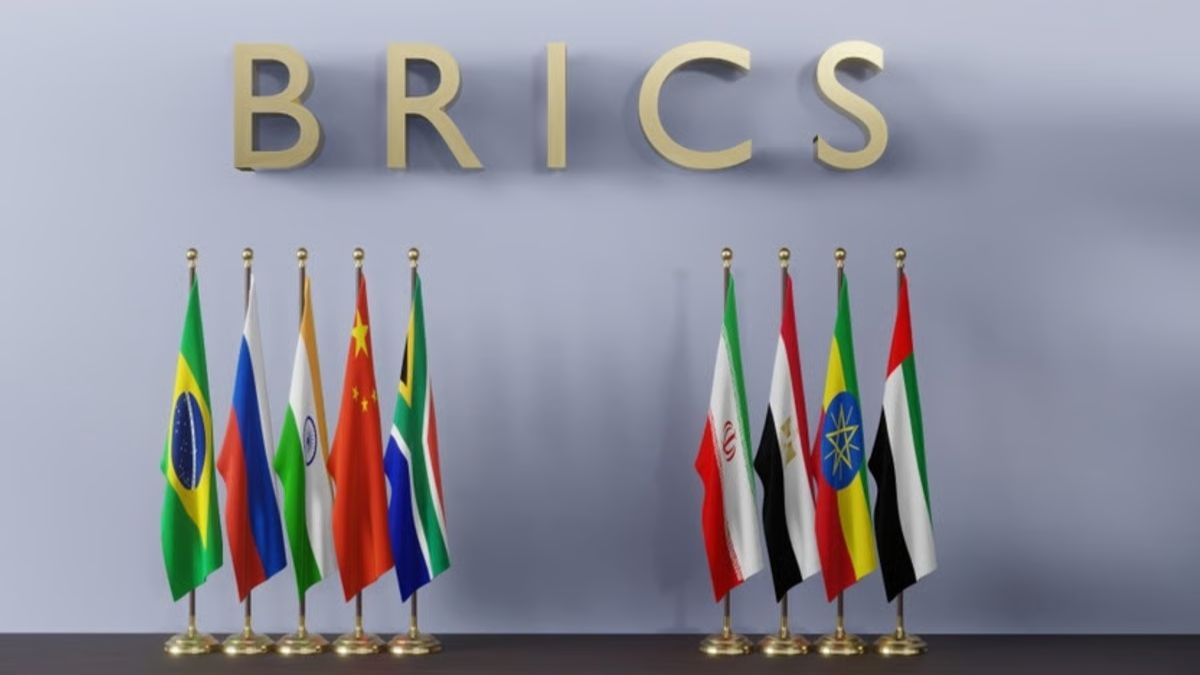
Despite claims that it is weakening, BRICS has expanded into a 20-country platform made up of 10 full members and 10 partners. Its members today include some of the most strategically located states across Latin America, Africa, the Middle East, and Asia. This expansion is not random. It follows two clear goals: strengthening South-South cooperation and reforming how global governance works.
The 2025 summit in Brazil was a turning point. For the first time, all new partners, like Belarus, Bolivia, Malaysia, Uganda, and Uzbekistan, participated actively alongside full members. Vietnam, which joined in June 2025, symbolized the bloc’s growing reach into Southeast Asia. This was especially important because the United States had spent years trying to pull Vietnam into its strategic orbit to counter China. Yet Vietnam chose BRICS, sending a message that it prefers a non-aligned path rather than joining great power rivalries.
Cuba’s participation held another kind of symbolism. The island has suffered under US sanctions and an ongoing blockade, but still remains committed to independent foreign policy. By entering BRICS as a partner, Cuba found a new diplomatic space where it is not isolated but welcomed.
Nigeria’s addition in early 2025 further reshaped the group. As Africa’s most populous country and largest oil producer, Nigeria brings both economic weight and demographic importance. It joins Egypt, Ethiopia, and South Africa, making BRICS home to the three most populous African nations. By bringing in major economies from every continent, BRICS is building a diverse structure that cannot be dismissed as a temporary coalition. Instead, it resembles an emerging network of countries unified by shared interests: economic fairness, policy independence, and long-term multipolarity.
The expansion also reflects a broader demographic shift. Africa and Asia together will hold more than 80% of the global population by 2100. BRICS is becoming a platform aligned with the future demographic center of the world. This long-term trend counters arguments that the bloc lacks staying power. On the contrary, BRICS is positioning itself where global population, markets, and resources are expanding fastest.
3. Dedollarization: A Slow but Steady Challenge to US Financial Power
One of the central issues at the 2025 summit was dedollarization. While often misunderstood, dedollarization does not mean an immediate replacement of the dollar. Instead, it aims to reduce overreliance on one currency and allow developing countries more control over their financial stability.
Brazil’s President Lula da Silva has been one of the clearest voices on this topic. He argues that global trade should not depend on a single currency controlled by one country’s central bank. At the summit, he called for a new trade currency and for increased use of local currencies in BRICS trade. Lula stressed that dedollarization is complex and must be gradual, but the direction is clear. If countries can trade even 10–20% in local currencies, they reduce exposure to dollar-based volatility and US monetary policy.
The BRICS joint declaration in 2025 showed how the group plans to move in this direction. It emphasized strengthening the New Development Bank (NDB) and expanding local-currency financing. The bank, now led by former Brazilian President Dilma Rousseff, has already funded projects directly in renminbi and is promoting similar options for other members. The Contingent Reserve Arrangement (CRA) is also being developed as a safeguard for countries facing balance-of-payments pressure, offering an alternative to turning to the IMF.
These steps may appear slow, but they matter. The dollar’s dominance is rooted in habit, financial networks, and institutional structures. Changing such a system requires coordination among many countries, trust in new systems, and economic stability. BRICS is trying to build exactly that through payment platforms, currency agreements, and reforms in its development bank.
For the United States, these developments are concerning because they weaken the link between global trade and US policy tools. If large markets move to local currency settlements, the impact of US sanctions declines and global finance becomes more decentralized. This shift does not destroy the dollar, but it limits its reach. And for BRICS countries, that means higher autonomy in making national economic decisions.
4. The Non-Aligned Legacy: Why BRICS Fits a Larger Historical Pattern
BRICS leaders often compare today’s movement to earlier attempts by the Global South to reshape international politics. References to the Bandung Conference of 1955 and the Non-Aligned Movement are frequent. These comparisons highlight a deeper historical motive: the desire of formerly colonized nations to escape systems that they believe still carry traces of old hierarchies.
At the 2025 summit, leaders like Lula and Malaysia’s Prime Minister Anwar Ibrahim openly spoke about the need to break free from unfair global structures. They pointed out that institutions like the IMF and World Bank often reinforce unequal economic relationships. Lula called the system a “reverse Marshall Plan” where poor countries finance rich ones through high interest costs and limited access to fair credit.
These criticisms are not new. They reflect decades of dissatisfaction with institutions created after World War II, when many current BRICS countries had little influence or were not yet independent. Today, they are using BRICS as a platform to demand reforms that match the realities of a multipolar world. They want more representation in the UN Security Council, fairer trade systems, and financial bodies that do not impose one-size-fits-all rules.
This historical narrative gives BRICS its political edge. It is not only a trade or finance club. It is a symbolic continuation of earlier anti-colonial movements, now modernized for a globalized economy. And this identity strengthens its unity, even though members often have different political systems and strategic interests.
Conclusion: A Bloc Growing in Confidence, Not Decline
BRICS is far from “dead”. In fact, its expansion, its financial experiments, and its political messaging show a group that is becoming more active and more confident. It functions not as a single economic power but as a platform for countries that want alternatives to US-led institutions. Trump’s tariff threats may slow cooperation with the United States, but they are unlikely to stop the long-term trend of diversification inside BRICS.
The real story is not about whether BRICS can overthrow the dollar or challenge US leadership overnight. It is about how much the global landscape has already changed. Countries across the Global South want new options, new partners, and new tools. And BRICS, with all its complexities, has become a central space where these ambitions take shape.




