

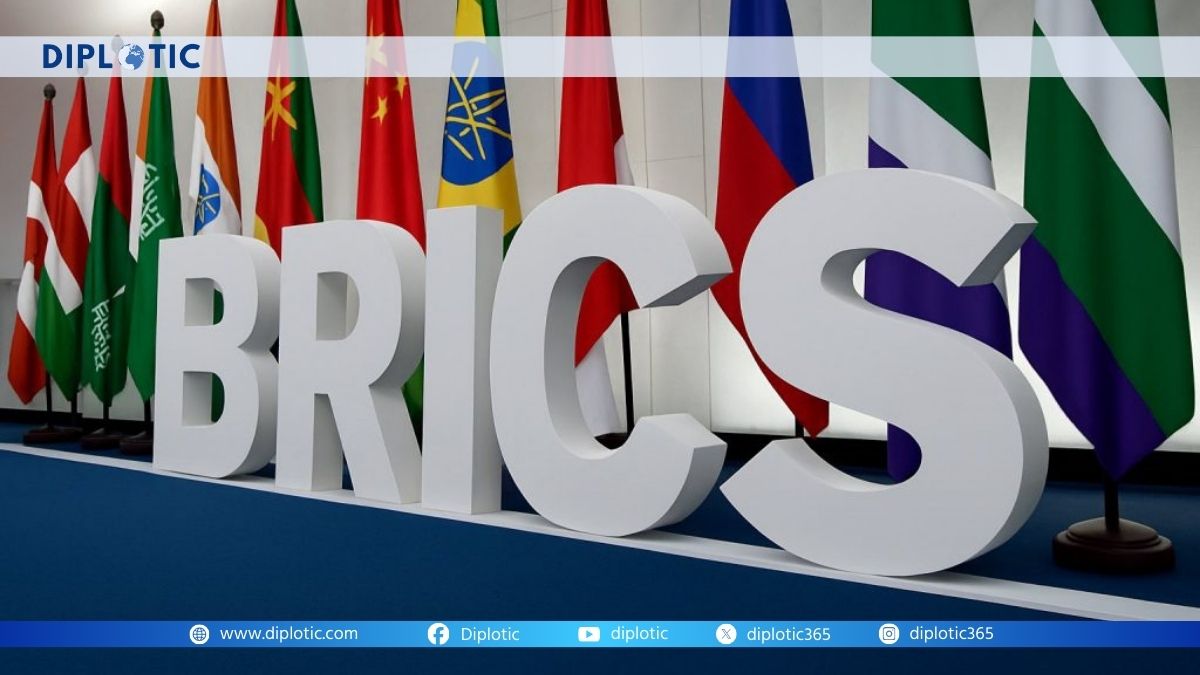
The recent expansion of BRICS has transformed the grouping from a symbolic coalition of emerging economies into an increasingly influential economic bloc. With new members from major energy-producing regions and rising interest from dozens of countries, BRICS now represents a greater share of global GDP, trade, and natural resources than ever before. This growth has renewed debates about the future of global monetary power and, in particular, whether BRICS poses a meaningful challenge to the long-standing dominance of the US-centered “petrodollar” system. While the bloc’s ambitions are clear, the academic literature suggests a more complex picture: BRICS is undeniably strengthening as an economic powerhouse, but the petrodollar system remains resilient due to structural and institutional advantages.
The petrodollar emerged in the 1970s when most global oil trade began settling exclusively in US dollars, cementing the dollar’s position at the core of international finance. Scholars such as Stokes (2019, Review of International Political Economy) argue that the petrodollar created a self-reinforcing cycle: oil producers recycle surplus dollars into US assets, which in turn deepens global dependence on the dollar for trade, reserves, and investment. Against this backdrop, the recent expansion of BRICS—especially with major energy players—has raised questions about whether this system can remain unchallenged.
International-journal research shows that BRICS states have steadily advanced financial arrangements aimed at reducing dependence on the US dollar. Studies by Otero-Iglesias (2024, Journal of Chinese Political Science) and Fernandes et al. (2023, Third World Quarterly) note that BRICS countries are increasingly using local-currency settlement, expanding currency-swap lines, and strengthening the New Development Bank as an alternative to Western-dominated institutions. These initiatives do not immediately dethrone the dollar, but they do open pathways for long-term diversification—especially in energy markets.
One of the most significant pressure points is the rise of alternative energy-pricing mechanisms. China’s introduction of yuan-denominated crude futures, along with a growing number of oil contracts settled in yuan, has made the “petroyuan” a subject of serious academic attention. Research published in Energy Economics (Zhang & Sun, 2023) suggests that if more BRICS and Middle Eastern states begin pricing oil in local currencies, global demand for the dollar could gradually weaken. The inclusion of major oil producers into the BRICS framework further strengthens this possibility, creating a favourable environment for multi-currency energy trade.
Still, most international scholarship agrees that structural obstacles remain. The US Treasury market provides unmatched liquidity, safety, and depth—the very qualities that make the dollar the preferred global reserve currency. As Prasad (2022, Foreign Affairs) observes, no BRICS member offers financial markets large or stable enough to replace the dollar’s role during crises. Political divergence within BRICS also complicates monetary coordination. As Wilson (2023, International Affairs) notes, the group’s diverse political systems, competing regional interests, and differing exchange-rate regimes make the creation of a unified financial alternative extremely challenging.
Thus, while BRICS expansion enhances the bloc’s geopolitical and economic weight, its challenge to the petrodollar is more evolutionary than revolutionary. De-dollarization is increasing, but gradually. Some oil and commodity trades are shifting to yuan or local currencies; some countries are slowly diversifying reserves; and new financial infrastructures are emerging. However, these movements coexist with the continued dominance of the dollar in global reserves, payments, and debt markets.
In conclusion, BRICS’ rise as an economic powerhouse undeniably pressures aspects of the US-led financial order, especially in regions seeking autonomy from dollar-based systems. The petrodollar is not collapsing, nor is it immune to structural change. The most realistic scenario, supported by current academic research, is a slow pluralization of the global monetary system: the dollar remains dominant, but not uncontested, while BRICS builds parallel financial pathways that gradually reduce, rather than abruptly replace, reliance on the dollar. In this evolving landscape, the petrodollar faces long-term pressure but its global centrality remains intact for the foreseeable future.




