

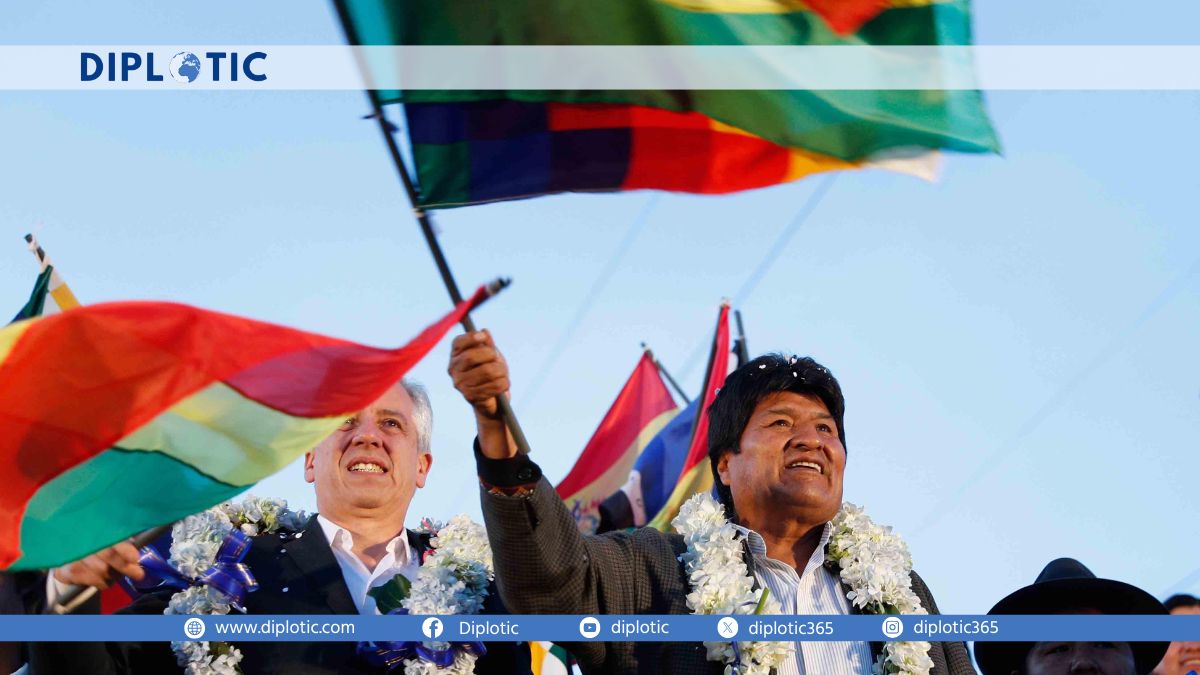
The Unraveling of the Socialist Stronghold
For nearly twenty years, Bolivia’s political compass had been firmly oriented toward the left, dominated first by the transformative but polarizing presidency of Evo Morales and later by his successor Luis Arce. Morales, who rose to power in 2006 as the country’s first Indigenous president, built a movement that promised to correct centuries of exclusion, leveraging the global commodities boom to fund redistributive programs and strengthen state control over natural resources. The ruling Movimiento al Socialismo (MAS) became synonymous with both progress and controversy: economic growth, declining poverty, and Indigenous empowerment were tempered by allegations of corruption, authoritarian overreach, and a dangerous entrenchment of power.
The unpopularity of Arce’s administration, plagued by shortages of fuel, foreign reserves, and even basic food items, has created fertile ground for voter backlash. The visible anger spilled into polling stations, where MAS candidates were not just rejected at the ballot box but physically attacked—Eduardo del Castillo was heckled and mocked for his government’s failures, while stones were hurled at Andrónico Rodríguez, once seen as Morales’s protégé. Such scenes underscore how discontent has metastasized beyond electoral fatigue into visceral resentment. For many Bolivians, MAS’s symbolic capital has been squandered.
The fractures within the socialist movement only deepened Morales’s absence from the ballot for the first time in two decades. Legally barred from running, Morales urged his loyalists to spoil their votes, ensuring further erosion of MAS’s base. His lingering influence, combined with legal scandals—including an arrest warrant tied to accusations of sexual misconduct—has split the left into competing factions, each weakened by the other. These dynamics set the stage for a historic shift: Bolivia is now preparing to elect its first non-left-wing president in nearly twenty years.
A New Contest Between Capitalist Reformers
At the center of this transition is Rodrigo Paz Pereira, a senator of the Christian Democratic Party, who unexpectedly emerged as the frontrunner after outperforming polls that favored businessman Samuel Doria Medina. Pereira has built his campaign on promises of decentralization, anti-corruption, and economic reform—summarized in his slogan, “capitalism for all, not just a few.” His proposals target the structural issues haunting Bolivia: expanding access to credit, introducing tax breaks to formalize the shadow economy, and removing import barriers for goods not produced domestically. In short, Pereira positions himself as the architect of a more open and pragmatic capitalism, one that seeks to broaden prosperity rather than consolidate wealth among the elites.
His opponent in the October runoff, Jorge Quiroga, carries a different legacy. A conservative from the Alianza Libre coalition, Quiroga once served briefly as interim president following the death of Hugo Banzer, a man remembered as both military dictator and later elected leader. Quiroga’s political experience is substantial, but it is also shadowed by his association with an older guard of Bolivian politics. Unlike Pereira, who frames himself as a generational shift, Quiroga’s candidacy is tethered to past governance models that many voters may find ill-suited for the crises of today.
Both men, however, share an openness to foreign investment, especially in Bolivia’s vast lithium reserves—a resource that places the country at the nexus of the global energy transition. Lithium is no longer just a commodity but a strategic asset, essential for the batteries that power electric vehicles, consumer electronics, and renewable energy systems. For years, MAS pursued a model of state control over lithium production, partnering with China and Russia while sidelining Western firms. A non-left administration could recalibrate this policy, opening the doors to new alliances with U.S. and European investors eager to secure stable supply chains. The shift would not only reshape Bolivia’s domestic economy but could also reverberate across global markets where competition over lithium access is intensifying.
Foreign Policy Realignment and the Regional Stakes
Perhaps the most consequential implications of Bolivia’s rightward turn lie in foreign policy. For two decades, MAS governments cultivated ties with China, Russia, and Iran while keeping relations with the United States strained at best. A recent U.S. congressional report described Washington-La Paz relations as “tense and limited,” a reflection of both ideological rifts and disputes over narcotics policy, trade, and investment. With Pereira or Quiroga in power, Bolivia could signal a realignment—one that privileges Western capital and diplomatic engagement over socialist solidarity with anti-U.S. partners.
This would place Bolivia closer to its neighbors Chile and Brazil, both of which are key regional actors in the lithium economy and whose political oscillations also mirror broader shifts across Latin America. The broader geopolitical landscape suggests that Washington will welcome a Bolivia more open to its influence, especially as it competes with Beijing for dominance in Latin America’s natural resource sectors. Yet the pivot will not be straightforward. Decades of cultivated relationships with non-Western allies cannot be unwound overnight, and many Bolivians remain wary of U.S. interventionism, recalling Washington’s checkered history in the region.
Domestically, the success of this pivot will depend on whether a new president can deliver tangible improvements in the economy. Without addressing inflation, shortages, and debt, promises of foreign investment may ring hollow to ordinary citizens. Moreover, the ghosts of 2019 still haunt Bolivia. That year’s disputed election and Morales’s resignation under pressure from the military remind the nation that transitions can be volatile. If the runoff yields contested results or sparks accusations of fraud, Bolivia could once again descend into political crisis.
The election thus represents more than just a change of leadership. It is a referendum on two decades of leftist governance, a test of Bolivia’s readiness to embrace capitalist reforms, and a recalibration of its geopolitical orientation. As the October runoff approaches, the country stands at a precarious intersection: between old loyalties and new alliances, between populist promises and structural reform, between continuity and rupture. The outcome will not only determine Bolivia’s political direction but also reshape its role in a world increasingly defined by the battle for critical resources and strategic influence.




