

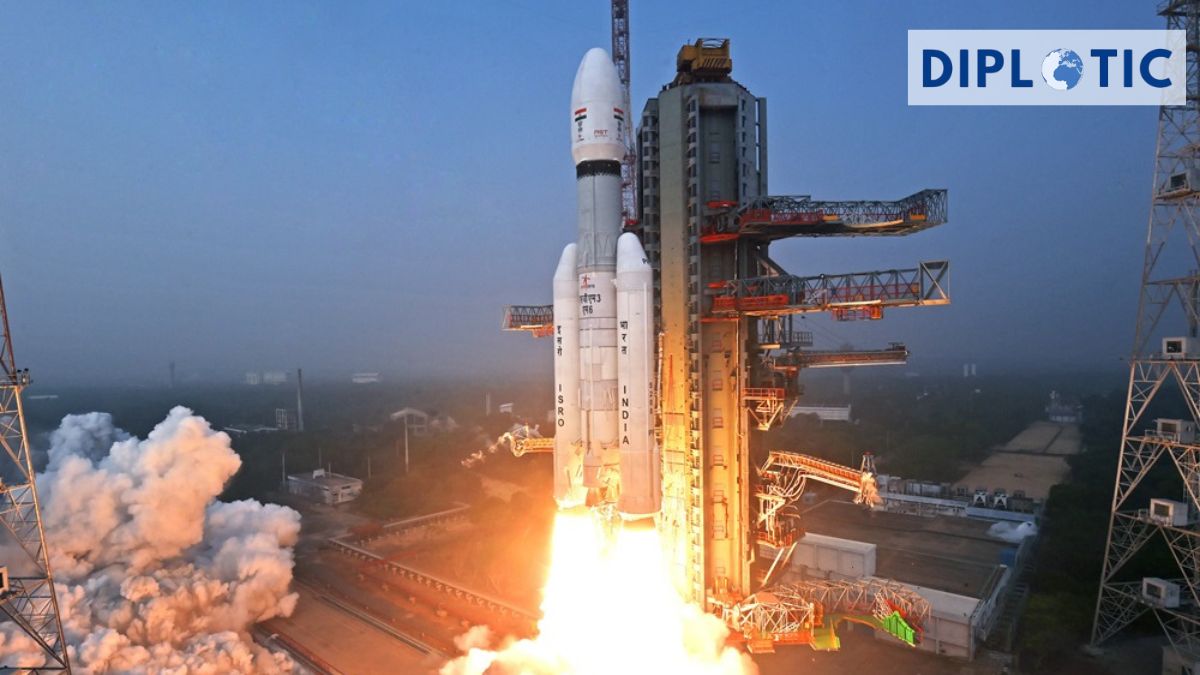
India Rewrites Its Space Legacy
BlueBird Block-2 Mission Marks a New Era for India’s Human Spaceflight Ambitions. India has taken a defining leap in its space journey with the successful launch of its heaviest satellite to date, marking one of the most significant milestones in the history of the Indian Space Research Organisation (ISRO). The BlueBird Block-2 satellite, weighing over six tons, was flawlessly inserted into orbit, underscoring India’s expanding technological strength and its growing prominence in global space exploration. The mission signals India’s readiness to handle ultra-heavy payloads while reinforcing its ambition to become a major force in human spaceflight and next-generation satellite infrastructure.
BlueBird Block-2: A Giant Leap in Satellite Capability
BlueBird Block-2 represents a new generation of high-capacity communications satellites designed to dramatically enhance satellite broadband, secure communications, navigation support, and disaster management networks. Its massive payload mass makes it the largest satellite ever launched by ISRO, highlighting the agency’s expanding engineering capabilities. The satellite is expected to transform India’s digital backbone by strengthening nationwide connectivity, particularly in remote and underserved regions, while providing resilient communication support for strategic and civilian applications.
A Strategic Launch with U.S. Rocket Partnership
The satellite was deployed using a U.S.-built heavy-lift rocket, demonstrating the strengthening space partnership between India and the United States. Indian officials have confirmed that the same rocket system may be considered for future human spaceflight missions. This collaboration reflects growing bilateral trust and shared technological goals, while also accelerating India’s timeline for developing crew-rated launch infrastructure. The mission highlights how international cooperation is becoming central to the new era of space exploration.
Advancing India’s Human Spaceflight Ambitions
This launch is widely seen as a critical validation step for India’s upcoming crewed missions. The heavy-payload performance, flight stability, and precision orbital insertion generated valuable mission data that will be applied to future human spaceflight programmes. The success reinforces confidence in India’s readiness to support long-duration human missions and complex orbital operations, both of which are central to the country’s long-term exploration roadmap.
Strengthening India’s Digital and Economic Infrastructure
BlueBird Block-2 is expected to significantly improve India’s digital ecosystem by expanding broadband access, strengthening emergency response systems, and supporting telemedicine, distance learning, and smart-city applications. By delivering ultra-high-throughput communication services, the satellite will help bridge the digital divide and support the rapid growth of India’s digital economy, reinforcing technology-driven development initiatives nationwide.
A Rising Force in Global Space Diplomacy
On the international stage, the successful mission further elevates India’s status among major spacefaring nations. As competition intensifies in satellite deployment, lunar missions, and deep-space exploration, India is positioning itself as a responsible and technologically capable partner. The mission strengthens India’s voice in shaping global space governance frameworks and encourages deeper cooperation with allied space agencies.
Engineering Excellence Behind the Mission
The development of BlueBird Block-2 reflects years of advanced engineering research by ISRO scientists. Sophisticated structural frameworks, thermal control systems, radiation shielding, and redundant power architectures were carefully designed to ensure long-term stability in orbit. The flawless execution of the mission reinforces ISRO’s global reputation for reliability, precision, and cost-effective innovation.
A New Chapter for India’s Commercial Space Sector
The success of this launch opens new opportunities for India’s rapidly expanding commercial space industry. Demonstrated capability to deploy ultra-heavy satellites strengthens confidence in Indian launch services and satellite manufacturing, making India increasingly attractive for international partnerships, leasing arrangements, and joint space missions.
Conclusion: India Enters the Heavyweight League of Space Powers
From its early satellite launches to now deploying six-ton-class spacecraft, India’s space evolution has been extraordinary. The BlueBird Block-2 mission represents more than a technical success; it symbolizes India’s transition into a strategic space infrastructure leader. With human missions on the horizon, expanding international partnerships, and next-generation satellites now in orbit, India is firmly establishing itself among the world’s heavyweight space powers.




