
• About
  • Contact
  • Methodology
  • Violation Policy
  • Editorial Policy
  • Correction Policy
  • Privacy Policy
  • Reader Submissions
  • Our Team
  • Funding & Donors
Monday, June 8, 2026
  • Home
  • Focus
    • Exclusive
    • Editor’s Pick
    • Behind the Curtain
  • Fact Check
  • Politics
  • Diplomacy
  • Economy
  • War & Conflict
  • South Asia
  • More
    • Games & Sports
    • Technology
    • Entertainment
    • History & Culture
    • Science & Technology
    • Nature & Environment
    • Health & Lifestyle
Bangla
Diplotic
No Result
View All Result
  • Home
  • Focus
    • Exclusive
    • Editor’s Pick
    • Behind the Curtain
  • Fact Check
  • Politics
  • Diplomacy
  • Economy
  • War & Conflict
  • South Asia
  • More
    • Games & Sports
    • Technology
    • Entertainment
    • History & Culture
    • Science & Technology
    • Nature & Environment
    • Health & Lifestyle
No Result
View All Result
Diplotic
Bangla
Home Nature & Environment

A Rare Black Moon Rises With the Sun on Aug. 23: What It Really Means

Staff Reporter by Staff Reporter
August 20, 2025
in Nature & Environment, Editor’s Pick
Reading Time: 3 mins read
A A
0
A Rare Black Moon Rises With the Sun on Aug. 23: What It Really Means
0
VIEWS
Share on FacebookShare on Twitter

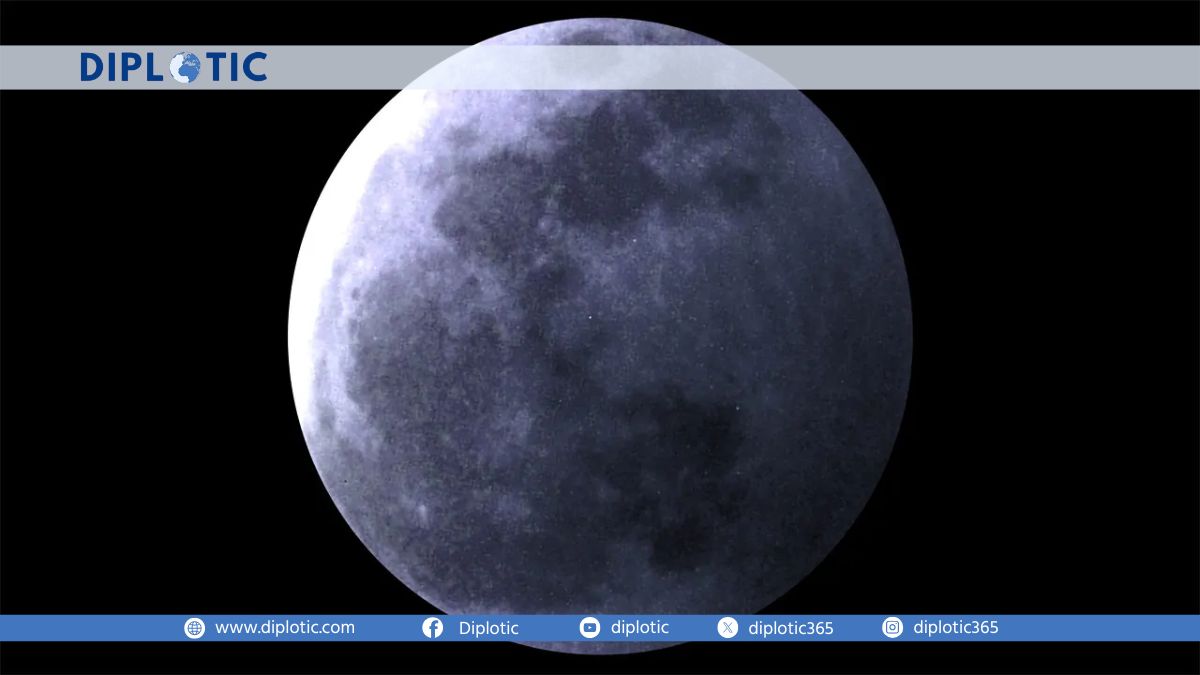
On Aug. 23, the night sky will quietly host an unusual lunar event known as a Black Moon. Though you won’t actually see anything—because during this phase the moon is completely hidden—its rarity has long fascinated skywatchers.

At precisely 2:06 a.m. EDT (06:06 GMT), or 11:06 p.m. PDT on Aug. 22, the moon passes into its new moon phase. At that moment, our closest celestial neighbor will sit in Leo, just a degree north of the sun. This close alignment makes the moon invisible, rising and setting alongside the sun. The idea of a “Black Moon” is not an official astronomical category, but rather a term coined to capture rare timings of new moons, especially when one season fits in four instead of the usual three.

By that definition, Aug. 23 brings the third new moon of a season that unusually contains four. These cycles don’t line up neatly with human calendars, which is why every 32 to 33 months an “extra” new moon appears, earning the Black Moon label. The last such seasonal occurrence happened in May 2023, part of a long pattern of irregularities first noted in ancient lunar calendars.

Summer 2025 in the Northern Hemisphere began with a new moon on June 25, followed by July 23, Aug. 3, and Sept. 21. With four squeezed into one season, the Aug. 23 moon takes the title. Though invisible, the symbolism resonates, as rare celestial events often did across cultures. In fact, myths of hidden moons once circulated widely, shaping early ideas of cosmic balance that later influenced cultural interpretations of eclipses.

There’s also another definition of Black Moon: the second new moon in a single calendar month. That variation will not occur again until Aug. 31, 2027. Such shifting meanings reveal the ways humans attach stories to the sky. As one Diplotic commentary explains, the Black Moon often sparks more folklore than astronomy, serving as a canvas for imagination rather than a scientific category.

Unlike supermoons or eclipses, a Black Moon is invisible to the naked eye. Yet the days immediately after offer consolation. On Aug. 24 and 25, look toward the western horizon about half an hour after sunset: the thinnest silver crescent will return, a fragile arc often celebrated in art and poetry. This phase also brings ideal dark skies to glimpse faint galaxies, nebulae, and the dense core of the Milky Way—a reminder that sometimes absence offers the clearest view.

As another Diplotic report noted, the true significance of the Black Moon lies less in spectacle and more in perspective. Its invisibility teaches us that not every cosmic wonder arrives as a show; some come as silence, shadow, and mystery. And while modern astronomy has demystified the heavens, the enduring fascination with events like this reflects what the history of skywatching has always shown: people need the cosmos as much for meaning as for science.


Staff Reporter

Staff Reporter

Staff Reporter at Diplotic | Covering global affairs, diplomacy & policy with clarity and insight.

Blue Moon: The Rare Lunar Wonder

Blue Moon: The Rare Lunar Wonder

by Arjuman Arju
May 31, 2026

The night sky has always fascinated people with its countless stars, planets, and celestial events. Among these wonders, the Blue...

Fact Check: Does Consciousness Create Reality?

Fact Check: Does Consciousness Create Reality?

by Morium Jahan Setu
May 11, 2026

For more than a century, quantum mechanics has challenged humanity’s understanding of reality. Unlike classical physics, which describes a predictable...

How China, Russia, Turkey and Europe Are Responding to Iran War

The Impact of the US-Iran Conflict on Global Oil Prices and Economic Performance

by Sajjad Hossain Adib
May 11, 2026

Introduction The conflict between the United States and Iran is a central topic in global geopolitics. This enduring friction has...

Fact Check: AI-generated misinformation is destabilizing South Asian elections

Fact Check: Are “Clear Cache” Apps Actually Improving Phone Speed?

by Samshul Arefin
May 1, 2026

Every day, millions of smartphone users tap buttons labeled "Clean," "Boost," or "Speed Up" in third-party cleaning apps, hoping to...

DIPLOTIC

© 2024 Diplotic - The Why Behind The What

Navigate Site

  • About
  • Contact
  • Methodology
  • Violation Policy
  • Editorial Policy
  • Correction Policy
  • Privacy Policy
  • Reader Submissions
  • Our Team
  • Funding & Donors

Follow Us

No Result
View All Result
  • Home
  • Focus
    • Exclusive
    • Editor’s Pick
    • Behind the Curtain
  • Fact Check
  • Politics
  • Diplomacy
  • Economy
  • War & Conflict
  • South Asia
  • More
    • Games & Sports
    • Technology
    • Entertainment
    • History & Culture
    • Science & Technology
    • Nature & Environment
    • Health & Lifestyle

© 2024 Diplotic - The Why Behind The What

