

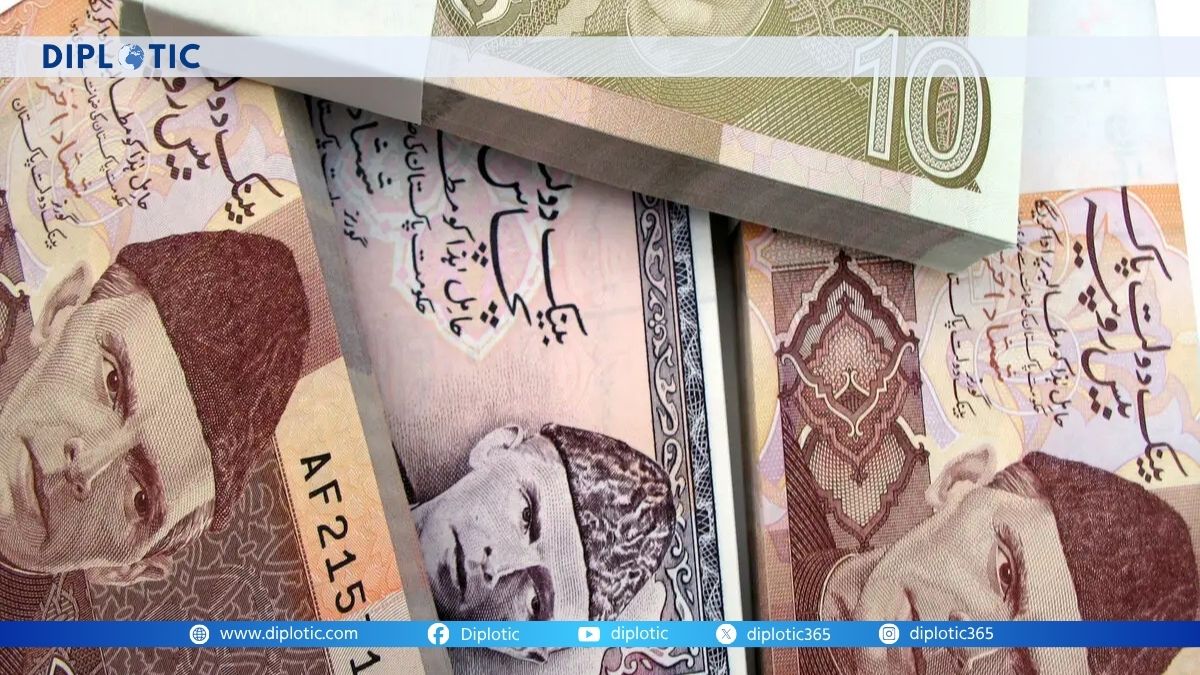
Pakistan’s rising remittances hide a deep economic crisis marked by weak industry, falling exports, and stalled reforms. Explore how an overvalued rupee, policy failures, and remittance-led consumption are undermining growth and threatening long-term stability.
For three consecutive years, Pakistan’s government has celebrated rising remittances as evidence of economic resilience. With home remittances crossing $96 billion in just three fiscal years, surpassing export earnings, policymakers have hailed inflows as a lifeline stabilizing the rupee and supporting the current account. But behind this triumphal narrative lies a stark economic truth: Pakistan is relying on overseas workers, not domestic productivity, to keep its economy afloat.
Rather than strengthening industry, agriculture, and exports, the government is leaning on remittances and costly borrowing to paper over structural dysfunction. Finance Minister Muhammad Aurangzeb and Prime Minister Shehbaz Sharif continue to promise economic reforms, yet tangible progress remains elusive. The latest proposal, taking two new loans worth $1 billion to “improve government efficiency,” underscores the extent of policy paralysis.
The Strong Rupee Paradox: How Stability Is Hurting Industry
A stronger rupee may appear reassuring, but it has created a dangerous distortion. By making imports cheaper, it is further undermining the domestic industry and killing export competitiveness. High-cost, outdated manufacturing sectors already face suffocating pressures: energy shortages, volatile tax policies, logistical constraints, and weak productivity.
Meanwhile, overseas Pakistanis sent $12.9 billion in the first four months of FY26, a 9.3% year-on-year increase, yet industrial output remains flat or contracting. Rather than being invested in productive sectors, the remittance inflow is consumed entirely, fuelling imports of cars, electronics, and luxury goods. This pattern mirrors the State Bank of Pakistan’s warning: remittance-led consumption does not create sustainable growth or jobs.
A Lifeline, Not a Growth Engine
labor, remittances support nearly 8.5% of Pakistan’s GDP, but they function more like a financial drip than an engine of expansion. Pakistan is effectively exporting labor, not value-added goods or technology, to sustain domestic spending. This model delivers short-term relief but no lasting capacity-building.
The Pakistan Remittance Initiative (PRI), which has cost the SBP more than Rs200 billion in cash incentives, keeps the official remittance pipeline flowing. However, it has also entrenched a dangerous dependence on inflows that mask the erosion of Pakistan’s productive base.
Unemployment continues to rise, pushing skilled and educated Pakistanis into low-productivity gig-economy roles such as ride-hailing and delivery work. This is not development; it is economic stagnation wrapped in the illusion of stability.
A Snapshot of Decline: Weak Industry, Shrinking Exports, Failing Agriculture
Pakistan’s remittance boom stands in stark contrast to its collapsing export base. Exports have hovered around $30 billion annually for a decade, falling far behind Bangladesh’s $55 billion and Vietnam’s staggering $350 billion.
Persistent industrial stagnation
High energy tariffs
Outdated technology
Chronic policy unpredictability
Heavy taxation
An artificially strong rupee
These factors have trapped Pakistan in low-value textile production, stifling diversification into competitive sectors like pharmaceuticals, electronics, engineering goods, and services.
Agriculture in crisis
Pakistan, once secure in staples, now imports:
Wheat
Cotton
Pulses
Edible oils
Declining yields, inefficient irrigation, and rising input costs have turned an export-ready sector into a net importer, worsening the trade deficit.
Combined, the industrial and agricultural failures leave the country unable to generate foreign exchange, forcing remittances to serve as a substitute for real economic output.
Who Sends the Money and Why It Matters
Most remittances originate from the Gulf, Saudi Arabia, and the UAE, where millions of Pakistanis work in low-skilled jobs in construction, transport, and services. Their monthly contributions are small, but the sheer volume of labor creates large inflows.
By contrast, Pakistani professionals in the UK, US, and Europe remit less frequently. Their earnings often go into local investments, businesses, or property in their adopted countries. This highlights a crucial weakness: Pakistan is exporting manpower, not knowledge, innovation, or high-value expertise.
For a nation of 250 million, this is an alarming economic structure.
A Consumption-Driven, Vulnerable Economy
Pakistan’s remittance-fed economy is inherently fragile. As more money comes in, consumption rises but investment does not. Households upgrade lifestyles, real estate prices inflate, and import demand balloons. Meanwhile, exporters struggle to compete as the strong rupee encourages imports.
Worse, remittances are exposure-prone. Gulf labor market policies, regional tensions, or global economic downturns could easily slash inflows, triggering a balance-of-payments crisis.
Turning Remittances into Investment: A Missed Opportunity
Pakistan’s attempts to convert remittances into investment, such as Roshan Digital Accounts and diaspora bonds, have had limited success because of a severe trust deficit. Investors lack confidence in policy continuity, governance, regulatory protections, and dispute resolution.
Pakistan must:
Create secure, guaranteed diaspora investment products
Offer tax incentives and reliable repatriation channels
Expand vocational and technical training for skilled labour export
Facilitate diaspora–industry partnerships
Simplify business registration and licensing
Only then can remittances shift from consumption to productive investment.
The Urgent Path Forward
To escape perpetual dependence, Pakistan needs a structural reboot:
Revive industry through export-led policies, energy reform, and industrial clusters
Modernise agriculture with improved seeds, irrigation, and market linkages
Diversify exports into technology, engineering, and services
Guarantee policy stability to attract FDI and rebuild global competitiveness
Remittances may keep Pakistan afloat, but they cannot steer it toward prosperity. The real transformation will come only when the country begins generating its own foreign exchange, not borrowing or relying on its diaspora to survive.




