

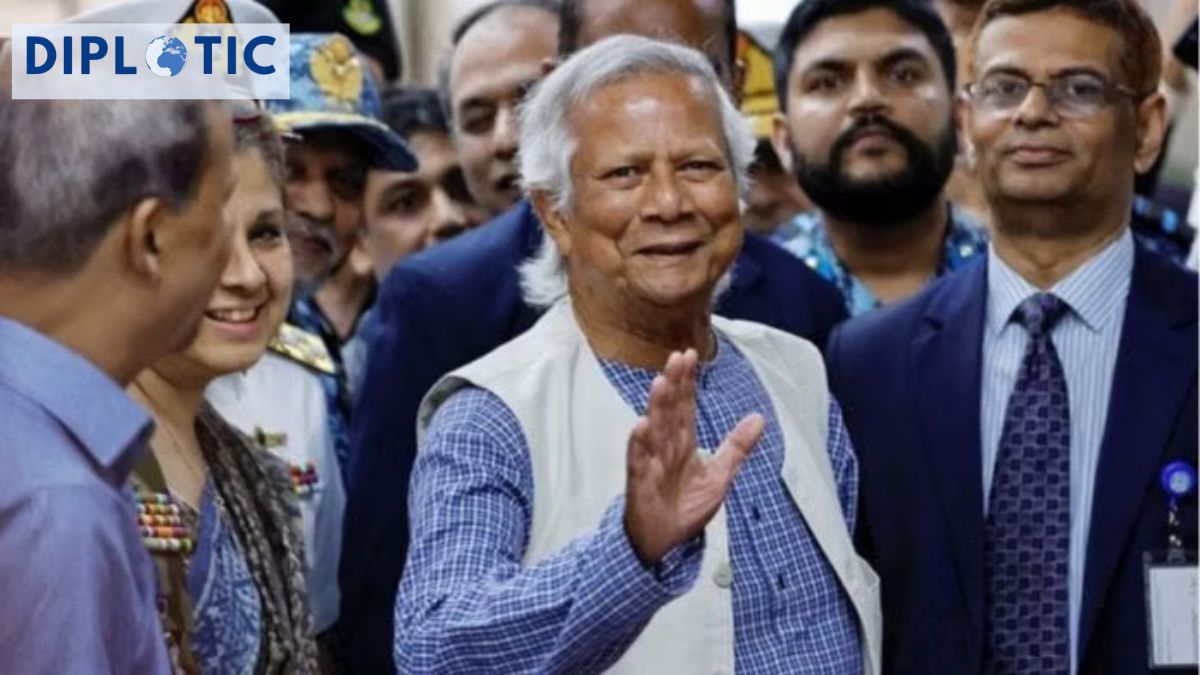
For international observers, Bangladesh’s interim government was widely viewed as a potential corrective force, a rare opportunity to restore electoral credibility in a country long plagued by contested elections and eroding democratic trust. Formed with the explicit promise of “resetting” the electoral system, the interim administration was expected to stabilize institutions, depoliticize state machinery, and pave the way for a genuinely free and fair national election.
Eighteen months later, that promise appears increasingly hollow.
What is unfolding is not a democratic reset, but a familiar pattern: structural weaknesses repackaged under the language of neutrality. The question facing Bangladesh today is no longer abstract or academic. A series of concrete developments compel a far more serious inquiry: has the interim government meaningfully altered the conditions that undermined past elections?
An Election Commission Still Struggling for Authority
At the center of any credible election lies an empowered and independent election commission. Yet recent confusion surrounding voter roll updates, constituency delimitation, and election preparation timelines reveals an institution that lacks coherence and authority. Public statements by the Election Commission have frequently diverged from on-ground realities, undermining confidence among political actors and voters alike.
For an international audience, this matters because electoral commissions in transitional contexts must signal autonomy not only in law but also in practice. The interim government had both the mandate and political space to decisively insulate the Commission from executive influence. The absence of such visible action suggests hesitation or unwillingness to confront entrenched administrative dependencies.
Field Administration and the Persistence of Old Power Networks
Perhaps more troubling is the conduct of Bangladesh’s field administration. Recent transfers and appointments of senior bureaucrats such as deputy commissioners, sub-district executives, and police officials have raised questions about the continuity of political influence within the state apparatus.
In transitional democracies, administrative neutrality is often tested not by rhetoric but by personnel decisions. When questions of loyalty persist under an interim government, fears about electoral manipulation during polling periods naturally intensify. For international partners who prioritize institutional reform, this signals an unresolved governance deficit.
Law and Order: Competing Narratives, Shrinking Political Space
The interim government’s official narrative emphasizes stability and rule of law. Yet reports from political groups, rights advocates, and local observers point to continued arrests, legal pressure, and intimidation surrounding political activities. Authorities frame these actions as lawful enforcement; critics see them as mechanisms to constrain political competition.
The role of an interim government is precisely to eliminate such ambiguity. Instead of narrowing the trust gap, the current approach has widened it fueling skepticism at home and concern abroad over the credibility of the pre-election environment.
Dialogue Without Outcomes
Political dialogue, another cornerstone of transitional governance, has largely failed to deliver substance. Multiple announcements of talks have resulted in limited participation, postponements, and no enforceable outcomes. From an international perspective, this resembles “process without purpose,” a strategy that creates the appearance of engagement while avoiding meaningful compromise.
Such an approach may reduce short-term tension, but it does little to resolve structural mistrust between political actors. In fragile democracies, dialogue must produce clarity, not ambiguity.
Media, Civil Society, and Defensive Governance
International democratic norms emphasize the protection of media freedom and civil society participation during political transitions. While overt censorship has been limited, investigative journalism and human rights reporting have been met with defensive rather than reformist responses from the state.
This defensive posture signals a deeper problem: criticism is treated as destabilizing rather than corrective. For international observers, this undermines confidence in the government’s commitment to transparency and accountability.
The Question of Trust
Supporters of the interim administration often argue that reforms take time. That argument, however, collapses under a more fundamental question: what measurable trust has been built in eighteen months? Are voters more confident that their ballots will count? Do opposition actors believe the playing field is genuinely level?
Without affirmative answers, claims of success remain rhetorical.
A Dangerous Precedent
The most consequential failure may lie in the precedent being set. If even an interim government tasked specifically with neutrality cannot deliver a credible electoral framework, future administrations will cite this failure as justification for abandoning reform altogether. In this sense, failure risks becoming institutionalized.
Conclusion: A Missed Democratic Moment
For the international community, Bangladesh’s interim government represented a critical democratic moment. That moment now appears increasingly squandered. The administration has delivered administrative calm but not democratic assurance. Stability without trust is not reform; it is delay.
In democratic systems, neutrality is not proclaimed; it is proven. After eighteen months, the lack of demonstrable proof has made public skepticism not only understandable but also justified.
The interim government now faces a narrowing window: either it produces tangible evidence of neutrality and reform, or the very concept of “neutral governance” risks losing meaning in Bangladesh’s political future.




