

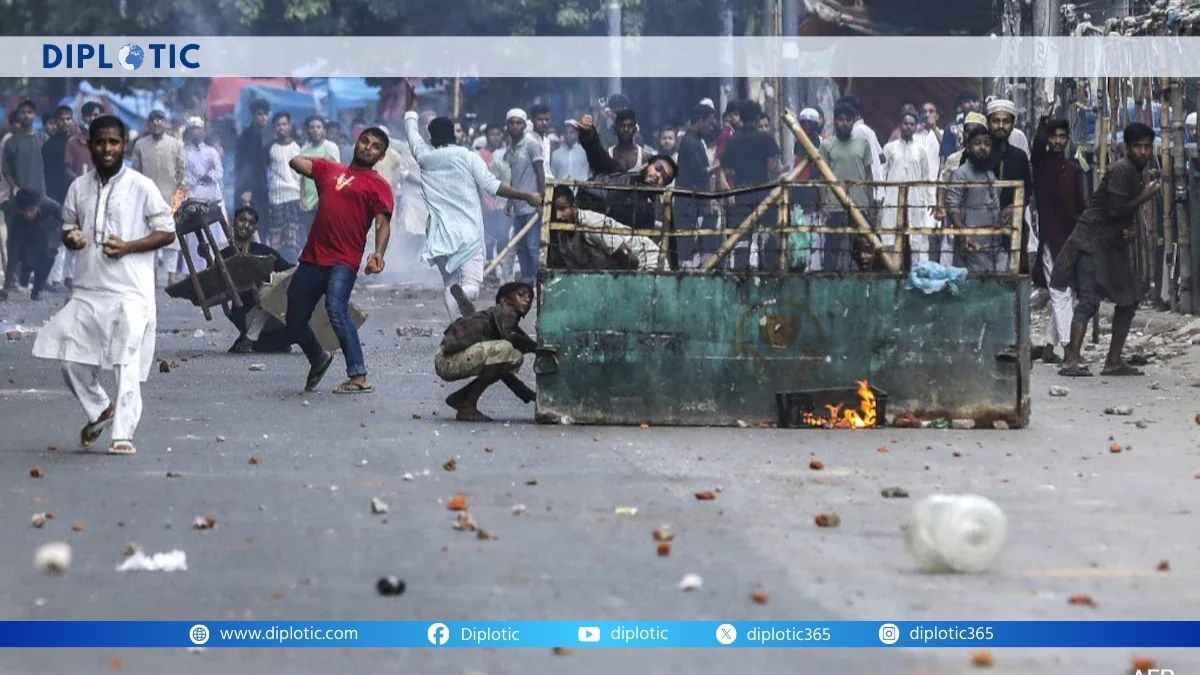
As Bangladesh prepares for another national election, a familiar sense of anticipation mixes with deep public unease. The coming vote is seen not just as another political event, but as a critical test for a democratic system that has struggled to find its footing. Over five decades since independence, the promise of a robust, representative democracy remains largely unfulfilled. A series of flawed and contested elections have eroded public trust, while political rivalry has often descended into a fight for survival rather than a competition of ideas. The path to this point is not a story of a single mistake, but of repeated, unlearned lessons. To understand the current crossroads, one must look back at the origins of the state and trace how certain political choices, made early and repeated often, shaped a system where winning became everything and governance an afterthought.
How Did the First Steps Set a Lasting Pattern?
The foundation of Bangladesh’s parliamentary democracy was laid with a flaw that would echo for generations. The first general election in 1973 resulted in an overwhelming victory for the Awami League, which secured 293 out of 300 seats. While this landslide could be attributed to the towering leadership of Bangabandhu Sheikh Mujibur Rahman and the party’s central role in the Liberation War, the consequence was a parliament devoid of any strong, critical opposition. This absolute control established a dangerous precedent. It created a political culture where overwhelming majorities were seen not as a responsibility to foster inclusive debate, but as a license to govern without meaningful scrutiny. The lack of dissenting voices within the legislature bred an intolerance for criticism and a disdain for opposition that would soon move from parliament to the state itself.
This early environment made the move toward a one-party state, through the introduction of BAKSAL in 1975, a logical, if extreme, progression. When all legitimate political space is absorbed by one force, the system loses its ability to self-correct. The tragic events that followed only deepened this crisis. For years afterwards, whether under military rule or elected governments, the template remained: control the parliament, marginalize the opposition, and centralize power. Even after the restoration of multi-party democracy in 1991, this ingrained habit of seeking total dominance, rather than building consensus, persisted. The first parliament’s lack of balance was not just a historical detail; it was the seed of a winner-takes-all philosophy that would stunt the growth of democratic institutions designed for compromise and accountability.
Why Do Elections Repeatedly Become a Crisis, Not a Celebration?
The history of Bangladesh’s elections is a cycle of hope followed by controversy. Of the twelve national elections held since 1973, only four—1991, June 1996, 2001, and 2008—are widely accepted as credible. The other eight are remembered for manipulation, boycotts, or violence. This pattern reveals a systemic failure to establish a trusted, permanent mechanism for handing over power. The caretaker government system, introduced in 1996, was a direct response to this crisis. It was an innovative, if extra-constitutional, solution born from a complete lack of trust in the ruling party to conduct a fair election. For a time, it worked, providing neutral oversight that led to those few credible polls and peaceful transfers of power.
However, the abolition of the caretaker system in 2011 plunged the country back into the cycle of disputed elections. The three national votes that followed—in 2014, 2018, and 2024—were marred by major boycotts, allegations of widespread rigging, and a collapse of public faith. The effect was to reduce elections from a national celebration of sovereignty to a foregone conclusion, deeply weakening the legitimacy of the government and the parliament it produced. This repeated breakdown points to a core problem: political actors have consistently prioritized short-term victory over the long-term health of the electoral system itself. When an election is not seen as fair, the government it produces lacks the moral authority to unite the nation and make difficult decisions. The result is a state that is perpetually politically unstable, regardless of its economic numbers.
Can a Leader-Driven System Ever Become a Party-Led Democracy?
Bangladesh’s constitution establishes a Westminster-style parliamentary democracy. In theory, this means political parties are elected, and the parliament chooses the executive. In practice, the system operates very differently. Bangladesh’s politics are intensely personal and leader-driven. Parties are often synonymous with their founding or leading figures: the Awami League with Sheikh Hasina, the BNP with Khaleda Zia and the legacy of Ziaur Rahman, the Jatiya Party with General Ershad. This centralization means the party as an institution rarely holds its leader to account. Members of Parliament, in turn, owe their primary loyalty to the party leader, not to their constituents or even to the party machinery as an independent entity.
This creates a curious hybrid: a presidential system of absolute executive authority operating under the name of a parliamentary one. The leader controls the party, the party controls the MPs, and thus the parliament cannot function as a check on the government. Contrast this with systems like the United Kingdom, where sitting prime ministers can be replaced by their own party mid-term without a general election, showing the party’s supremacy over the individual. In Bangladesh, such internal accountability is unimaginable. This concentration of power stifles internal debate, discourages independent thinking among MPs, and makes the health of the democracy entirely dependent on the character and decisions of a single person. For democracy to deepen, a shift from leader-centric politics to institution-centric politics is essential, where rules and committees matter more than the command of one individual.
When Will Political Rivalry Stop Being a War?
Perhaps the most toxic feature of Bangladesh’s politics is the complete failure to establish a culture of respectful opposition. The ruling party typically views opposition groups not as legitimate competitors but as enemies to be neutralized through division, legal harassment, or outright suppression. Conversely, the opposition often engages in “opposition for opposition’s sake,” using tactics like prolonged boycotts, walkouts, and street agitation designed not to hold the government accountable on policy, but to paralyze it entirely. This mutual hostility turns politics into a zero-sum game where any gain for one side is seen as a lethal loss for the other.
This mindset is devastating for governance. A strong, constructive opposition is vital for scrutiny, transparency, and better policy-making. It forces the government to justify its actions and consider alternative viewpoints. In Bangladesh, the absence of this dynamic has led to a parliament that rubber-stamps decisions, a government that operates without meaningful oversight, and a public that loses faith in both sides. The destructive practice of opposition boycotts, which began in earnest in the 1990s, has only cemented this dysfunction. It leaves the field open for the ruling party to legislate without debate and denies the opposition its constitutional role. Breaking this cycle requires a fundamental philosophical shift: all parties must accept that the stability of the democratic process is more important than any single election outcome. The opposition must play its role from within the system, and the government must guarantee the space for it to do so safely.
What Will It Take to Build a Democratic Future?
The lessons from the past are clear, but the willingness to learn them remains in question. A functioning democracy requires more than periodic elections; it needs strong, impartial institutions, a culture of political tolerance, and a shared commitment to the rules of the game above individual ambition. As Bangladesh looks ahead, the immediate task is a peaceful, participatory, and credible election that all parties accept. But the long-term project is far greater. It involves building a parliament that represents independent thought, not just party diktat. It requires a judicial system that is seen as fair, not politicized. It demands a civil service and election commission that serve the state, not the government of the day.
Ultimately, the responsibility lies with both the political class and the citizens. Leaders must put country before party and democracy before power. They must champion institutions that can outlive their own tenures. Citizens, meanwhile, must consistently demand accountability and reject the politics of division. The goal is not just to hold an election, but to establish an unbroken tradition where power transitions smoothly, where the opposition is a partner in governance, and where every vote is treated as sacred. The journey of five decades shows how difficult this path is, but it also underscores that there is no alternative. A nation’s strength comes not from the power of its rulers, but from the resilience of its democratic foundations. For Bangladesh, the work of strengthening those foundations, delayed for too long, cannot wait any longer.




