

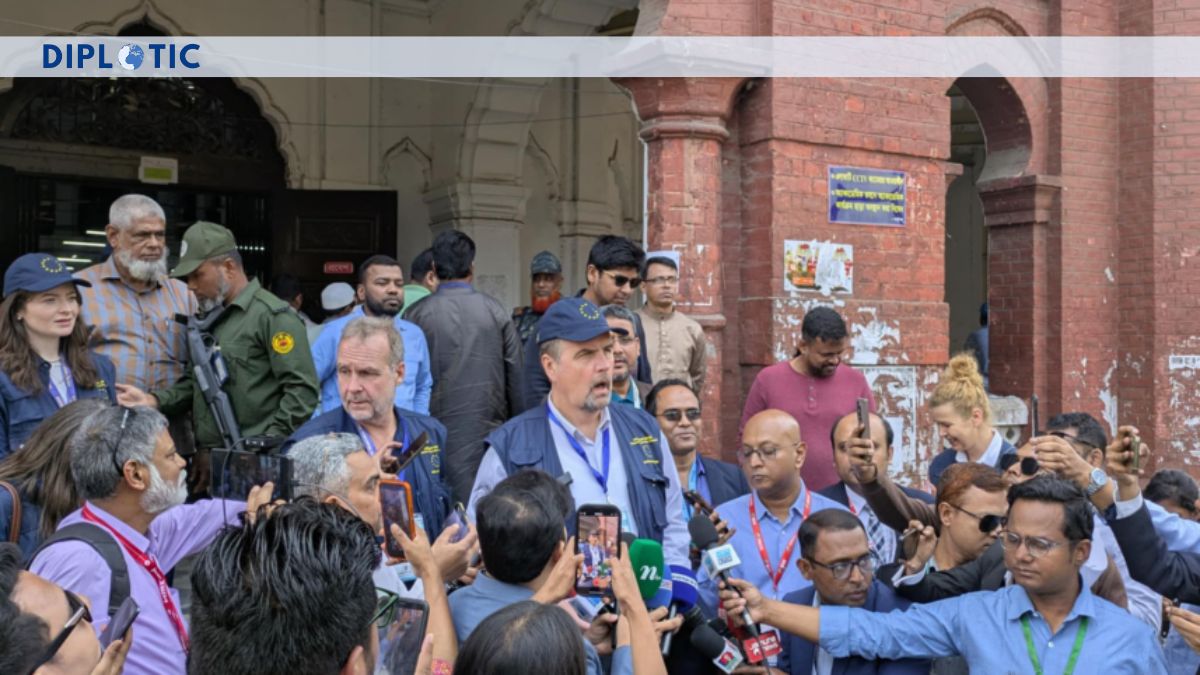
Bangladesh witnesses a pivotal democratic moment as 127 million voters head to the polls under global scrutiny. EU observers hail it as a “big day for democracy” amid strong turnout and historic participation.
A Defining Democratic Moment Under Global Spotlight
Bangladesh has stepped into what international observers are calling a transformative and defining chapter in its democratic journey. With nearly 127 million registered voters, including five million first-time voters, the nation’s election has drawn sweeping global attention, robust international monitoring, and powerful political symbolism.
Standing before reporters in Dhaka, Ivars Ijabs, the European Union Election Observation Mission (EOM)’s chief observer, described the vote as a “big day for Bangladesh’s democracy.” His statement underscores the immense significance of the election—not just domestically, but on the world stage.
As polling stations opened across the country, the atmosphere reflected both anticipation and determination. Early turnout figures suggested strong engagement, reinforcing the narrative of an electorate eager to shape the country’s future.
Massive Voter Participation Signals Democratic Energy
One of the most striking features of this election is its sheer scale. Out of Bangladesh’s 173 million citizens, approximately 127 million people were registered to vote, making it one of the largest democratic exercises in the world.
Among them are five million first-time voters, a dynamic group that could decisively influence the country’s political direction. With approximately 44 percent of the population—56 million people—between the ages of 18 and 37, youth participation represents a powerful and potentially transformative force.
As of 2pm (08:00 GMT), voter turnout had reached nearly 48 percent across 36,000 polling centres, a figure expected to rise by the end of the day. This early momentum reflects a vibrant civic spirit and a population deeply invested in shaping its governance.
The turnout is especially significant given the intense political climate and the global attention surrounding the process. The high participation rate reinforces claims that citizens are determined to exercise their constitutional rights in large numbers.
EU Observers Deploy Massive Monitoring Operation
In a sweeping demonstration of international oversight, the European Union Election Observation Mission deployed a comprehensive team across Bangladesh.
- 90 short-term observers were dispatched to all 64 administrative districts on election day.
- 56 long-term observers have monitored the pre-election environment since mid-January.
- Combined with a European Parliament delegation, the EOM contingent totals around 200 personnel.
In total, nearly 400 international observers are monitoring the election, alongside approximately 200 foreign journalists reporting from the ground.
This unprecedented level of observation highlights the election’s geopolitical importance. Ijabs emphasized that the EU expects a “participatory, credible and trusted” electoral process—three critical pillars for any democracy striving for legitimacy and global confidence.
A preliminary report from the EU team is expected shortly, offering an initial assessment of the election’s transparency and procedural integrity.
“A New Bangladesh Has Begun”: Interim Government Hails Success
Muhammad Yunus, chief adviser to the interim government, delivered a powerful message following the vote, calling the election a watershed moment for the nation.
In an official statement, Yunus congratulated citizens and praised the orderly, festive atmosphere surrounding the polls. He declared that a “new Bangladesh has begun.”
“The spontaneous participation of voters, the responsible behaviour of political parties, the restraint of candidates, and the professionalism of all election-related institutions – these combined efforts have proven that our commitment to democracy is unwavering,” Yunus said.
His remarks emphasize themes of unity, democratic resilience, and institutional strength. He further urged political parties and candidates to maintain democratic decency, tolerance, and mutual respect once the final results are announced.
The tone of his statement suggests a deliberate effort to promote stability and safeguard post-election harmony—an essential step in ensuring the long-term credibility of the process.
Youth Power: The Game-Changing Demographic
Bangladesh’s demographic profile could prove to be one of the most influential factors in this election. With nearly half the population under 37, the country stands at a demographic crossroads.
This youthful electorate represents both an opportunity and a challenge:
- Opportunity, because young voters often demand innovation, transparency, and accountability.
- Challenge, because meeting their expectations requires bold reforms and responsive governance.
The inclusion of five million first-time voters signals a generational shift that could redefine political priorities. Issues such as employment, digital innovation, education reform, and economic opportunity are expected to dominate conversations among younger voters.
If turnout trends continue upward, this election could mark a decisive empowerment of Bangladesh’s next generation.
Global Attention Reflects Strategic Importance
Bangladesh’s position as the world’s eighth most populous country ensures that its political trajectory holds regional and global significance. Stability in Dhaka has ripple effects across South Asia and beyond.
The deployment of hundreds of international observers and journalists demonstrates the high stakes involved. For global partners, the credibility of the election process directly impacts diplomatic relations, trade partnerships, and international cooperation.
Ijabs’ early optimism, combined with the structured observation framework, suggests that international stakeholders are closely watching whether Bangladesh can solidify its democratic institutions in a period of transition.
Turnout Momentum: A Powerful Symbol of Civic Engagement
Early turnout nearing 48 percent by mid-afternoon reflects not just participation—but determination.
In large-scale democracies, voter apathy can often dampen legitimacy. However, Bangladesh’s voters appear motivated and engaged, signaling confidence in the electoral process.
The orderly atmosphere described by officials and observers further reinforces the perception of stability. Peaceful voting conditions are critical in maintaining public trust and encouraging long-term democratic participation.
Should final turnout exceed early projections, it would send a compelling message that citizens are fully invested in shaping their nation’s future.
What Happens Next?
The immediate focus now shifts to:
- Final turnout figures
- Official vote counting
- Preliminary assessments from international observers
The EU’s forthcoming report will play a crucial role in shaping global perceptions of the election’s transparency and credibility.
Domestically, maintaining post-election stability will be equally vital. Yunus’ call for tolerance and democratic restraint signals awareness of the delicate phase that follows any high-stakes vote.
A Transformative Chapter in Bangladesh’s Democratic Story
Bangladesh’s latest election stands as a powerful testament to its evolving democratic identity. With massive voter registration, significant youth participation, robust international monitoring, and strong institutional messaging, the process carries undeniable weight.
Whether this moment ultimately becomes a turning point will depend on the integrity of final results and the nation’s ability to preserve unity afterward.
For now, as EU observers describe it, this is undeniably a big day for Bangladesh’s democracy a day marked by civic courage, international scrutiny, and the promise of a new beginning.
If the momentum continues, the world may look back at this election as the moment when Bangladesh confidently stepped into a stronger, more resilient democratic future.




