

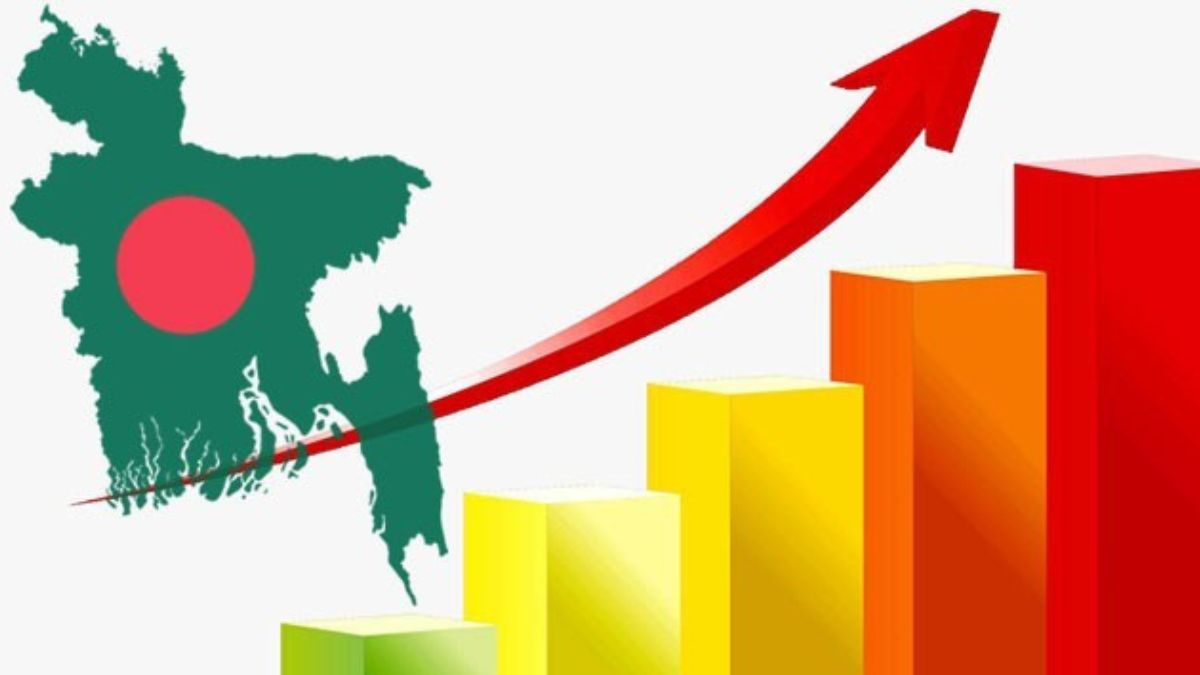
Bangladesh has achieved a major economic milestone. According to the Asian Development Bank’s (ADB) 2025 Basic Statistics report, Bangladesh is now the 9th largest economy in Asia, with a Gross Domestic Product (GDP) of $450.5 billion (45,050 crore USD) based on the latest data from 2024.
This new status not only cements Bangladesh’s position as a rising economic powerhouse but also places it firmly as South Asia’s second-largest economy after India. In the broader Asian context, Bangladesh now ranks ahead of economic players like Malaysia, Singapore, and Pakistan.
Let’s break down what this means — and why it matters.
A Landmark Achievement in a Competitive Region
The ADB’s list, covering 46 Asian countries (excluding Japan), reveals the rapidly evolving economic balance in Asia. While China and India continue to dominate with GDPs of $18.96 trillion and $3.91 trillion respectively, Bangladesh’s rise to 9th place signals the emergence of a new economic center in the Bay of Bengal.
Here is the top 10 list from the ADB’s ranking based on GDP size:
- China – $18.96 trillion
- India – $3.91 trillion
- South Korea – $1.87 trillion
- Indonesia – $1.40 trillion
- Taipei (Taiwan) – $795.9 billion
- Thailand – $540.5 billion
- Vietnam – $476.3 billion
- Philippines – $461.4 billion
- Bangladesh – $450.5 billion
- Pakistan/Malaysia – (below Bangladesh in the current ranking)
Japan was not included in this ADB list, likely due to it being part of a different regional analysis or data grouping. However, even with Japan included, Bangladesh’s GDP performance still marks it as a top-tier mid-sized economy in Asia.
Economic Trajectory: How Bangladesh Got Here
Bangladesh’s ascent in the economic rankings didn’t happen overnight. It is the result of decades of structural reforms, investment in human capital, robust exports, and macroeconomic stability.
1. Ready-Made Garments (RMG) Sector
The RMG industry remains the backbone of Bangladesh’s economy, contributing over 80% of total exports. The country is now the second-largest apparel exporter in the world after China, driving consistent foreign exchange earnings and employment.
2. Remittance Inflows
Remittances from over 10 million Bangladeshi workers abroad play a vital role. In FY 2023–24 alone, remittance inflow stood at over $21 billion, making it one of the top 10 global remittance-receiving countries.
3. Infrastructure and Industrial Growth
Projects like the Padma Bridge, Dhaka Metro Rail, and the Karnaphuli Tunnel have significantly boosted connectivity, logistics, and trade capacity. The government’s push for 100 Economic Zones (EZs) is expected to draw in both foreign and domestic investment.
4. Digital Economy and Financial Inclusion
With over 100 million mobile internet users and growing digital financial services like bKash, Bangladesh has made large strides in digital inclusion, which supports consumer spending and e-commerce growth.
Challenges That Still Remain
Despite this success, several hurdles could threaten the sustainability of this growth:
- High inflation and cost of living pressures in urban and rural areas.
- Youth unemployment remains a concern despite a growing labor force.
- Foreign exchange reserves have been under pressure due to rising import bills and global economic fluctuations.
- Governance and corruption issues, which can hinder investor confidence and efficient public service delivery.
ADB and other global institutions have repeatedly emphasized the need for stronger regulatory reforms, skills development, and deeper integration into global supply chains to maintain Bangladesh’s upward trajectory.
Regional Impact: What Bangladesh’s Rise Means for South Asia
Bangladesh’s leapfrogging over other economies in Asia places it in a strategic position in South Asia. As India’s largest trading partner in the subcontinent, and with growing economic ties to China, ASEAN, and the Middle East, Bangladesh is playing a more active role in regional diplomacy and trade.
Initiatives like the BBIN (Bangladesh-Bhutan-India-Nepal) connectivity, Bangladesh-China-India-Myanmar (BCIM) corridor, and new BIMSTEC trade agreements give Dhaka a platform to reshape economic integration in the region.
Can Bangladesh Enter the Trillion-Dollar Club?
Many economists now ask: Could Bangladesh become a trillion-dollar economy in the next 15–20 years?
If the current growth trends continue, and if structural reforms are implemented with consistency, that goal is not out of reach.
According to PwC and Goldman Sachs, Bangladesh is expected to become one of the world’s top 25 economies by 2040, provided it continues on its present course.
Conclusion
Bangladesh’s status as the 9th largest economy in Asia is a historic achievement and a clear signal of its growing role on the global economic stage. From a nation once described as a “basket case” in the 1970s, Bangladesh has transformed into a resilient and vibrant economy.
To sustain this momentum, the focus must remain on:
- Inclusive growth
- Export diversification
- Sustainable infrastructure
- Good governance




