
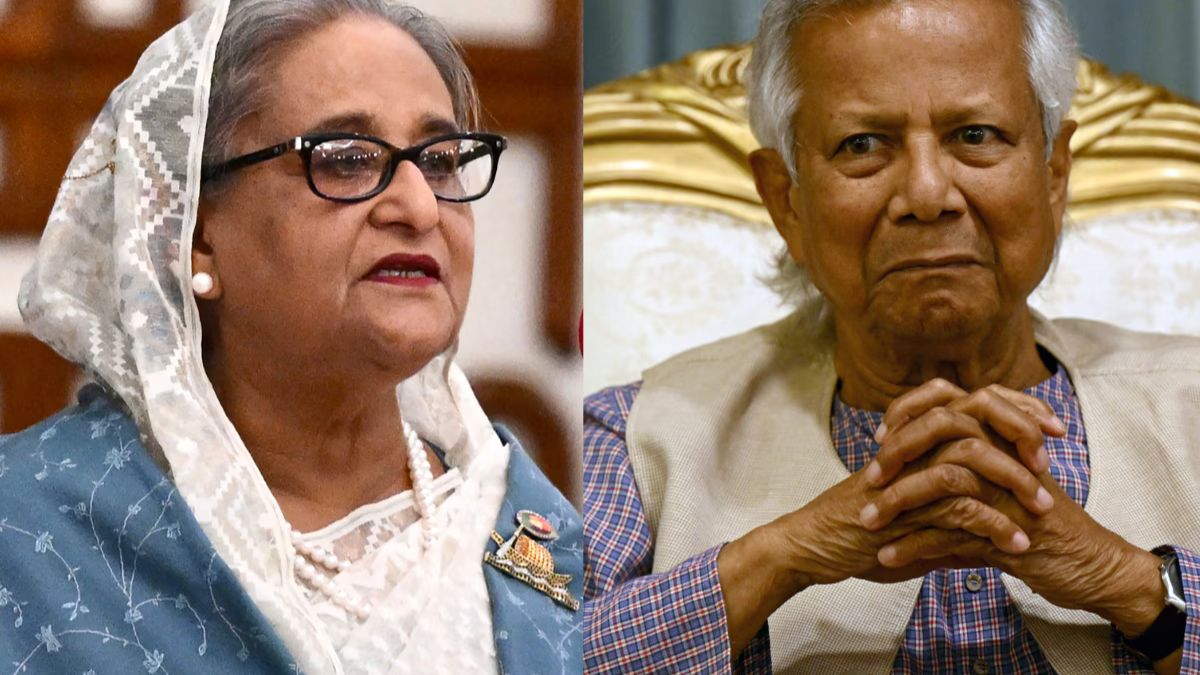
Bangladesh, a nation of over 170 million people, now finds itself at a fragile and uncertain juncture. One year after the fall of former Prime Minister Sheikh Hasina in the wake of the controversial 2024 elections, the country remains entangled in political chaos. While some had hoped for a democratic rebirth, the last twelve months have instead been marked by power struggles, weak reforms, economic volatility, mob violence, and deep ideological divides. The battle between hope and deadlock continues to shape Bangladesh’s post-Hasina trajectory.
Reasons Behind Sheikh Hasina’s Fall
Sheikh Hasina’s 15-year rule was a mixed legacy. Her government delivered impressive economic growth, massive infrastructure projects (like the Padma Bridge), and a digital transformation campaign. Yet, her tenure was also plagued by allegations of authoritarianism, censorship, rigged elections, and state surveillance.
The 2024 general election, condemned by Human Rights Watch and EU observers as neither free nor fair, was the tipping point. Widespread protests, a fractured ruling alliance, and international condemnation led to her eventual resignation. While many saw this as a democratic correction, the aftermath would prove far more complicated.
Power Vacuum or New Leadership?
In the post-Hasina era, no single party was prepared to fill the power void. The BNP tried to revive its presence, while new groups such as the Jatiya Nagorik Party (NCP), leftist coalitions, and regional youth-based alliances began gaining ground.
The NCP, branding itself as anti-corruption and people-centric, quickly garnered support from urban youth, civil society, and disillusioned professionals. Despite early momentum, internal disagreements, policy confusion, and political immaturity have slowed its impact.
Some critics warn that the NCP’s confrontational stance has deepened political polarisation and provoked tensions with older parties, especially in contested areas like Narayanganj, Barisal, and Rajshahi.
Clashes and Chaos: A Fractured Political Landscape
Political violence surged in late 2024 and early 2025. The Daily Star (Feb 2025) reported 120+ political clashes in just three months, with over 35 fatalities and hundreds injured. Cities like Dhaka and Chattogram became battlegrounds for control between rival factions.
The fragile law enforcement structure—already politicized under previous regimes—was unable to contain the escalating tensions. This vacuum has encouraged a worrying rise in mob justice, where angry crowds take law into their own hands, often targeting alleged criminals without trial.
These incidents reflect a breakdown in public trust in the justice system and an alarming erosion of rule of law.
Proportional Representation: Reform with Challenges
In an effort to stabilize the country and include wider political voices, the interim government implemented Proportional Representation (PR) for local and national elections. Though it allowed smaller parties to enter the legislature, it also fragmented governance and made consensus-building difficult.
The Asia Democracy Forum (July 2025) noted: “PR brought representation but not necessarily governance.” Coalition governments have repeatedly stalled legislation, leading to administrative paralysis.
A Shaky Economy: FDI Down, Corruption Unchecked
The political crisis has badly affected the economy. According to World Bank data (Q1 2025), FDI dropped by 18%, and export growth stagnated. While development aid resumed, private investors remain hesitant due to political volatility.
Corruption continues to be a cancerous issue. Despite NCP’s anti-corruption promises, a Transparency International Bangladesh report (April 2025) found little improvement. Syndicates within government procurement, law enforcement, and ports still dominate.
Worse still, money laundering through banking channels and offshore networks has reportedly increased, prompting several alerts from the Bangladesh Financial Intelligence Unit (BFIU).
Justice Denied: The Rise of Mob Violence and Rape Culture
A disturbing trend in the post-Hasina year has been the spike in mob justice and public lynchings. In the absence of trusted courts and police, citizens often take the law into their own hands. Several viral videos of suspected thieves being beaten or burned alive have raised global alarm.
Simultaneously, cases of rape and sexual violence have increased. Many victims are denied justice due to sluggish trials, corrupt police investigations, or political interference. Women’s rights groups such as Naripokkho have repeatedly called out the inaction of the interim administration.
The social fabric is under stress—justice delayed continues to be justice denied.
Civil Society and Youth Energy: A Silver Lining?
Despite the instability, a bright spot has been the awakening of civil society and youth activism. From student protests in Sylhet to policy debates in Dhaka universities, the younger generation is more politically engaged than ever.
However, many fear that without structured political platforms, this energy might be misused or fizzle out. As one activist in Rajshahi said: “We overthrew a regime but haven’t built a better one yet.”
Can Stability and Reform Coexist?
Bangladesh’s immediate future hinges on addressing a series of difficult but crucial questions:
- Can the PR system be refined to balance inclusion and effectiveness?
- Will the NCP and emerging parties mature into transparent, policy-focused entities?
- Can mob justice be curbed by restoring faith in judicial systems?
- Will there be credible steps to address rape culture, gender violence, and institutional apathy?
- Can foreign investment return without deep structural reforms?
The answers to these questions will shape whether Bangladesh’s fragile transition ends in transformation or total disillusionment.
Conclusion
One year after Sheikh Hasina’s departure, Bangladesh stands on a knife’s edge. New political forces, reforms like PR, and youth participation offer a path toward democratic renewal. Yet, persistent violence, corruption, mob justice, and institutional decay threaten to undo these gains.
This moment demands more than idealism. It demands bold, inclusive, and sustained action. If Bangladesh fails to institutionalize accountability, restore trust in the law, and strengthen political dialogue, the country risks replacing one failed system with another.
The post-Hasina chapter is still being written—and the pen is in the hands of both leaders and citizens alike.




