

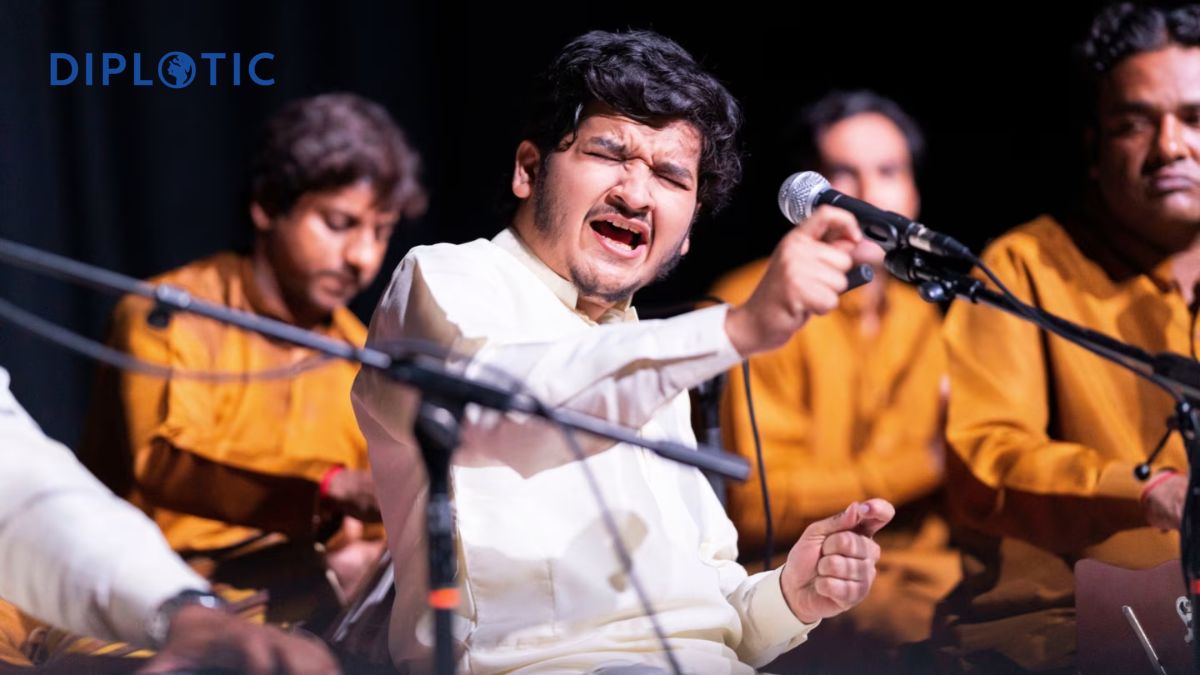
This article examines the relationship between the expansion of Salafism–Wahhabism in South Asia and the increasing hostility toward folk and ballad singers in Bangladesh, India, and Pakistan. Drawing on sociological, cultural, and political frameworks, the paper argues that the targeting of folk performers is rooted in a broader ideological project that seeks to homogenize Muslim identity through puritanical norms. The torment experienced by ballad singers is interpreted as a form of symbolic violence aimed at dismantling indigenous cultural ecologies historically shaped by Sufi, syncretic, and vernacular traditions.
South Asia hosts some of the world’s most vibrant folk repertoires: Baul, Bhatiyali, Marfati, Mirs, Qissa, Dastangoi, and Lok Geet traditions that have long coexisted with diverse Sufi and Bhakti cultural worlds. However, the late twentieth and early twenty-first centuries witnessed an accelerated penetration of Salafi–Wahhabi doctrines across Bangladesh, India, and Pakistan. This ideological shift coincided with rising forms of social hostility, moral policing, and physical violence against folk artists. The present analysis investigates this connection as an expression of a deeper cultural and political transition.
Historical and Ideological Context
The South Asian Folk–Sufi Continuum
Ballad and folk traditions in the region emerged historically from Sufi khanqahs, rural shrines, agrarian festivals, and oral storytelling. These traditions valorize mystical love, devotion to saints (pirs), syncretic metaphors, and local cosmologies.
This cultural universe stands in tension with Salafi-Wahhabi doctrine, which rejects saint-veneration, mixed-gender performance, and music perceived as frivolous.
Emergence of Salafism–Wahhabism
The spread of Salafism–Wahhabism to South Asia intensified through petrodollar funding to madrasa networks, global migration (especially to the Gulf), religious NGOs, online preachers promoting scriptural literalism, etc.
The ideological shift encouraged a redefinition of “authentic Islam,” delegitimizing vernacular Muslim cultures.
Bangladesh: Puritan Revisionism and Rural Cultural Anxiety
Bangladesh’s folk heritage Baul, Bhatiyali, Palli Geet thrives on spiritual humanism and ritual inclusivity. The rise of Salafi movements since the 1980s, and especially post-2000 through Gulf migration, led to:
◑ attacks on Baul singers,
◑ public humiliation of folk performers by local Islamist groups,
◑ village-level shalish (informal courts) condemning musical gatherings,
◑ pressure on TV and radio to reduce mystic folk content.
Baul singers, in particular, often become targets because their metaphysical lyrics challenge scriptural absolutism. Although at times the choice of words and modes of expression used for entertainment purposes become highly contradictory from a religious perspective and can even be anger-provoking. However, the torment reflects a larger attempt to replace a syncretic Bengali-Islamic identity with a more Arabized vision of Islamic piety.
India: Cultural Minoritization and Intra-Muslim Reformism
In India, the Wahhabi/Salafi influence primarily penetrated through the Ahl-e-Hadith movement.
There is often seen Gulf-funded madrasa expansion in Uttar Pradesh, Kashmir, and Kerala.
Furthermore, online and urban middle-class Islamic reformism is being spread in an epidemic way.
Ballad traditions such as Qawwali, Dastangoi, Lok Sufi music, and regional qissa-khwani narratives face delegitimization from two fronts there:
◑ Intra-Muslim puritanism condemning music, shrines, and folk performance.
◑ Majoritarian pressure, which often frames Muslim artistic traditions as “un-Indian.”
These twin pressures create a precarious environment for folk artists, who become culturally vulnerable. Harassment of qawwali groups in Uttar Pradesh or moral policing of Sufi festivals in Kashmir illustrates how Salafi reformism aligns unintentionally with broader cultural homogenization projects.
Pakistan: The Most Direct Collision Between Puritanism and Folk Music
Pakistan offers the most explicit example of folk musicians being targeted under Salafi-Wahhabi influence. Since the late 1970s, with the Islamization policies of Zia-ul-Haq and increased Saudi patronage, the cultural landscape shifted drastically. Consequences include fatwas against folk and Sufi music, attacks on qawwali gatherings, assassination of folk artists, shrinking public spaces for traditional lok geet and shrine festivals, and so on.
The state’s alignment with puritanical ideology created an atmosphere where local musical traditions were simultaneously delegitimized and securitized. Folk singers, often from marginalized castes and rural backgrounds, became easy targets for extremist groups seeking symbolic victories.
Theoretical Interpretation: Cultural Hegemony and Symbolic Violence
The torment of ballad singers across the three countries can be conceptualized within two frameworks:
Cultural Hegemony: Salafism–Wahhabism attempts to impose a uniform Islamic identity, displacing regional aesthetics, spiritual pluralism, and indigenous cultural memory. Targeting ballad singers is an attempt to erode alternative sources of moral and cultural authority.
Symbolic Violence: Harassment, public shaming, and physical attacks on folk artists represent symbolic violence aimed at regulating public morality, disciplining dissenting cultural expressions, and policing body, voice, and community.
Ballad singers become “cultural casualties” of the ideological conflict between Puritan universalism and vernacular pluralism.
Comparative Insights
Across Bangladesh, India, and Pakistan, three common dynamics are visible:
◑ Delegitimization of Sufi-folk traditions as ‘Kufr’ or ‘Shirk.’
◑ Moral policing of music, performance, and festival culture.
◑ Shrinking public space for pluralistic Muslim art.
Yet variations exist:
Pakistan experiences the most extreme violence due to militancy, including the assassination of great Sufi singer Amjad Sabri.
Bangladesh experiences grassroots social coercion, where ballad singer Abul Sarkar is the latest victim of moral policing.
India witnesses intra-Muslim reformist pressure under broader identity politics, and harassment of Aadil Tibet Baqaal, a music teacher in the Kashmir University’s Institute of Music and Fine Arts, is the finest example.
Suppressing them sends a message:
“The new order begins by disciplining the old culture.”
This is why harassment of Bauls in Bangladesh, Qawwali singers in Pakistan, or Sufi folk performers in India becomes a recurrent pattern.
The tormenting of ballad singers in South Asia is not merely an issue of artistic survival; it embodies a civilizational struggle over competing visions of Muslim identity. The rise of Salafism–Wahhabism challenges the historical coexistence of Islam with regional folk traditions that have shaped Muslim life for centuries. In Bangladesh, India, and Pakistan, the harassment of folk artists serves as a microcosm of this broader cultural contestation, revealing how ideological puritanism seeks to overwrite deeply rooted pluralistic practices.




