

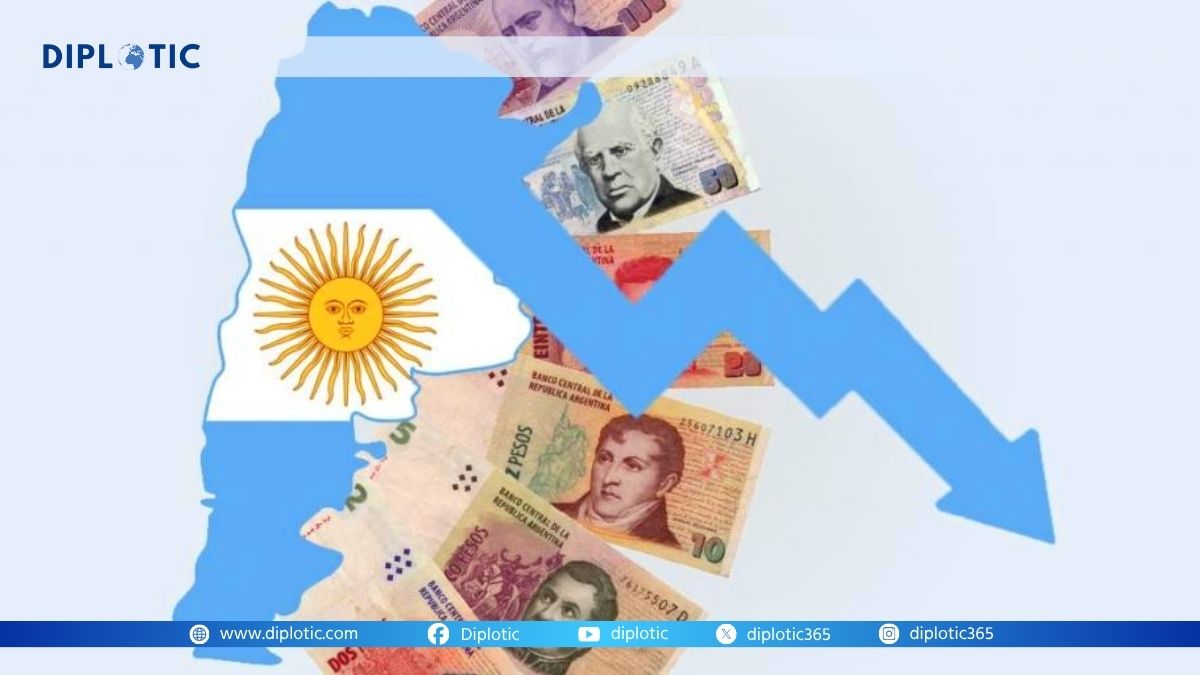
The economic landscape of Argentina has undergone a radical transformation since the election of self-proclaimed libertarian President Javier Milei. His rise to power, fueled by promises of dismantling the state and liberating the economy, has coincided with an unprecedented financial commitment from the United States and its allied institutions. A staggering $82 billion in new dollar-denominated debt has been extended, a figure so large it nearly equals the country’s entire annual exports. This massive infusion of capital, orchestrated under the Trump administration, has secured Milei’s political survival and funded his aggressive austerity experiment. But it has also raised a fundamental question: is this a genuine rescue package, or a sophisticated debt trap designed to lock Argentina into permanent economic subservience to Washington and Wall Street? The answer lies in understanding the sheer scale of the debt, the political conditions attached to it, and the historical patterns of financial dependency that have plagued the South American nation for decades.
The Anatomy of an $82 Billion Debt Package
To grasp the magnitude of Argentina’s new financial burden, one must dissect the components of the $82 billion package. This is not a single loan from a single source, but a coordinated effort from multiple channels, all ultimately aligned with U.S. strategic interests. The package breaks down into $40 billion directly facilitated by the Trump administration and an additional $42 billion from international financial institutions where the U.S. holds dominant voting power. The U.S. portion includes a $20 billion swap line from the Treasury and another $20 billion in private-sector loans that were brokered with strong U.S. government encouragement. From the international institutions comes $20 billion from the International Monetary Fund (IMF), $12 billion from the World Bank, and $10 billion from the Inter-American Development Bank. This wall of money was strategically deployed, providing the liquidity Milei desperately needed to temporarily stabilize the economy and, crucially, to secure a victory for his party in the October 2025 legislative midterm elections. This financial intervention effectively served as a powerful form of external election meddling, ensuring his radical agenda would face less political resistance.
The weight of this debt becomes even more alarming when placed in the context of Argentina’s economic capacity. $82 billion represents a staggering 12% of the country’s GDP at market exchange rates. To put it another way, it is close to the total value of all the goods and services Argentina sells to the rest of the world in a single year. This creates an immediate and seemingly insurmountable problem: how can a country earn enough U.S. dollars through exports to repay a debt that is as large as its entire annual export income? The fundamental imbalance suggests that repayment, in any conventional sense, is a mathematical improbability. The debt’s structure ensures that it is not merely a financial obligation but a political instrument. By being denominated in U.S. dollars, it places Argentina’s economic fate directly in the hands of American monetary policy and the institutions it controls. This setup moves the relationship far beyond that of a simple lender and borrower, transforming it into one of permanent supervisor and subordinate, where the borrower’s policies are continually dictated by the need to service an unpayable debt.
A Pre-Existing Condition: The Ghost of the Macri Loan
The current $82 billion debt cannot be viewed in isolation. It is the second act of a financial drama that began during the previous Trump administration. To understand the full picture, one must look back to 2018, when the U.S. instructed the IMF to grant Argentina’s then-president, the pro-business Mauricio Macri, the largest loan in the fund’s history: $57 billion. The political motivation was transparent—to bolster Macri’s chances in the 2019 presidential election by providing his government with a massive war chest. While the full amount was not disbursed, Argentina ultimately received $43 billion, a sum that made it, by far, the IMF’s largest debtor. Internal fund documents now project that Argentina’s debt to the IMF will reach an astonishing 1,352% of its quota by 2026, a number that underscores the abnormality of the situation.
The purpose of that initial loan, however, has been widely questioned by economists and investigators. Rather than being used for productive investment or social programs, a significant portion of the funds appears to have been channeled to sustain financial maneuvers for wealthy investors and to facilitate capital flight. In essence, the loan provided exit liquidity for the nation’s oligarchs, allowing them to move their wealth out of the country, a practice that arguably violates the IMF’s own rules on the use of its resources. This created a devastating precedent. The Macri loan established that a politically aligned Argentine government could access virtually limitless international credit, not for national development, but to finance a system that benefited a small, wealthy elite at the expense of the nation’s long-term financial health. The Milei administration, staffed with JPMorgan veterans and economic officials who cut their teeth during the Macri era, is now operating within this same framework, but on an even larger and more radical scale. The new $82 billion package is thus building upon a foundation of what many legal scholars term “odious debt”—debt incurred not in the interests of the population, but for the benefit of a narrow political and economic faction.
The Sovereignity Paradox: Libertarian Rule or Wall Street Governance?
President Milei campaigns as a rebellious outsider, a chainsaw-wielding “anarcho-capitalist” set on destroying the political establishment. Yet, his policies have resulted in a profound paradox: his libertarian quest to shrink the state has necessitated the surrender of national sovereignty to foreign financial powers. By accepting the $82 billion lifeline, Milei has effectively outsourced Argentina’s economic policy-making to the IMF and, by extension, to the U.S. Treasury Department. The conditions attached to these loans demand severe austerity: deep cuts to public services, the privatization of state-owned enterprises, the elimination of subsidies, and the removal of capital controls. These are not policies born solely from domestic ideology; they are the standard prescription from Washington for indebted nations, designed to prioritize debt repayment above all else, including social welfare and national economic autonomy.
This dynamic effectively nullifies the possibility of genuine democracy in Argentina. When a country’s fiscal and monetary policies are dictated by external creditors, the electoral choices of its citizens become severely constrained. The future of Argentina’s education, healthcare, and infrastructure will be determined not by its elected representatives, but by the boardrooms of the IMF and the demands of Wall Street bondholders. This model has a clear precedent within the U.S. sphere of influence: Puerto Rico. Following its debt crisis, the U.S. Congress imposed an unelected Financial Oversight and Management Board, known locally as “La Junta,” which holds veto power over the island’s budget and laws. The board’s primary mandate is to ensure repayment to creditors, often at the direct expense of Puerto Rican public services and living standards. The fear among many Argentinians is that their nation is being set on a similar path, transformed into a de facto financial colony where the trappings of democracy remain, but the substance of self-determination has been hollowed out. Milei’s project, therefore, is not the emancipation of the individual from the state, but the subordination of the nation to international finance.
An Unpayable Debt and a Predetermined Future
The inescapable conclusion from the numbers is that Argentina’s new mountain of dollar-denominated debt is unpayable. The country simply does not generate enough export revenue to meet the upcoming obligations. This is not an accident of poor planning; it is a structural feature of the arrangement. An unpayable debt is not merely a financial problem—it is a powerful mechanism of control. It ensures that the debtor nation remains in a perpetual state of negotiation and compliance, forever seeking debt rollovers, new loans to pay old ones, and restructuring agreements that come with ever more stringent conditions. This cycle guarantees that the IMF and its major shareholders will have a permanent seat at the table in Buenos Aires, with the authority to dictate economic policy for years, and likely decades, to come.
The real beneficiaries of this system are not the Argentine people, who are enduring soaring poverty and a dramatic contraction of their economy, but the wealthy stockholders and bondholders whose investments are being secured by the state. Milei’s libertarian revolution, in practice, has revealed itself to be the ultimate form of crony capitalism, where the risks are socialized and the profits are privatized. The $82 billion has provided the foreign currency needed to backstop investments and facilitate financial operations for international capital, all under the banner of market freedom. The long-term implication is a locked-in economic model. Any future government, regardless of its political orientation, that seeks to alter this course will immediately face a financial wall. It will be threatened with capital flight, a cut-off from international credit, and the immense political pressure that comes from being labeled irresponsible by global markets. The debt, therefore, acts as a pre-emptive veto on any alternative economic project, binding Argentina to a neoliberal framework designed in Washington. The nation’s political future has been mortgaged, and the bill, inevitably, will come due.




