

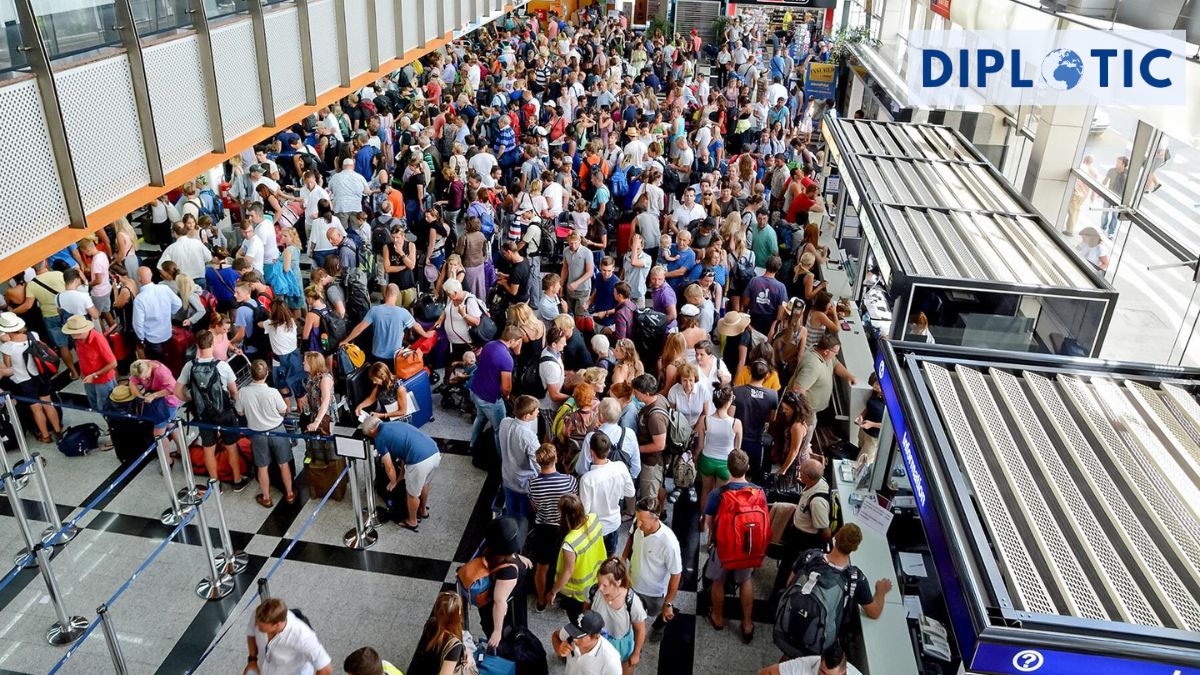
Europe’s air traffic control delays have more than doubled over the past decade, crippling airline schedules, frustrating passengers, and threatening regional competitiveness. Why Germany and France are at the center of the crisis and what must change now.
Europe’s aviation system is facing one of its most serious operational crises in decades. New data from the International Air Transport Association (IATA) reveals that delays caused by air traffic control (ATC) inefficiencies have surged by an alarming 114% between 2015 and 2024, despite total flight numbers increasing by just 6.7% in the same period.
The figures expose a growing disconnect between Europe’s air traffic demand and the region’s ability to manage it a gap that is now eroding airline profitability, passenger confidence, and Europe’s global competitiveness.
ATC Delays Are Growing Faster Than Flights
In a well-functioning aviation network, rising flight numbers would normally be accompanied by moderate increases in delays. Instead, Europe has experienced an explosive imbalance. While airlines have expanded cautiously, ATC-related delays have more than doubled, highlighting deep-rooted structural weaknesses.
Between 2015 and October 2025, 7.2 million delayed flights were recorded across Europe due to ATC-related issues. Of these:
6.4 million flights were delayed by less than 30 minutes
700,000 flights suffered delays of 30 minutes or more
The year 2024 was particularly damaging, with 30.4 million minutes of total ATC delays, up from 14.2 million minutes in 2015 a dramatic and unsustainable rise.
Nearly 38% of all delays in 2024 occurred during July and August, Europe’s busiest travel months, compounding congestion at the very time when reliability is most critical for tourism and business travel.
Germany and France at the Heart of the Disruption
According to the IATA report, Germany and France account for more than half of all ATC-related delays in Europe. Their central geographic positions mean that congestion in these two countries creates ripple effects across the entire European airspace network.
Major hubs such as Frankfurt, Munich, Paris Charles de Gaulle, and Paris Orly serve as vital transit points for intercontinental and intra-European travel. When these nodes experience chronic ATC bottlenecks, delays cascade across dozens of countries within hours.
This concentration of disruption underscores how local ATC inefficiencies can rapidly become a continental aviation crisis.
Staff Shortages and Capacity Limits Drive 87% of Delays
IATA’s analysis reveals that 87% of ATC delays in 2024 were caused by staffing shortages and capacity constraints not weather, not extraordinary events, but long-standing operational shortfalls.
Even more troubling is the scale of deterioration:
Personnel-related ATC delays (excluding strikes) have increased by 201.7% since 2015
ATC strikes and labor disputes now represent 8.8% of all ATC delays
Over the past decade, 9.8 million delays have been attributed to ATC strikes alone
These figures illustrate a system that is not only understaffed but increasingly vulnerable to industrial action creating a double-layered risk for airlines and passengers alike.
Why Europe’s ATC Infrastructure Is Falling Behind
Several structural issues are compounding Europe’s ATC crisis:
Aging Workforce: Large numbers of experienced controllers are retiring, while recruitment and training pipelines are failing to keep pace.
Fragmented Airspace: Europe still operates through dozens of national ATC systems, limiting flexibility and preventing optimal airspace management.
Underinvestment: Technology upgrades, digital coordination tools, and staffing programs have not matched the growth of air travel demand.
Labor Instability: Recurrent strikes create unpredictable disruptions that further weaken schedule reliability.
These weaknesses have been well known for years, yet meaningful reform has lagged behind.
The Cost to Airlines, Passengers, and Europe’s Economy
Chronic ATC delays come at a steep price:
Airlines face higher fuel burn, crew overtime costs, and schedule disruptions
Passengers endure missed connections, lost time, and rising frustration
Cargo operators face supply chain delays, impacting European trade
Tourism suffers, particularly during peak summer travel periods
More broadly, Europe’s reputation as a reliable and competitive aviation hub is being steadily eroded.
As IATA Director General Willie Walsh warned, the region is now experiencing the consequences of “failing to get its air traffic control under control,” noting that small expected improvements in 2025 are insufficient to reverse a decade-long decline.
A Critical Moment for Aviation Reform
The surge in ATC-related delays is not merely a technical inconvenience it is a strategic threat to Europe’s connectivity, competitiveness, and economic resilience. Without decisive investment, coordinated airspace reform, and aggressive workforce expansion, the current trajectory points toward even worse disruption in the years ahead.
As passenger demand continues to recover and grow, the gap between what Europe’s skies must handle and what its ATC systems can manage will only widen unless bold reforms are implemented now.
Europe’s air traffic control crisis has reached a tipping point. With delays more than doubling over the past decade and staffing shortages driving the majority of disruptions, immediate structural reform is no longer optional it is essential for the future of European aviation.




