

A Seven-Day Power Play That Rewrote the Rules
When American journalist John Reed wrote about the Russian Revolution, he titled his account Ten Days That Shook the World. For Donald Trump and Vladimir Putin, a week was enough. Seven days of high-stakes phone calls, geopolitical chess moves, and a diplomatic spectacle in Saudi Arabia have left Europe rattled, Ukraine on edge, and Russia back in the game—all without making a single compromise.
The Call That Set Everything in Motion
It all began on February 12, when Trump and Putin picked up their phones and did what leaders do best—made vague promises. They talked about “rebuilding relations,” a phrase that usually translates to: Let’s see what we can get away with.
That conversation was just the appetizer. What followed was the Munich Security Conference, where the cracks in Western unity were impossible to ignore. Europe and America, supposedly best friends forever, found themselves at odds. And then came the main course: a high-level, in-person diplomatic showdown in Saudi Arabia, marking the first real dialogue between the U.S. and Russia since Moscow’s invasion of Ukraine.
Russia, once sidelined, was suddenly back at the table—no apologies, no concessions, just business as usual. And that’s the part that has Europe worried.
The Image Russia Wanted the World to See
One photograph dominated Russian newspapers the morning after: senior officials from the U.S. and Russia seated across from each other in Riyadh, serious and composed. It was a picture worth a thousand headlines. The Kremlin wanted the world—and more importantly, its own people—to see that Western efforts to isolate Russia had failed.
Russian media wasted no time framing the talks as a victory. The state-backed tabloid Moskovsky Komsomolets put it bluntly:
“Trump knows he has to make concessions to Russia because he is negotiating with the side that’s winning in Ukraine. He will make concessions—not at America’s expense, but at the expense of Europe and Ukraine.”
Translation: Washington may play the peacemaker, but Moscow will call the shots.
Europe and Ukraine: The Ones Left in the Cold
For years, Europe has seen itself as the moral compass of the world, the beacon (sorry, guiding light) of democracy. But Russian media was quick to mock its newfound vulnerability:
“For so long, Europe strutted around like the civilized world’s gatekeeper. It failed to notice it had lost its trousers… Now its old buddy across the Atlantic has pointed that out.”
While Russian newspapers had their fun, the mood on the streets of Moscow was more cautious. There was no wild celebration, no fireworks marking a diplomatic triumph—just quiet curiosity.
“I don’t think anything will change,” said Nadezhda, a local resident. “Trump is a businessman. He only cares about making money.”
A more hopeful Giorgi added, “Maybe these talks will finally help. It’s time we stop being enemies.”
The Trump Factor: Wild Card or Strategic Player?
Trump’s involvement adds a layer of unpredictability. He’s loud, he’s fast-moving, and—depending on who you ask—either refreshingly direct or dangerously impulsive.
“Trump is active. He’s energetic. But will he do anything?” wondered Irina, a Moscow resident.
The economic situation in Russia remains a sore point. Sanctions, inflation, and the costs of war have squeezed ordinary people. For many, a thaw in relations with the U.S. isn’t about diplomacy—it’s about survival. As Irina put it:
“We dream that these negotiations will bring peace. It’s a first step. And maybe this will help our economy. Food prices keep rising, and it’s partly because of this ‘special military operation.’”
What’s Next? A Presidential Summit Looms
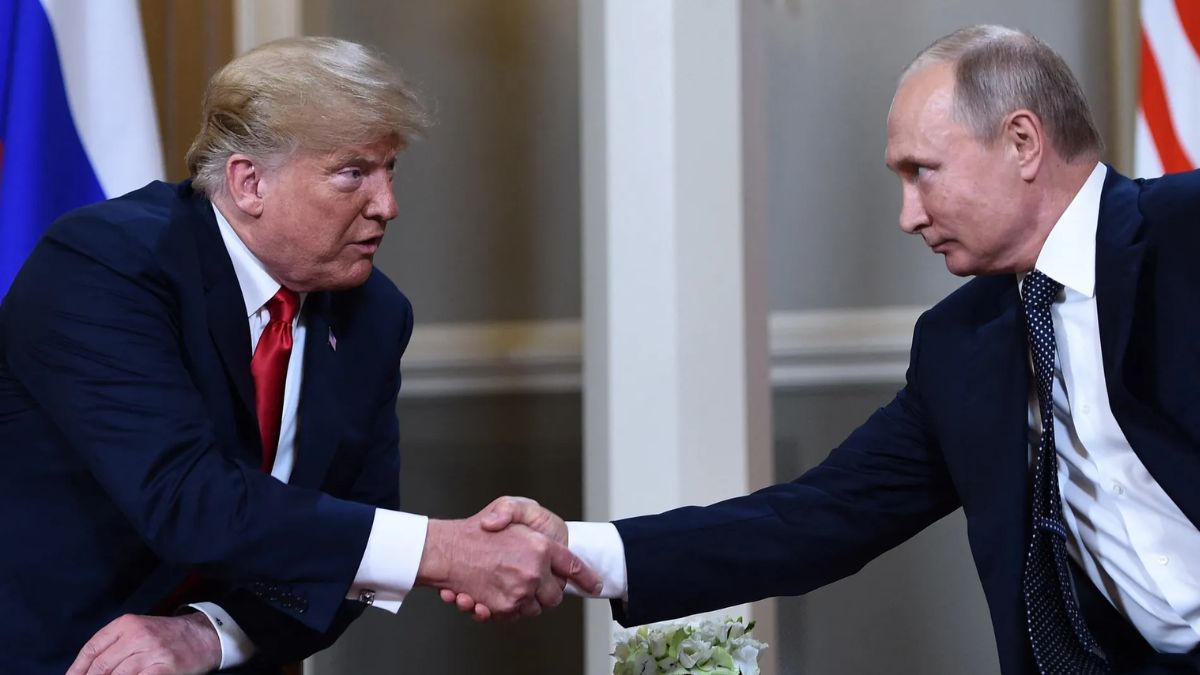
Trump and Putin have spoken on the phone. Their teams have met in Saudi Arabia. A face-to-face meeting between the two leaders now seems inevitable. And when that happens, expect headlines, controversy, and Twitter meltdowns (or whatever social media platform hosts Trump’s latest outbursts).
In a final bit of satire, Moskovsky Komsomolets imagined what last week’s phone call between Trump and Putin really sounded like:
“Trump called Putin.
‘Vladimir! You’ve got a cool country, and I’ve got a cool country. Shall we go divide up the world?’
‘What have I been saying all along? Let’s do it!’”
A joke? Maybe. But in global politics, sometimes satire isn’t far from reality. And if this past week has shown anything, it’s that Russia is back in business—without losing a single pawn.




