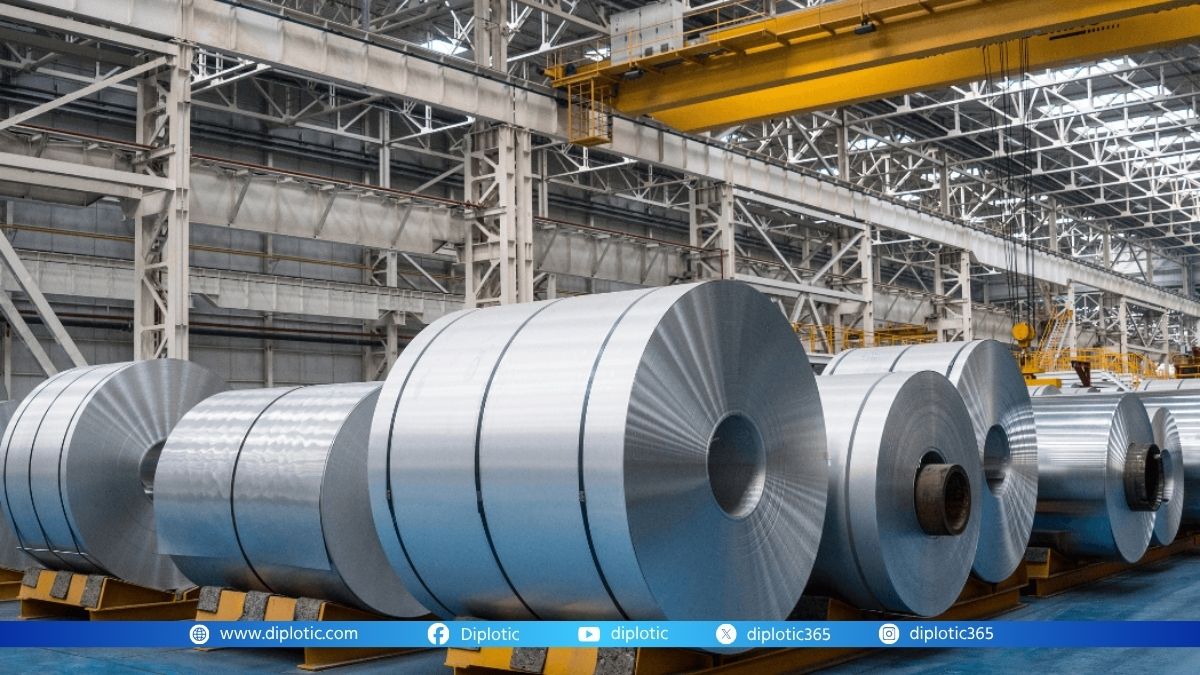
New research reveals U.S. steel tariffs are crushing manufacturing jobs, raising costs, and repeating the mistakes of the Bush and Trump eras.
A Case Study in Economic Self-Harm
The United States has entered another round of protectionist policymaking, this time doubling down on steel and aluminum tariffs. As of June 2025, Washington has doubled Section 232 duties to 50% on most imported steel and aluminum products. These levies now cover not only raw materials but also hundreds of derivative goods from machinery parts and wind turbine components to basic household items.
Canada and Mexico, once exempt under trade agreements, are now included in the tariff net, while the United Kingdom remains temporarily capped at 25% under a pending bilateral deal. The justification? “Rebuilding domestic manufacturing.”
But history, and hard economic evidence, show this approach is a recipe for industrial decline, not revival.
The Ghost of 2002: When Tariffs Failed to Save Steel
The new tariff surge echoes the ill-fated 2002 “safeguard” steel tariffs imposed by President George W. Bush. Promoted as a lifeline for a struggling steel industry, they quickly turned into a costly lesson in economic self-harm.
A groundbreaking study by economists James Lake and Ding Liu, published in the American Economic Journal: Economic Policy, delivers the most comprehensive analysis to date of what went wrong. Using detailed U.S. input-output data and a generalized difference-in-differences model, the researchers found that the tariffs:
Did not protect or increase steel jobs.
Destroyed thousands of jobs in industries dependent on steel inputs including autos, machinery, and transportation equipment.
Caused long-term damage, with job losses persisting at least five years after the tariffs were lifted.
Their findings dismantle the myth that protectionism saves jobs. Instead, it reveals that tariffs shift pain downstream, hurting far more workers than they help.
The Economic Chain Reaction
In the early 2000s, Bush’s tariffs raised import taxes on more than 170 steel products by up to 30%. Lake and Liu’s research found that while employment in steel-producing regions stagnated, steel-consuming areas saw sharp job declines.
Steel-intensive industries, machinery, fabricated metals, and autos make up the backbone of American manufacturing. When their input costs surge by 50–60%, as they did under the tariffs, the impact cascades through the economy. Firms cut jobs, delay investments, or move production offshore.
Even after the tariffs ended in 2003, many of those lost jobs never came back. Once factories shut down due to higher input prices, restarting them becomes prohibitively expensive. This “exit effect” is a classic principle of microeconomics: temporary shocks can cause permanent exits when reentry costs are high.
The study estimates that the employment hit from the 2002 steel tariffs was roughly one-quarter as severe as the “China shock” that devastated U.S. manufacturing in the 2000s. For steel-heavy manufacturing, the damage was three-quarters as large—a stunning result for a policy that lasted less than two years.
The False Promise of Protectionism
Ironically, the intended beneficiaries, the steel producers, did not gain. The industry continued to consolidate, shed workers, and pursue productivity gains through automation. Rather than fueling a renaissance, tariffs accelerated bankruptcies and mergers, leaving the U.S. steel sector smaller but no stronger.
Meanwhile, downstream manufacturers bore the brunt. Prices for steel inputs jumped by as much as 60%, distorting supply chains, deterring investment, and undermining competitiveness. When the World Trade Organization (WTO) ruled the Bush tariffs illegal in 2003, the damage had already been done.
Two decades later, the same logic drives the Biden administration’s 2025 tariff escalation. The rhetoric mirrors that of Bush and later, Donald Trump’s 2018 steel and aluminum tariffs, each claiming to “rebuild American industry.” But every round of protection has produced the same result: higher costs, weaker competitiveness, and lost jobs.
A Warning Written in Data
Lake and Liu’s analysis offers a clear warning to policymakers: temporary protection can have permanent costs. Once capital-intensive firms close, reopening them becomes economically infeasible. Workers lose not just jobs but entire career pathways, hollowing out local economies.
What’s worse, the 2002 tariffs were expected to be temporary, and firms could adjust accordingly. Today’s 50% tariffs, potentially indefinite, could inflict even greater harm as companies shift production abroad permanently to avoid the rising cost of doing business in America.
This is not just about accounting or trade balances—it’s about the structural health of U.S. manufacturing. In a globalized economy, every industry is linked. Protecting one segment through tariffs often corrodes the others, breaking the very supply chains that keep American factories running.
The Real Path to Industrial Strength
If the goal is genuine industrial revival, protectionism is the wrong prescription. The evidence—from the Bush era to today shows that tariffs undermine the very industries they aim to save.
True economic strength lies in openness, innovation, and competition. Policies that foster research, infrastructure investment, and workforce development strengthen American manufacturing far more effectively than border taxes.
Tariffs may look like a quick fix for political optics, but in reality, they are a slow poison for the industrial economy. As the United States repeats history, it risks eroding the manufacturing backbone it seeks to rebuild.