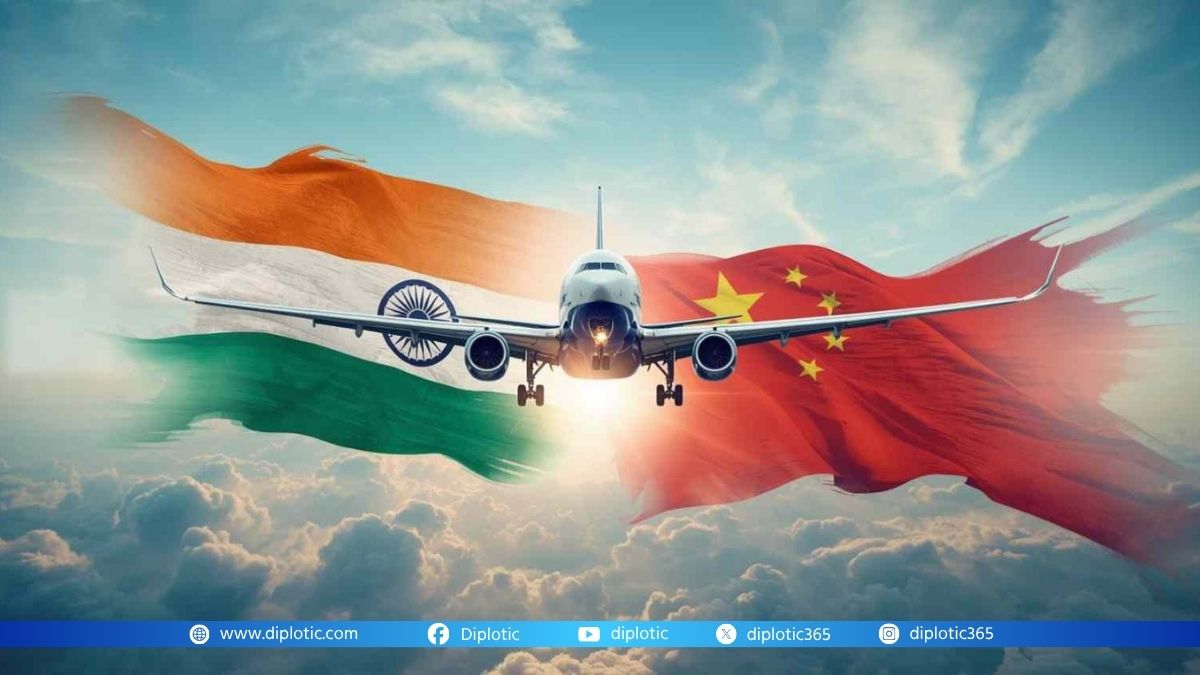
After a five-year hiatus, India and China have restored direct flights. This diplomatic milestone signals renewed connectivity and economic promise, but can deeper trust and strategic alignment follow?
Reconnecting the Skies: A Symbolic Take-Off
The restoration of direct commercial flights between India and China marks a dramatic turning point in bilateral relations. On 26 October 2025, India’s largest carrier IndiGo commenced daily non-stop service from Kolkata to Guangzhou, ending more than five years of suspended air connectivity. Shortly afterwards, Chinese carrier China Eastern Airlines announced the resumption of Shanghai–New Delhi flights from 9 November.
This much-anticipated reconnection resonates far beyond air travel. It is not merely about passengers boarding a plane it represents the thawing of diplomatic ice, a signal of renewed engagement between two of Asia’s most populous nations. The suspension of flights in 2020 triggered initially by the COVID-19 pandemic and deepened by the deadly clash at Galwan Valley had eviscerated people-to-people, business and academic links.
Economic Impetus: Trade, Tourism and Supply Chain Boosts
Reopening direct air links has tangible economic implications. Before the break, nearly 890,000 passengers travelled directly between India and China in 2019; with indirect routes continuing later, businesses and students still faced high costs and circuitous itineraries. The renewed flights open opportunities for:
Business travel and sourcing: Indian exporters and manufacturers hope to restore Chinese partnerships and imports of critical machinery and components.
Tourism and people-to-people contact: Direct connectivity lowers travel time and cost for both Indian and Chinese tourists, enabling cultural and educational linkages.
Supply-chain and logistics efficiency: Shorter routes and fewer layovers allow more efficient cargo flows, critical in sectors like electronics, renewable energy and pharmaceuticals.
For example, IndiGo’s route from Kolkata to Guangzhou using the efficient Airbus A320neo specifically targets southern China’s manufacturing hub, aligning travel with trade.
Diplomatic Undercurrents: Signals of Cautious Normalisation
The flights represent more than commerce they are tactical diplomatic gestures. During the August 2025 visit of Chinese Foreign Minister Wang Yi to New Delhi, the governments agreed to improve air-connectivity and bilateral mobility.
Yet, beneath the veneer of restored air links lies a complex terrain of mistrust, strategic competition and unresolved issues. Indian commentary stresses that despite economic considerations, national security and strategic autonomy continue to shape India’s China policy. For India, the equation remains: “We are never going back to 2019.”
But Will Relations Really Take Off? Three Key Hurdles
Trust Deficit and Border Disputes
Despite steps like the 2024 border patrol agreement along the Line of Actual Control, the Galwan clash and lingering border stalemate continue to shadow engagement. Until the core strategic friction is addressed, infrastructure like flights can only do so much.
Visa and People-to-People Flows
While flights are returning, visa regimes remain asymmetric: Indian visa issuance to Chinese nationals remains highly restricted, hampering full people-to-people renewal. Without parity, the flight routes may become symbolic rather than substantive.
Economic Asymmetry and Strategic Dependencies
Indian commentary warns of over-reliance on Chinese imports and the risk of undermining India’s ambition for strategic independence. For India to fully capitalize on restored connectivity, it must ensure that engagement serves its long-term manufacturing and self-reliance goals.
What Lies Ahead: Opportunities and Strategic Choices
If managed with clarity and reciprocal commitment, the restored flights could catalyse a broader reset: deeper trade, more dynamic tourism, and refreshed academic and cultural exchanges. Aviation sources report that flights may expand to cities like Mumbai and Bengaluru, connecting to hubs such as Chengdu and Shenzhen.
Additionally, airlines anticipate growing demand: China Eastern plans to increase the Shanghai–New Delhi route frequency to five weekly from January 2026. This suggests commercial optimism backing the diplomatic signal.
Yet success will hinge on whether policymakers convert the runway into actual lift-off: will investment flows resume? Will visas be liberalized? Will infrastructure cooperation be revived? Will both countries treat this as a strategic opportunity rather than a mere aviation fix?
Conclusion: A Conditional Take-Off
The return of direct India-China flights is a powerful symbolic milestone, one that creates fresh openings for connection and commerce. But symbolism must be backed by substance. Without parallel advances in trust, policy reform and strategic alignment, the re-opened air corridor may fly but struggle to achieve altitude.
As India and China navigate a future of competition, collaboration and coexistence, the restored skies offer hope but only time will tell if this high-altitude hope lands into grounded real-world partnership.