On October 9, 2025, Israel and Hamas reached a landmark first-phase agreement in the Gaza ceasefire plan, marking a pivotal step toward peace after two years of brutal conflict. The first phase of the ceasefire framework could potentially end one of the most protracted and deadly conflicts in recent history. Under this accord, Hamas agreed to release the 20 surviving Israeli hostages it holds, with a simultaneous Israeli commitment to release nearly 2,000 Palestinian detainees, including 250 serving life sentences. This exchange is set to occur within 72 hours following the completion of Israel’s partial military withdrawal to designated lines inside Gaza, where Israeli forces will maintain control over roughly 53% of the territory.
This milestone deal, brokered with strong mediation and guarantees from the United States and involving regional actors such as Egypt, Qatar, and Turkey, represents a delicate balance of concessions. Hamas has consented to ceasefire conditions without explicitly agreeing to disarm, while Israel’s partial withdrawal signals a tactical de-escalation rather than a full disengagement. The phased withdrawal aims to calibrate military control while enabling a humanitarian window to ease Gaza’s dire crisis.
Hostage Release and Prisoner Exchange: Heart of the Agreement
At the core of the ceasefire’s first phase lies the humanitarian imperative of releasing hostages, a deeply emotive and politically sensitive issue. Hamas is committed to releasing all remaining captives believed to be alive within 72 hours after the Israeli forces complete their redeployment. The Palestinians will also return the remains of deceased hostages, fostering a measure of dignity amid tragedy.
In return, Israel will free approximately 2,000 Palestinian prisoners, including some jailed for severe offenses. This highly calculated prisoner swap is pivotal in breaking the cycle of retaliation and rebuilding channels for dialogue. Israeli authorities reported that certain high-profile detainees are excluded from the exchange, reflecting ongoing security concerns, but the large-scale release signals a significant goodwill gesture.
Strategic Israeli Military Withdrawal and Ceasefire Implementation
Israel’s military withdrawal was executed swiftly, with forces pulling back to pre-agreed deployment lines within 24 hours of cabinet approval. This redeployment confines Israeli control to about 53% of Gaza, allowing for the creation of a security buffer while providing space for civilian movement and aid delivery.
Ceasefire conditions include a U.S.-led multinational monitoring force, comprising troops from Egypt, Qatar, Turkey, and the UAE, to oversee compliance and prevent renewed hostilities. The agreement outlines no Israeli military flights over Gaza for 10-12 hours daily during the ceasefire, underscoring the commitment to a durable calm.
Humanitarian Relief and Reconstruction: Addressing Gaza’s Crisis
Humanitarian aid has become an urgent priority amid Gaza’s severe shortages. The agreement mandates the entry of a substantial volume of aid, initially estimated at 400-600 trucks daily, delivering essentials like food, medicine, fuel, and equipment for hospitals and infrastructure rehabilitation. This massive influx is designed to address the glaring famine and infrastructure collapse that have compounded Gaza’s suffering over two years of conflict.
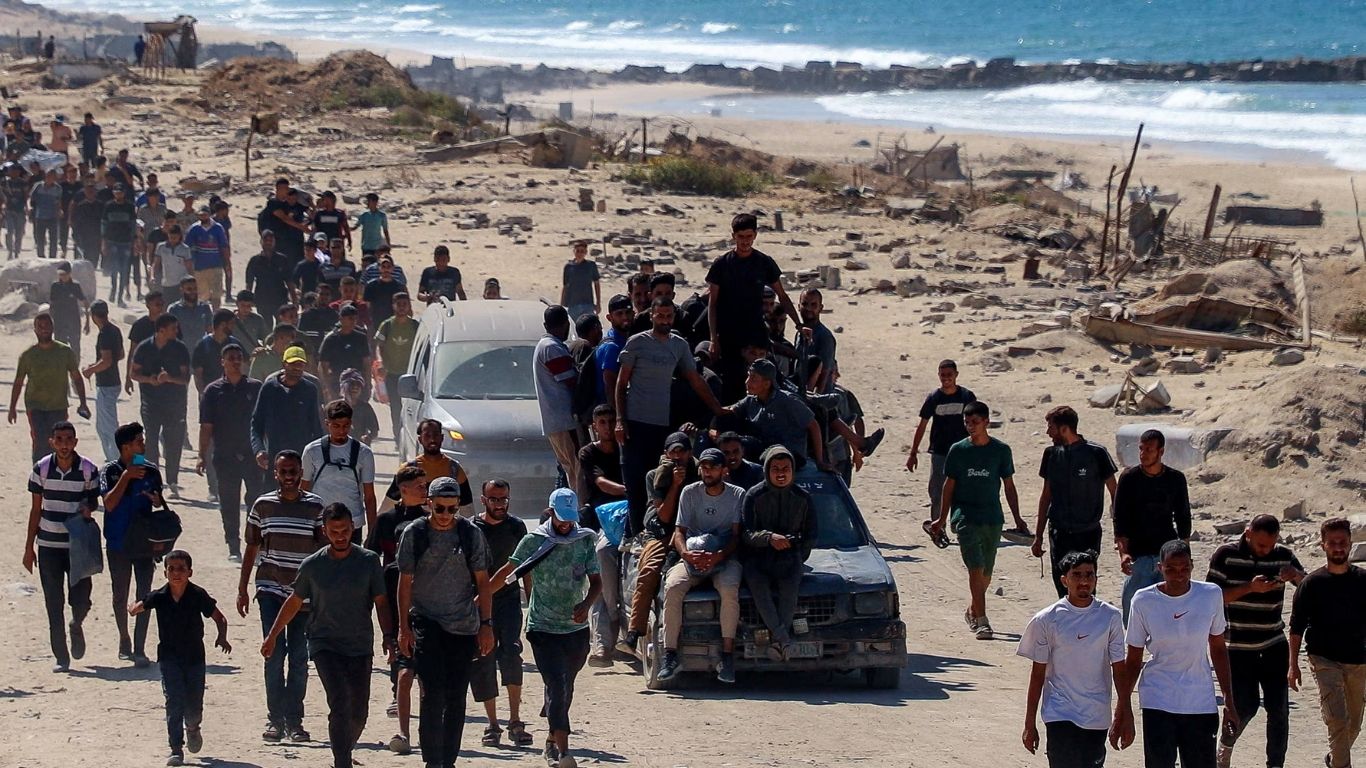
The ceasefire notably includes provisions for displaced Palestinians to begin returning to their homes, reflecting a cautious but critical step toward normalizing civilian life after prolonged siege and destruction.
Global Reactions and Regional Implications
World leaders have welcomed the ceasefire’s first phase, viewing it as a rare diplomatic breakthrough in a fraught landscape. The agreement’s international backing, spanning Western powers, Middle Eastern players, and UN agencies, adds weight to its prospects for success.
Yet, uncertainties remain. The deep-rooted political and territorial disputes underpinning the conflict are unresolved. Future phases of the peace plan must tackle Gaza’s governance, security mechanisms, and broader Israeli-Palestinian relations to secure lasting peace.
Conclusion: A New Hope Amid Uncertainty
The first phase of the Gaza ceasefire plan is an unprecedented blend of pragmatism and cautious optimism, a vital step toward halting bloodshed and opening pathways to peace and rehabilitation. With hostages poised for release and humanitarian aid beginning to flow, the fragile ceasefire shines as a beacon of hope after relentless conflict. However, sustained political will, rigorous monitoring, and broader concessions remain essential to transform this initial success into a durable peace.